Reg BI turns two on June 30th. It was supposed to help investors better understand how advisors and brokers differ and have BDs meet a “best interest” standard based on fiduciary principles. It turns out that Reg BI is doing the opposite.
Here’s how to position yourself for a lifetime of relationships by creating better touchpoints with a client’s family.
I am not implying that brokerage firms that pay their advisors via a “payout” are lying, but there is no shortage of misleading when it comes to payouts.
Because the consequences of leaving longevity unmanaged are likely to be the most devastating, advisors must act now to address it.
There is no Hall of Fame for single parents. There should be. The challenges of being a single parent are monumental.
Agricultural commodities fell, offering some reprieve to rampant food inflation, as traders weigh incoming data on harvests and looming recessions in some major economies.
China’s chip industry is growing faster than anywhere else in the world, after US sanctions on local champions from Huawei Technologies Co. to Hikvision spurred appetite for home-grown components.
US builders completed more apartments in large multi-unit buildings than ever before.
Elon Musk confirmed the salaried workforce at Tesla Inc. would be cut by about 10% over the next three months.
US banking giants are poised to return $80 billion to shareholders after this year’s Federal Reserve stress tests, less than last year’s elevated level that followed a pandemic-driven buyback pause.
Delegates at the second annual Qatar Economic Forum, from Tesla Chief Executive Officer Elon Musk and Nouriel Roubini to Atlas Merchant Capital’s Bob Diamond and StanChart’s Bill Winters, warned the United States was heading toward a recession.
The rising popularity of ESG investing has driven asset flows to green stocks. But new research confirms that the resulting higher valuations forebode lower returns for climate-conscious investors.
Who would want to be tasked with investing their own and other people’s money in companies run by weirdos and jerks? But that turns out to be one of the most important skill sets shared by successful venture capitalists.
US credit-card rates have soared past 20%, mortgage costs have climbed to the highest since 2008 and companies are having a harder time borrowing money.
On the edges of US Sun Belt suburbia, the wait lists for new houses are gone. And homebuilders are doing something they haven’t done in years: slashing prices.
The final day of bidding for Warren Buffett’s last charity lunch just got interesting.
Electric-vehicle prices are going up at a dizzying pace these days.
Private equity bosses are finding history to be a lousy guide as they hunt for clues on how to work through the turmoil in global markets.
Oil is heading for the first weekly decline since April after a period of choppy trading as investors weigh the prospect of further monetary tightening from central banks to curb rampant inflation.
Microsoft Corp. introduced Viva Sales, a new program meant to connect its Office and video conferencing programs with customer-relationship management software — its own and that of rivals, a step that could help it garner revenue from Salesforce Inc. clients.
The one speed bump advisors keep tripping over is that, well, people are funny about their money.
In 2003, at age 19, Elizabeth Holmes founded Theranos, and it became a $10 billion company by 2014. But it was a fraud. Aspects of target date funds mirror the Holmes story.
An ETF issuer is following in Cathie Wood’s footsteps with a new innovation-themed fund, despite the fact that her flagship ETF tumbled 61% this year.
The world’s central bankers are unleashing what may prove to be the most aggressive tightening of monetary policy since the 1980s, risking recessions and roiling financial markets as they rush to tackle the surge in inflation they didn’t see coming.
For all the talk of bear markets and a possible recession, investors continue to pile into American equities.
The number of Russell 3000 companies, excluding financial firms, trading below cash has surpassed the month-end record set during the global financial crisis.
The US has become the world's oil barrel of last resort, single handedly keeping prices in the energy market from exploding even higher by selling a large chunk of its Strategic Petroleum Reserve.
Since the start of 2019, investors have plowed more than $300 billion into environmental, social and governance (ESG)-themed exchange traded funds.
Cryptocurrencies were supposed to teach traditional financiers a thing or two about how to avoid collapses and crises. Yet it feels like we’re simply repeating history. Specifically, the messy hedge-fund humiliation captured in “When Genius Failed.”
While hedge funds were busy bailing from stocks at a record pace as the S&P 500 plunged into a bear market, Corporate America was furiously buying.
The equity-linked debt of some of the pandemic’s darlings has plunged to record lows and is now considered distressed.
Applications for US unemployment insurance were little changed last week, suggesting the labor market remains exceptionally tight.
It’s too soon to call an end to America’s worst bond-market collapse in at least half a century.
A key source of US economic growth this year -- consumer spending -- is showing signs of losing steam, even before Wednesday’s round of Federal Reserve rate hikes kick in.
Mortgage rates in the US surged the most in more than three decades, ratcheting up pressure on would-be homebuyers and cooling the housing market.
The better ARK performed, the more money flowed into its main ETF, ARKK. It used this money to buy more sci-fi ARKK stocks, pushing up the prices of its holdings. This created a vicious cycle that has now reversed.
Wednesday's Federal Reserve meeting provides the clearest sign yet that the central bank is treating inflation as a national emergency, with markets expecting a 0.75% interest-rate increase.
While the market chatter in the run-up to Wednesday’s Federal Reserve interest rate decision has understandably focused on whether the increase will be 50 or 75 basis points, the critical issue in play is a broader one.
Despite a lot of confident predictions, nobody knows what will happen at the Federal Reserve Wednesday, never mind what the impact will be on markets.
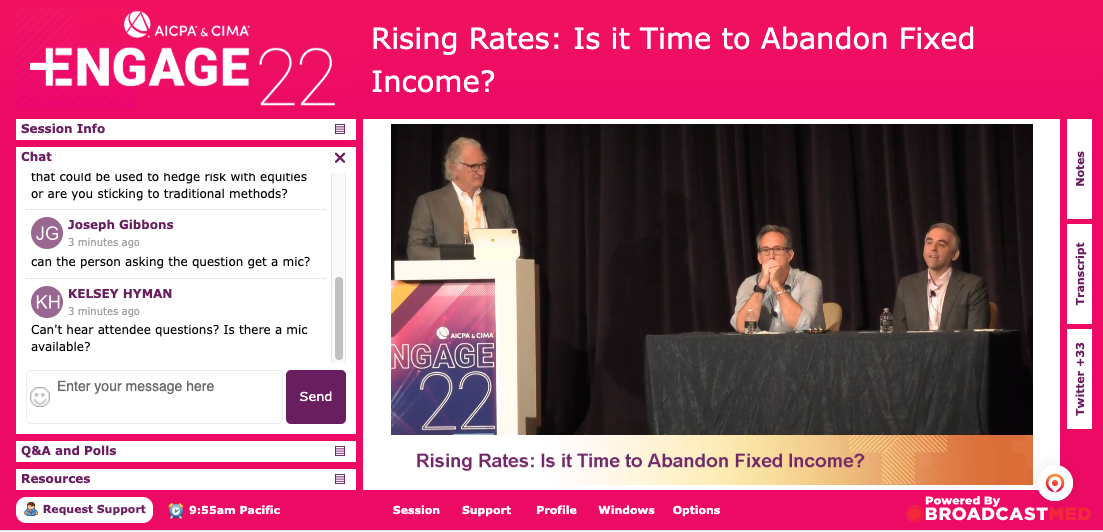
On June 7, Bob was in Las Vegas at the AICPA Engage conference, where he moderated a panel discussion.
What are growth-oriented firms doing and how are they thinking differently about technology?
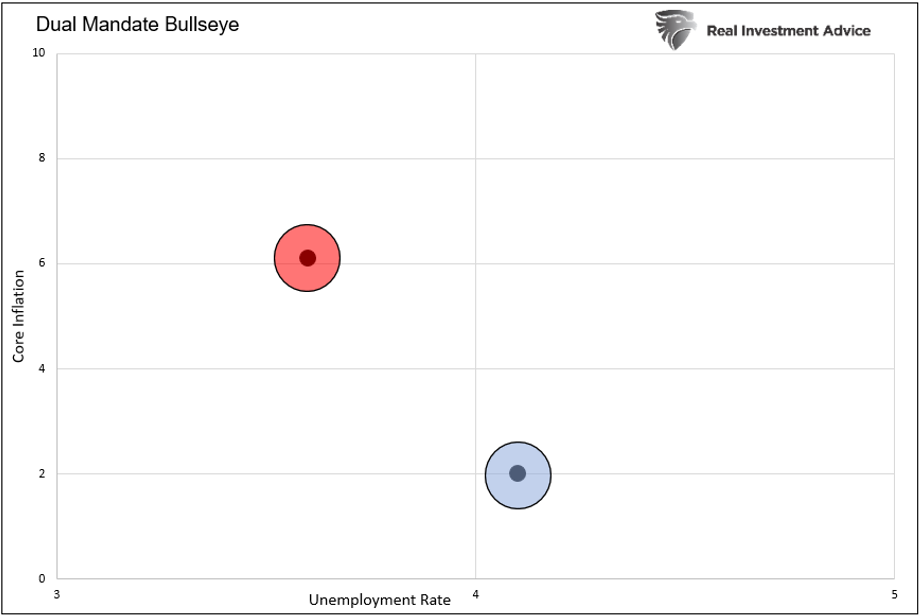
Recent experience shows that a third mandate – preventing financial instability – trumps the Fed’s two congressional mandates of full employment and low inflation.
A vague tweet by a founder of Three Arrows Capital, an influential hedge fund that has been liquidating crypto holdings as prices plummeted, is stirring fresh apprehension in an already shaken industry.
Here are a few important ideas for my readers on making cold pitches and trying to gain traction in the market with those you don’t know and who don’t know you.
US retail sales fell in May for the first time in five months, restrained by a plunge in auto purchases and other big-ticket items, suggesting moderating demand for goods amid decades-high inflation.
Here are the major takeaways from my two decades research into how advisors can more effectively work with prospects and clients.
Here’s how financial marketers can repurpose virtual meetings and video content.
Federal Reserve Chair Jerome Powell, who’s carefully telegraphed interest rate hikes over four years, looks likely to abandon gradualism and move more forcefully to stamp out inflation along with growing concerns that it will persist.
The world’s biggest technology stocks are crumbling on Monday as broad markets enter into bear market territory amid fears the Federal Reserve will send the US economy into recession.
MicroStrategy Inc., ARK Innovation exchange-traded fund, Tesla Inc. and Twitter Inc. are what I’m watching to identify the ultimate capitulation point of this cycle.