This article argues that the pursuit of high returns by institutional investors, like insurers and pension funds, through illiquid and opaque private market investments is a repeating mistake that risks underfunding future liabilities.
The dominance of Jensen Huang and Nvidia in the AI hardware market is facing a significant challenge, signaling a shift in the industry's power dynamic. This is driven by news of Google potentially selling billions of dollars in its own Tensor Processing Units (TPUs) to Meta, following a similar major deal with Anthropic.
With corporate bond spreads widening and Oracle Corp.’s credit default swap spiking to a multi-year high, Wall Street is getting worried that a flood of debt sales from Big Tech is overwhelming buyers and could blow up credit markets.
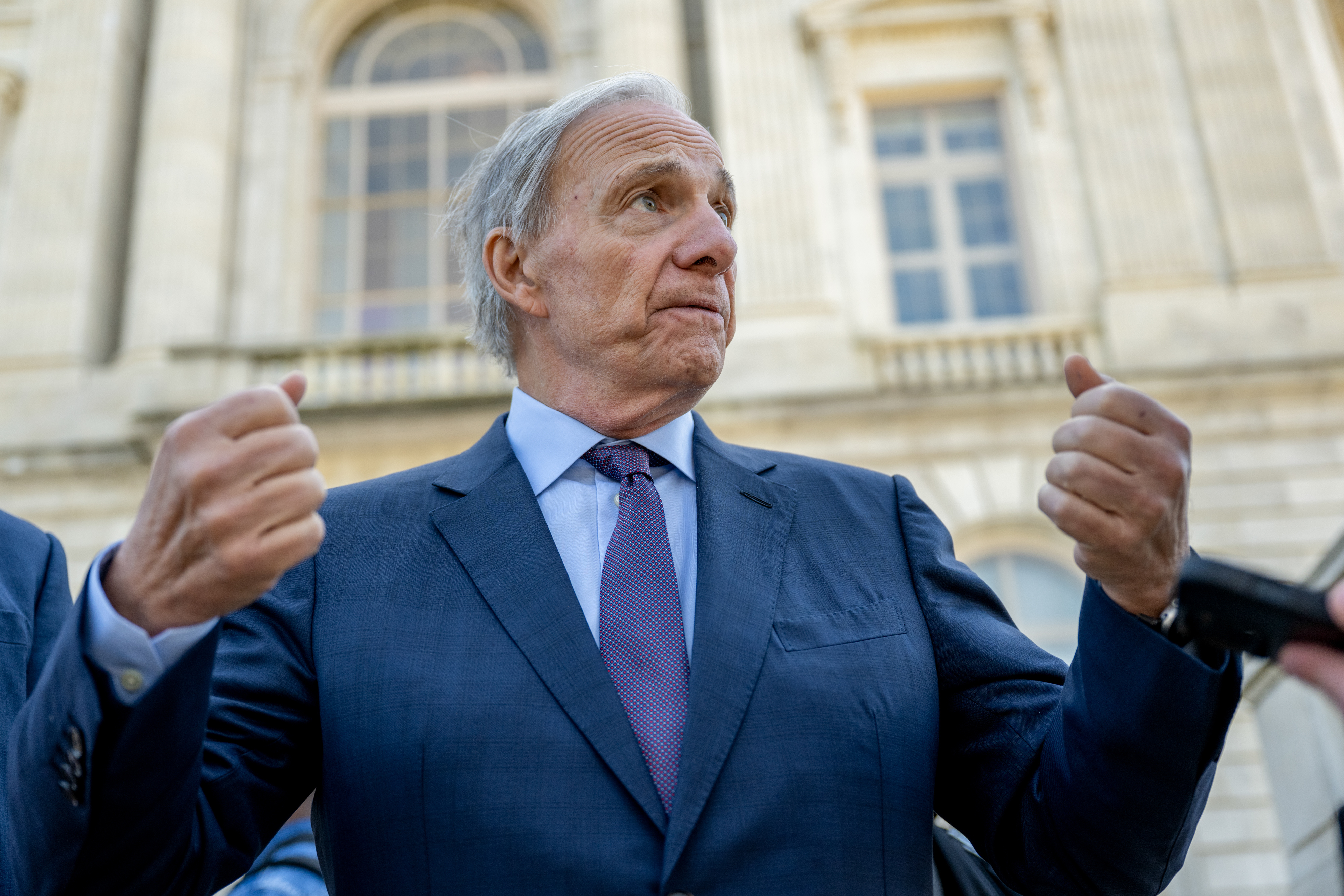
Multi-strategy hedge funds have been around for more than three decades. Will they make it to a half century? Ray Dalio, founder of 50-year-old hedge fund Bridgewater Associates has his doubts about this thriving subsector of asset management.
Some clients don’t want to expose everything and may find it annoying to be asked deeply personal questions. I do think, with some work, everyone can come around to share more about themselves if they are approached correctly. Here are some suggestions.
You don’t need a massive budget or an in-house team to market effectively. You need a focused, sustainable approach designed for small firms like yours. Here’s what that looks like in action — and how to start seeing results without burning out.
Referrals aren’t dead; they’ve evolved. When clients know you are there for more than their investments and when every moment reinforces the value you bring to your clients, referrals become a natural outcome.
Google, once seen as lagging after the launch of ChatGPT, is now surging in the AI race with its new Gemini 3 model winning praise and driving investor confidence.
Investor certainty about a Federal Reserve interest rate cut in December has surged to approximately 80%, driven by signals from Fed officials and recent mixed economic data, especially regarding the labor market.
As investors shift away from volatile artificial intelligence stocks, the health-care sector has emerged as the clear winner this month, with the S&P 500 Health Care Index up 10%. This rotation, fueled by aggressive buying from hedge funds and mutual funds, reflects investor interest in defensive value amid concerns over an AI stock bubble.
Kalshi Inc.’s Chief Executive Officer Tarek Mansour got my attention when he claimed last week that prediction markets could rival stock exchanges in a few years. Of course, this does not mean that people will buy and sell stocks on Kalshi, but that prediction markets will be where information is aggregated and prices set, with the New York Stock Exchange and its ilk relegated to processing orders.
The release of OpenAI's ChatGPT three years ago sparked an artificial intelligence mania on Wall Street, fundamentally reshaping the stock market landscape. This AI-driven frenzy has minted new market leaders, made the S&P 500 significantly more concentrated, and served as the dominant driving force behind the current bull market in US stocks.
This article explores gold's role as a distinct, independent alternative asset class, discussing its diversification benefits, and practical ways for investors to gain exposure.
Advisors spend hours gathering information via different systems that should already be talking to each other. But by the time they make sense of it, the market has moved on. I’ve seen even well-established firms face this problem because their systems rarely communicate smoothly.
Treasury yields edged lower, with the 10-year nearing 4%, as data affirming labor-market weakness and remarks from Federal Reserve Governor Stephen Miran bolstered expectations for an interest-rate cut next month.
Wall Street’s macro traders are headed for their best year since 2009 as clients rushed to place bets on changing interest rate policies by central banks around the world.
Meta Platforms Inc. is in talks to spend billions on Google’s AI chips, the Information reported, adding to a monthslong share rally as the search giant has made the case it can rival Nvidia Corp. as a leader in artificial intelligence technology.
This article explores the future of stablecoins as an everyday payment instrument by drawing parallels to the free-banking era (1837–1863) in the United States, when commercial entities issued their own, often chaotic, banknotes.
The article argues that making productive use of AI requires strong critical thinking, statistical, and analytical abilities, a necessity challenged by weakening standards in math and reading in educational institutions.
From a purely economic standpoint, imposing taxes on credit unions or ending taxes on banks would have the same outcome. If Congress were serious about fairness, either option would be a logical choice.
Those who have defaulted into TDFs need to un-default and take back risk control over their lifetime savings. Safe assets include Treasury bills and short-to-intermediate TIPS, even though their returns are low. The price of safety is low, but reliable, returns.
This article walks readers through the Federal Reserve’s balance sheet to explain how it now acts as the primary provider of liquidity to financial markets. It details the Fed’s reserve management tools, including the well-known QE and QT, to show exactly how it injects or withdraws reserves from the banking system.
A third straight week of market turbulence left US equity investors searching for any edge on how to position ahead of what is normally a strong seasonal stretch for stocks.
A flood of debt sales from Big Tech risks overwhelming buyers and could weaken the credit market on both sides of the Atlantic.
Federal Reserve Governor Christopher Waller said he’s advocating an interest-rate cut in December, though the US central bank can probably take more of a meeting-by-meeting approach starting in January once it receives a flood of economic data.
The AI investment story is maturing, with major tech firms raising a record $108 billion in debt in 2025 to finance infrastructure, a sharp departure from previous cash-funded growth. This increased use of leverage and riskier financing mechanisms is generating concern among stock traders and contributing to rising market volatility.
Sun Life Financial Inc.’s newly unified asset-management division plans to hire about 20 senior executives as it looks to turn a collection of investment managers into a more coordinated global powerhouse.
The S&P 500 Index edged higher to start Friday, recovering some of the losses caused by recent concerns over stretched valuations and a potential AI bubble. The recovery was supported by remarks from Federal Reserve Bank of New York President John Williams, who suggested there is room to lower interest rates soon. These comments immediately boosted market expectations for a December rate cut.
The article examines the high valuations of AI-focused tech giants like Alphabet and Nvidia, contrasting the risk of an "AI bubble" with their powerful profitability. While Berkshire Hathaway's new stake in Alphabet signals confidence, both companies require substantial future growth to justify their current multiples.
The article examines how tech giants like Meta are using massive, off-balance-sheet special-purpose vehicles to finance multi-billion dollar data centers. Despite these complex structures, large investors are treating the debt as a direct obligation of the tech company, leading to a subsequent sell-off of Meta’s publicly traded corporate bonds.
The end of the government shutdown left the SEC with an avalanche of paperwork, forcing staff to prioritize new company registration statements critical for initial public offerings (IPOs). More than a dozen companies had to revise their IPO timelines due to the delays, creating market uncertainty.
European stocks fell, tracking their deepest weekly decline since August, as a risk-off mood hit some of this year’s top-performing technology shares. The decline was driven by investor concerns over lofty tech valuations and uncertainty regarding the US Federal Reserve’s next move on interest rates. The market slightly recovered after a Fed official hinted there was room for rate cuts in the near term.
The continued slump in the housing market is now being compounded by a weakening U.S. labor market and a surge in mass layoffs. This labor uncertainty is making potential buyers reluctant to commit to purchases, even as affordability improves and mortgage rates stabilize. This dynamic is leading homebuilders to reduce construction and staffing, further worsening the job market.
Be wary of claims that indexing and passive investing have huge hidden costs. In my view, passive investing involves owning, as close as is economically feasible, every stock weighted to market capitalization. So this means total stock index funds.
BlackRock Inc.’s Tony DeSpirito, global chief investment officer of fundamental equities, is leaving the firm along with three other employees in that group as the asset manager shakes up its actively managed stock funds.
After peaking at just over $126,000 in early October, Bitcoin has dropped 30% — breaking through key thresholds, spooking ETF investors, and rattling holders big and small. One group in particular remains exposed: traders who bet on a rebound — and now find themselves underwater while paying for it.
The growing clout of private companies like OpenAI is causing Wall Street to redraw the boundaries of its equity research business.
Nvidia Corp. delivered a surprisingly strong revenue forecast and pushed back on the idea that the AI industry is in a bubble, easing concerns that had spread across the tech sector.
keep hearing some version of this argument: Yes, we’re in an AI bubble. But even in the dot-com crash, the best companies survived and made people rich. Just look at Amazon.com Inc.
Just six months ago, Alphabet Inc. investors feared the company could be a casualty of the artificial intelligence revolution. But after a trillion-dollar rally those concerns have flipped, and now the biggest worry is if the stock is getting too expensive for its own good.
While firms delay updating mobile communications compliance, the waiting incurs a substantial and measurable cost, averaging $232,457 annually in wasted analyst time on false positives. This inefficiency forces compliance teams to spend over 300 hours yearly on manual surveillance, diverting focus from strategic risk management. Ignoring this problem also dramatically increases regulatory exposure, given recent multi-billion dollar fines for off-channel communication violations.
This paper highlights and provides examples of how investment managers can reclaim and shape their own narrative by leveraging data science and alternative data sources, demonstrating the power in presenting information in new ways.
This reflective column explores five key life lessons learned over my last year, emphasizing the importance of health, strong family relationships, and giving back to the community. These insights are used to offer financial advisors specific ways to engage clients beyond just investments, by focusing on passions, supporting family goals, and preparing for life's unexpected crises.
The result is the first sustained selloff for the group since April, with the Nasdaq 100 leading the broader market lower as investors ditch tech winners in favor of more defensive stocks. One of the beneficiaries: companies with juicy dividend payments.
The growing list of US credit busts, from subprime auto lender Tricolor Holdings to Broadband Telecom Inc., raises a troubling question: If such “cockroaches” proliferate — if many more enterprises collapse under the weight of excessive debt — who will ultimately bear the losses?
Thirty-three nations, including new signatories Senegal and Rwanda, have now committed to a global pledge to triple nuclear power capacity by 2050. The World Nuclear Association suggests this ambitious target of installing about 1,200 gigawatts is achievable if governments fully implement their promises. However, other forecasts indicate meeting this goal will be challenging given current capacity projections.
Famed investor Michael Burry, popularized by The Big Short, is sparking new conversations after his firm decided to return outside capital. Recently bearish on the AI investment boom, Burry's Scion Asset Management purchased put options against major AI players like Nvidia and Palantir in the third quarter.
Wall Street will get a sense of where the billions of dollars being spent on artificial intelligence are going when Nvidia Corp. reports its earnings after the bell on Wednesday. How the sinking stock market will react is another question.
Alphabet Inc.’s Google plans to invest $40 billion in three new Texas data centers, part of an effort to add artificial intelligence computing power in a state that’s also drawn multibillion investments from competitors such as OpenAI and Anthropic PBC.