If owning a home is still the American dream, then it is increasingly out of reach for many young Americans. The average age of a first-time homebuyer is now 40, up from 33 just a few years ago and 29 in 1981.
Anduril Industries Inc. founder Palmer Luckey, Lockheed Martin Corp., Palantir Technology Inc.’s Shyam Sankar and other investors are putting $130 million into Valar Atomics, a nuclear startup that’s aiming to build thousands of advanced nuclear fission reactors within a decade.
Adam Giddens used to mainly rely on screening services and social-media buzz when looking for stocks to buy. Lately, though, he’s turned his attention to a different kind of influencer: Donald Trump.
Pfizer Inc. Chief Executive Albert Bourla had long searched for an obesity drug to make up for dwindling sales of the pharma company’s aging blockbusters. Late Friday, after a dramatic bidding war, he learned he’d finally claimed his prize.
To better understand how the AI industry is funding itself and the potential risks involved, we believe it is helpful to draw on historical context from the dot-com bubble, when similar deals were common amid a thriving technology sector.
A sad chapter in Boeing Co.’s history closed on Thursday when a federal judge approved a non-prosecution agreement with the Department of Justice that drops criminal charges against the company for failures of its aircraft design and manufacturing process that led to two deadly crashes and an inflight accident that by miracle didn’t kill anyone.
In October 1996, at the last party conference before the election that would make him UK prime minister, Tony Blair tried to define the essence of New Labour. He started off by contrasting his party with the dying Conservative government, before summarizing his three priorities for power.
This lack of transparency around private assets has helped the industry grow and innovate; it has also created a rapidly expanding multi-trillion-dollar black box that could pose systemic risks.
Everyone is looking for the next big AI bet. They’re searching for energy-rich places that can run data centers cheaply, for bottlenecks in the semiconductor supply chain that will earn massive profits, or for companies that might own the next breakout algorithm.
For investors, a concentrated portfolio of equity-market winners tends to work just fine — until it doesn’t. At the moment, the S&P 500 is a case in point: Its earnings remain both spectacular and spectacularly concentrated around the artificial intelligence story.
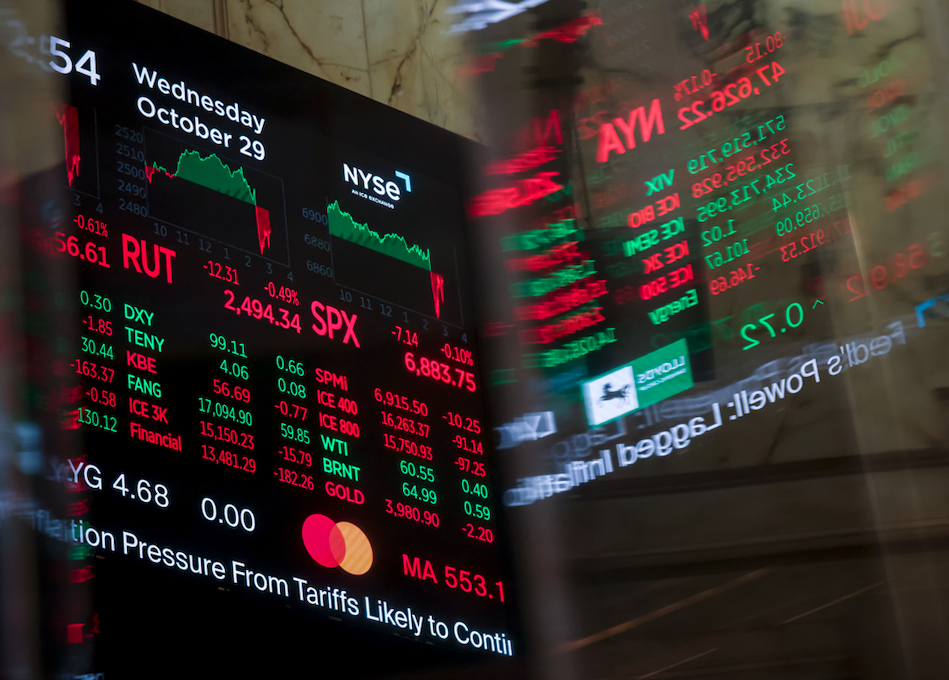
Investors’ certainty that the Federal Reserve would follow its recent interest-rate cut with another in December has evaporated.
The volume of activity on Polymarket, one of the most popular prediction markets, has been significantly inflated by so-called wash trading in which users rapidly buy and sell the same contracts, according to a new study by Columbia University researchers.
Financial markets are obsessed with AI, and the broader public is aware of its looming impact on jobs and wages. Yet for the Federal Reserve, the concern has barely registered.
Something remarkable happened the other day: I tried an AI device I didn’t instinctively loathe. It was a smart ring, created by two former Meta Platforms Inc. employees, that finally met some of the key criteria I think about when it comes to wearable tech and artificial intelligence, an intersection already fraught with failure and no shortage of justifiable anger.
The US stock market has roared past every caution sign on its way to a dizzying 36% surge since the April lows. It’s now staring down one favored by investing legend Warren Buffett.
Global bond sales have soared to a record this year as borrowers take advantage of easy market conditions to fund everything from the boom in artificial intelligence projects to a revival in acquisitions.
AstraZeneca Plc’s profit rose more than analysts anticipated last quarter, buoyed by demand for its blockbuster cancer and diabetes drugs.
Innovation and influence are very distinct phenomena. Bob Dylan, for instance, didn’t invent folk music: He borrowed extensively from Woody Guthrie, Pete Seeger and others in the folk revival movement of the fifties and sixties, yet he became far more influential than any of them.
The rebirth of private equity dealmaking has been supposedly just around the corner for well over a year. But even as investment bankers cheer a rush of mergers & acquisitions and the reopening of the market for initial public offerings, many financial sponsors are still struggling to catch the same wave.
Federal Reserve Chair Jerome Powell agrees that there’s probably something to the claims of a K-shaped economy. But at last week’s press conference, he failed to note how the Fed has helped to create it — and the implications it has for monetary policy.
M&A is more like a math equation. Your firm plus the desired one should equal what you would like to see occur. There are many other desired outcomes of these deals. For that reason, evaluating each deal with the exact same metrics is preposterous and unhelpful.
AUM-based compensation was a necessary evolution. But it isn’t the endpoint. If our profession is serious about being a profession, not an asset-gathering enterprise, we must continue to evolve. That means taking a hard look at how we get paid.
Remember that people have different communication and learning styles. What works for one person who “gets it” doesn’t work for another. If a message is important, make sure to use several modes of communication — written, verbal and interactive — wherever possible.
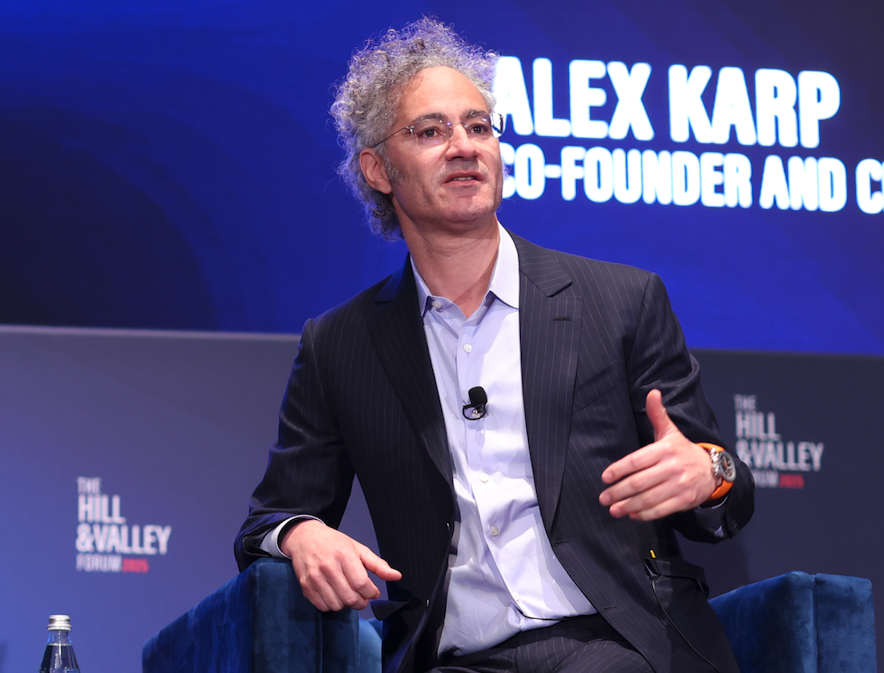
There can be only one Highlander, but Palantir’s Alex Karp shows there can be multiple highly paid, outspoken chief executive officers of richly valued tech companies with cult followings and unsettling stores of political power. That still doesn’t guarantee it’s a durable model for success.
The huge checks Meta Platforms Inc. is writing to support its artificial intelligence ambitions are reminding some investors of the massive metaverse outlays that crippled the stock just a few years ago.
The US Treasury indicated it’s not looking to boost sales of notes and bonds until well into next year, in a decision that will see the government increasingly rely on bills to fund the budget deficit.
The trade was simple — and worked until it didn’t. Wrap crypto in a stock ticker. Call it innovation. Ride the wave.
Amazon.com Inc.’s latest global layoffs should come as a singular warning to India. For policymakers dealing with the world’s largest youth population, AI suddenly poses a very real risk to jobs, wages, and a white-collar future.
Recent dealmaking by OpenAI appears to raise an awkward question for mergers and acquisitions advisers: What value do you add?
Nothing says gold is hot quite like a story that big US banks are considering getting back into the business of holding other people’s bullion.
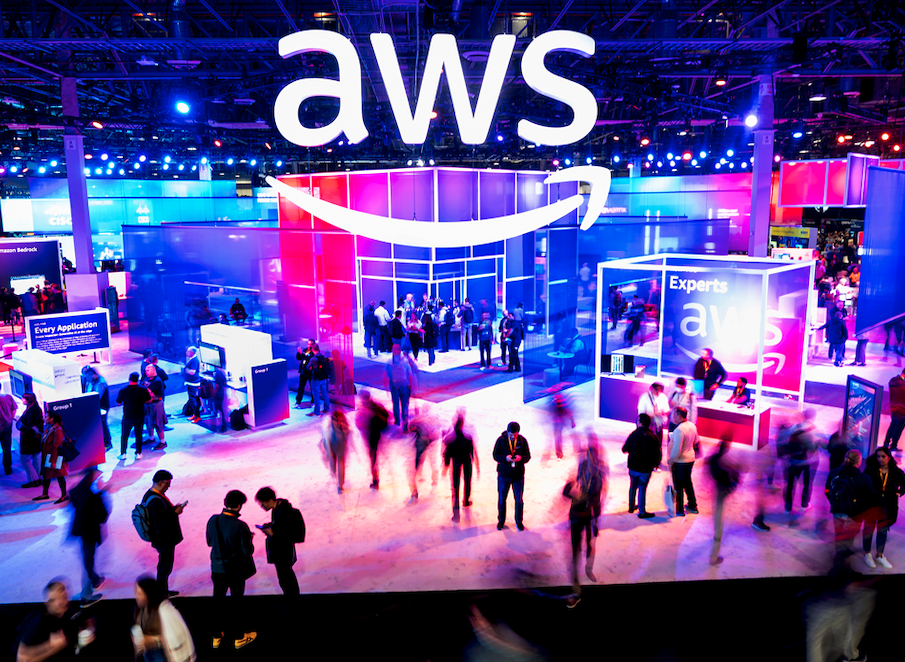
Adding AWS as a key cloud provider can ease some pressure for OpenAI, especially as it continues to farm out more contracts to neocloud providers like CoreWeave, which operates at a much smaller scale than AWS.
RIAs need to use AI effectively in their practices, but they also need to understand how their clients are using it.
Rick Kahler highlights a tool for helping investors achieve balance between two opposing financial concepts.
U.S. workers, particularly those in the Gen Z and millennial generations, are facing a “financial vortex” of financial pressures that are eating into their savings, including rising debt, housing, healthcare and caregiving costs.
Investors are bracing for Treasury Secretary Scott Bessent to lean more toward shorter maturities in the government’s funding mix to keep down long-term yields amid a mounting debt burden.
Wall Street is riding this era of American state capitalism — tracking it, packaging it and offering it back to investors through a new ETF.
This article details personalization with a strong caution against trying to personalize what cannot be personalized because it’s not nice to fool mother nature with a 'managed' account that is not actually managed.
More than a generation ago, financial historian Peter Bernstein wrote about investors’ 'memory banks,' the market experience that accumulates in their hippocampi over their investing lives and molds their investment strategy. As he put it, looking back on the 1990s: 'Most of the new participants in the market had no memory of what a bear market was like.'
As equity valuations approach — or in some cases surpass — the record highs of 1999, investors are growing increasingly anxious. This unease is partly driven by the media issuing grim warnings, often based in part on CAPE valuations.
Michael Saylor is raising the stakes for almost everyone that is touched by his multibillion dollar bet on Bitcoin.
Gold steadied near $4,000 an ounce as traders weighed a US-China trade truce that failed to quash concerns about long-term competition between the world’s two largest economies.
JPMorgan Chase & Co. is leading a group that’s investing about $90 million in a second round of financing for the Texas Stock Exchange, giving a boost to the Dallas-based upstart as it angles for a piece of a market dominated by Nasdaq and the New York Stock Exchange.
Tucked into President Donald Trump’s trade deals formalizing higher tariffs on goods from Asia this week are provisions for a global economic frontier the US wants to stay free of protectionism: digital commerce.
Novo Nordisk A/S made an unsolicited bid for US biotech firm Metsera Inc., sparking a heated battle with Pfizer Inc. to get their hands on weight-loss treatments that both drugmakers want in order to regain lost ground in the booming market.
US stocks are hovering near all-time highs, buoyed by the prospect of cooling trade tensions between the US and China as corporate America largely brushes off tariff pressures. But that doesn’t mean that Wall Street professionals will be sleeping easy this Halloween.
Long-dated bonds are looking more attractive as governments and central banks take steps to curb the glut in that segment of the market, according to JPMorgan Asset Management.
Amazon.com Inc.’s cloud unit posted the strongest growth rate in almost three years, reassuring investors who were concerned that the largest seller of rented computing power was losing ground to rivals. The shares surged.
Meta Platforms Inc. found record-shattering demand for its bond sale on Thursday even as its shares plunged, in a sign that bond investors are looking past any concerns about its artificial-intelligence spending plans.
Euro-area inflation eased slightly but stayed above 2%, backing the European Central Bank’s decision to keep borrowing costs where they are.
There’s no official read on how fast the US economy grew last quarter, thanks to the government shutdown. But almost everyone reckons it was a healthy pace — and that’s largely thanks to AI.