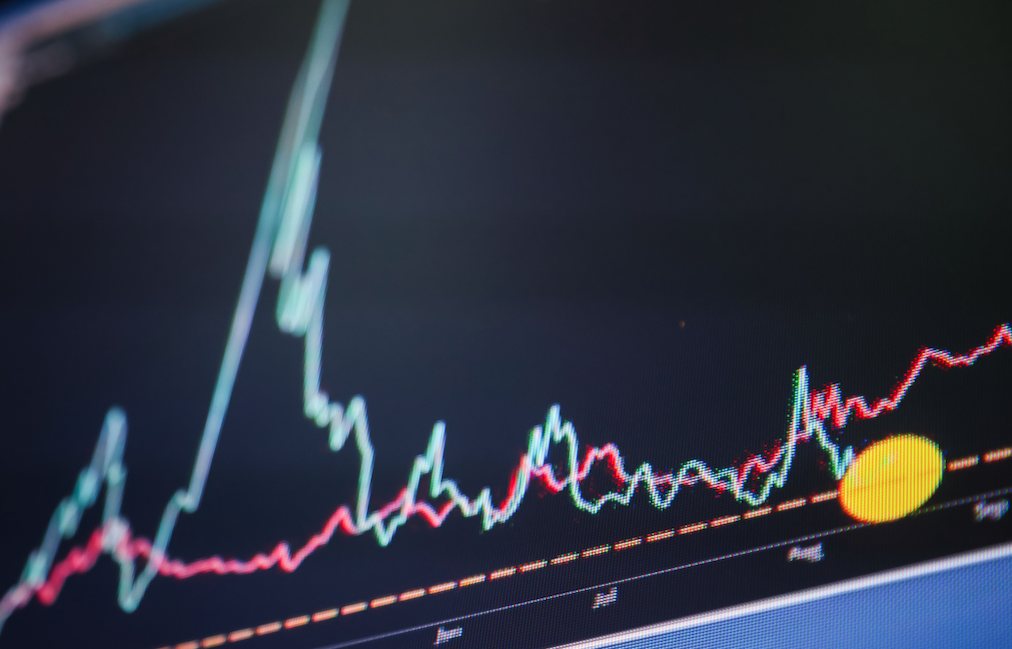
While I make no judgment about bitcoin’s intrinsic value, I do believe we’re witnessing the early stages of a structurally driven price expansion — powered not by sentiment, but by product development, market mechanics, and leverage.
Investors fretting over signs the bull market in stocks is pushing toward unsustainable levels will soon have another thing to worry about.
The World Bank sold $510 million of bonds backed by loans it gave companies across the developing world, part of its efforts to lure more institutional investors to regions where borrowers have a harder time raising cash.
President Donald Trump’s efforts to stack the Federal Reserve with economists willing to cut interest rates is providing all the drama this week.
The Russell 2000 Index last posted an all-time high on Nov. 8, 2021, and is still almost 3% from that level. Unless something drastic happens by Friday, it will mark the small-cap gauge’s longest streak without a record since the dot-com bubble.
The US economy expanded in the second quarter at a slightly faster pace than initially estimated on a pickup in business investment and an outsize boost from trade.
Nvidia Corp., the world’s most valuable company, gave a tepid revenue forecast for the current period, signaling that growth is decelerating after a staggering two-year boom in artificial intelligence spending.
Bond investors are accepting the smallest compensation in years in return for taking default risk, as a potent combination of economic optimism and too much cash chasing too few securities skews costs.
A new China-buys-China narrative is taking shape as Beijing steps up its tech rivalry with the US. The world’s second-largest economy not only wants to build generative AI models, but power them with its own hardware, redrawing a supply chain dominated by Nvidia Corp.
If there were any doubts about SpaceX’s dominance in space, they were swept away after the company pulled off a near-flawless test of its massive Starship rocket late Tuesday.
Money flowing to the U.S. Treasury from a source other than taxpayers may seem like a benefit. Yet any company required to give away 15% of its gross revenue, which could equal its entire profit, has to compensate in some way.
A federal appeals court ordered a review of US Securities and Exchange Commission rules that required investors to reveal far more about short selling and related stock lending.
he safety record of zeppelins was relatively unimpeachable prior to the Hindenburg, and that’s why the deadly disaster so shocked the public and devastated the rigid airship industry.
Fund managers say returns on emerging-market assets are set to power ahead of their developed peers, having moved in lockstep since US President Donald Trump unleashed his tariff blitz in April.
Boeing Co. resumed talks on Monday with union leaders to end a strike that most investors aren’t paying much attention to.
It's never a great sign when a central bank governor says his country's predicament is a “pretty sad story.” That's how Bank of England Governor Andrew Bailey described the UK at the Federal Reserve symposium in Jackson Hole, Wyoming, last week.
When you show someone the mirror, you’re not just helping them see their problem. You’re helping them see themselves. You’re also giving them the gift of clarity, without adding to their pain. That’s what builds trust.
Advisors can learn to grow organically, but not by just being told they need to do it and being given goals to get there. They need support and help, and once they get it, they often enjoy the process and are self-motivated to keep going.
Once a year, ideally in Q4, step back and look at the big picture of your marketing. Use this time to reflect on what worked over the past year, what didn’t, and what you want to start, stop, or continue.
The shift away from pure robo models does not reflect a rejection of digital tools. Instead, the industry is increasingly embracing hybrid frameworks — combining automated portfolio construction with human advisory support.
Most FAs I see work long hours but spend less than two hours a week attempting to grow their business. One of the first things I do when coaching them is to learn five things.
Today we look like geniuses, but there will be times when, by making rational and unpopular decisions, we’ll look like idiots. There are few guarantees I can give in this business, but this is one of them.
A group of multi-billion dollar businesses could help stage a comeback for Europe’s market for initial public offerings this fall, compensating for the region’s slowest first half in more than a decade.
US orders for business equipment increased in July by more than projected, suggesting companies are moving forward on investment plans as some of the trade and tax policy uncertainty gradually diminishes.
Apple Inc.’s stock is showing signs of life after struggling through most of 2025, as the tariff-related risks that have weighed on the company start to ease.
China is in the midst a stock boom. The blue-chip CSI 300 Index is up 9% so far this month, while the tech-heavy ChiNext Index has soared 18%, leaving the S&P 500 in the dust.
If I told you Argentina is the world’s hottest new market for copper, you might be likely either to scratch your head or just laugh.
As financial planning becomes more digital, more automated, and more standardized, this human layer becomes even more critical. The ability to connect, to coach, and to support emotionally charged decisions will remain one of the most valuable skills an advisor can offer.
The Federal Reserve’s annual gathering in the Rocky Mountains is usually a time for central bankers and their wonky friends to kick back, discuss a few complicated economic topics and then go for a hike in the shadow of Grand Teton.
An avalanche of cheap Chinese stuff is landing on doorsteps across Latin America. Bargain-hungry consumers are giddy, local retailers are getting pummeled and customs agencies are swamped.
For years software companies were the toast of Wall Street. High profit margins, low capital requirements and vast runway for growth prompted the venture capitalist Marc Andreessen in 2011 to famously declare “software is eating the world.”
The difference in wealth and income between the top 1% and the rest of America tends to get more attention, but one of the more striking wealth gaps is generational: Older Americans are far richer than young Americans.
At the risk of assaulting an already deceased equine, happy talk about decreased spending in retirement strikes us as the whistling-past-the-graveyard rationalization of those who fear they haven’t saved enough. In plain English, the average retiree spends less than while working because they have to, not because they want to. Advisors and prospective retirees should take care not to confuse the two.
Different clients may prefer different ways to invest in bonds. This article isn’t about identifying which fixed income vehicle offers the highest yield or lowest fee. It’s about matching strategies to real-world investor behavior.
The battle of words between the alternative investments industry and all others about whether alts belong in 401(k)s is far too familiar today. The two sides speak different languages. They don’t engage each other.
Despite not meeting three of the four criteria, UPS valuations provide a better margin of safety than many stocks. However, while it may fare better comparatively, we would want to see improvement in earnings and sales trends before committing UPS to our roster of rainy-day stocks.
For much of this month, Wall Street traders piled into stocks and bonds, betting that the Federal Reserve was finally ready to start cutting interest rates again. All they were waiting on was the green light from Jerome Powell to keep the rally going.
Walmart Inc., TJX Cos Inc. and Lowes Cos. each upgraded their forecasts this week; Home Depot Inc. returned to sales growth. All the good news means the retail sector is doing fine, right?
Oracle Corp.’s Larry Ellison used to scoff at the idea of cloud computing, saying in 2008 that it was “complete gibberish.”
Consumer companies can cope with the baby bust. They just have to pivot to baby boomers.
Treasuries soared and traders added to bets on a September interest-rate cut after Federal Reserve Chair Jerome Powell indicated a reduction may be warranted to support the labor market.
Investors are clamoring to buy the one kind of security that few companies want to sell now: long-dated bonds.
Bond investors are heading into Friday’s much-anticipated Jerome Powell speech largely expecting the Federal Reserve chair will indicate policymakers will start cutting interest rates next month.
Bitcoin, once the unruly child of finance, is showing signs of maturity as its wild swings fade, forcing speculative traders to hunt for a new playground.
A paper from researchers at hedge fund AQR Capital Management and Yale University addresses one of the most important questions in finance: Will artificial intelligence and machine learning replace human researchers and traders?
Nvidia Corp. has instructed component suppliers including Samsung Electronics Co. and Amkor Technology Inc. to stop production related to the H20 AI chip, the Information reported, citing unidentified sources.
Sharp losses in high-flying momentum stocks may present a dip-buying opportunity if history is any guide, according to Goldman Sachs Group Inc.’s trading desk.
Mutual funds are bleeding assets anew, just as their ETF cousins break fresh records.
If you’re a tech company not called Apple Inc., getting regular people to pay attention to your smartphone launch is a challenge. Your executives, who simply must be involved, are stuffy, wooden and, more often than not, white and old. Even worse, they’re not famous.
The US and European Union took the next steps to formalize their trade pact, detailing plans that could reduce tariffs on European automobiles within weeks while opening the door to new potential discounts for steel and aluminum.