In the aftermath of the first Internet stock-market bubble of the late 1990s the economy went into a relatively shallow recession starting in 2001. That recession was precipitated by a tight monetary policy, with the Federal Reserve setting short-term interest rates consistently above the pace of nominal GDP growth (real GDP growth plus inflation).;
International equities — non-U.S. equities — brought in a record $60 billion in January. Investors are looking abroad for their investment opportunities amid domestic uncertainty like significant concentration risk, Fed questions, and policy concerns.
The Procure Space ETF (UFO) has entered 2026 with significant momentum as investor enthusiasm around the commercialization of space continues to build.
There has been so much data released in the past week it’s hard to know where to begin. Much of the data is inconclusive or not helpful, but it is not as bad as many click-bait pundits suggest as they take each data point and extrapolate it into the future.
The private equity (PE) business is huge. When I say huge, I mean $4.4 trillion huge. However, as we warned then, the risks have come home to roost. The private equity and private credit industry is heading into a gut-wrenching period of consolidation.
One of the things I enjoy most about producing videos and educational content is the thoughtful feedback and questions from viewers. Often, the comments themselves highlight areas where investors are seeking a deeper understanding of value investing principles.
The Fed’s new economic projections are fraught with even more uncertainty. The Middle East conflict is unlikely to derail growth in a meaningful way.
After a decade defined by narrow, largely intangible businesses driving growth, markets appear to be entering a new phase shaped by physical buildout across AI infrastructure, defense, energy, and supply chains.
Although the administration has expressed support for a lower federal funds rate, several policy developments since taking office continue to complicate that objective. In particular, recent tariff actions – some of which were legally challenged and later invalidated by the Supreme Court – have contributed to ongoing uncertainty around trade policy.
As advisors explore 2026 ETF Trends, Exchange presented a session covering top-of-mind stories. The session featured members from Women in ETFs, that inlcuded J.P. Morgan’s Julie Abbett, American Century Investments’ Cleo Chang, Fidelity Investments’ Lubna Lundy, and moderator Roxanna Islam from VettaFi, who unpacked the state of ETF markets in 2026.
Market leadership shifted modestly this week, with the performance gap between small cap and large cap stocks narrowing.
As artificial intelligence (AI) infrastructure debt floods bond markets, investors face a new risk landscape shaped by complex financing structures and potential overbuilding across the data center ecosystem.
Corporate pension sponsors don’t enjoy unwelcome surprises, particularly those that create financial strain. Many experienced significant financial stress following the Global Financial Crisis and the prolonged decline in interest rates that followed.
The market has shifted quickly from concerns about artificial intelligence (AI) disruption to rising geopolitical risks tied to the conflict in Iran. Headlines continue to drive market movements as investors wait for greater clarity on the timing of a U.S. exit strategy.
For families with loved ones who have special needs, tomorrow often arrives sooner than expected. Many families instinctively plan for today: therapies, education, medical care, and navigating government benefits.
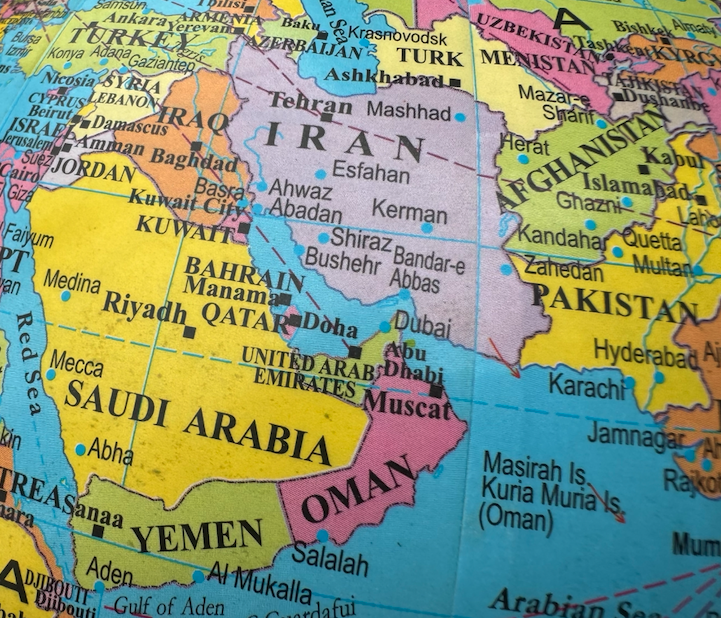
We covered a lot of ground, but one image stuck with me: He called the Strait of Hormuz the sword of Damocles hanging over the global economy. For decades, the world’s most critical energy chokepoint has dangled there.
A surprise 92k decline in February nonfarm payrolls and a rise in the unemployment rate to 4.4% signal some labor market softening, though stronger ISM manufacturing and services readings and still-low jobless claims suggest the broader U.S. growth backdrop remains intact.
The worsening energy shock from the Iran War has raised risks of a more severe crisis. It may resolve quickly, but the longer it persists, the larger the possible economic damage. Asia and Europe are most vulnerable.
The Institute for Supply Management (ISM) conducts a massive monthly survey of hundreds of Purchasing Managers, which are the executives responsible for buying the raw materials and supplies that keep companies running.
Iran's de facto closing of the Strait of Hormuz precipitated the latest in a series of energy crises. Since the 1970s, some energy spikes were associated with weak stock markets, but some were not.
Supported in part by a growing U.S. defense budget, legacy aerospace and defense ETFs are performing admirably. A trio of those funds each have more than doubled over the past three years.
Deep value stocks remain our highest conviction long-only investment idea. Globally, they trade at abnormally wide discounts and offer attractive expected returns in an environment where many equities trade at elevated valuation levels.
In this article, Russ Koesterich notes the year-to-date strength of both cyclical and defensive stocks, a pairing that seems too strange to last.
For the second time in less than a year, the United States is engaged in military conflict in the Middle East. And once again, investors must assess how escalating tensions could affect markets.
A healthy mix of income and growth potential may yield a more effective equity allocation.
As the capital expenditure (capex) race for compute continues, we thought that it would be worthwhile to briefly outline the current state of play facing the well-publicized data center buildout. To understand why so much capex is needed to support artificial intelligence (AI), we must first understand how data centers are built and operated.
Investing is an exercise in decision making under uncertainty. No single signal—no matter how intuitive or well supported by history—captures the full complexity of markets.
The OBBBA expands Section 1202 benefits, allowing certain C-corp business owners to exclude significant capital gains. This complex provision requires specific holding periods and asset tests, making professional guidance essential to maximizing these tax savings.
Volatility spiked as investors questioned the Federal Reserve's next move, adding to existing concerns about private credit markets. Here's why investors shouldn't overreact.
State Street Investment Management is continuing its push into the intersection of public and private credit with the launch of a new ETF.
The military conflict in Iran and the Middle East is curtailing the global flow of oil and natural gas. This adds notable pressure to energy prices and the near-term inflation outlook, while also raising questions about countries’ reliance on energy imports and their economic resilience.
In this second installment of our series, Chuck Carnevale, co-founder of FAST Graphs and widely known as Mr. Valuation, takes a deeper dive into the S&P 500 to demonstrate how investors can uncover potential opportunities within an otherwise expensive market.
At these levels, valuations are stretched, leaving investors with little potential upside and increased vulnerability to spread widening. In our view, such an environment warrants a shift toward high-quality assets.
North is south, south is west, west is east, east is north, up is down, and down is steady. This week’s employment reports have something for everyone, which is precisely why we should interpret them cautiously.
Prior to the conflict in the Middle East, the U.S. financial markets were being confronted with headlines and attendant concerns surrounding the credit markets.
Kitty Hawk, North Carolina is known as the birthplace of aviation. Success did not come overnight. The Wright Brothers spent three years on the Outer Banks experimenting. While they ultimately took flight, the potential downsides of their endeavor were of constant concern.
The size and duration of the oil-price shock are key variables in determining the ultimate impact.
Have no fear—ETFs tracking crude oil, natural gas, and even wholesale gasoline futures are at the ready.
Spring training started in Arizona recently and it reminded us of the 2025 World Series. The series ended a Major League season which was delightful and instructive.
Soaring oil prices and the military conflict in Iran are among the primary reasons the MSCI EAFE Index is off nearly 6% over the past month.
Adam Hetts and Oliver Blackbourn discuss where they assess the market implications of sustained conflict with Iran, examining energy shocks, inflation pressures, and what prolonged instability could mean for investors.
LPL Research reviews how the Iran conflict is affecting markets, highlighting energy risks, market resilience, and what investors should watch in the weeks ahead.
The “fiat is dying” argument has become a catchphrase narrative among digital asset bulls, gold bugs, and cryptocurrency advocates. That narrative’s core is that central banks have printed vast amounts of money.
If tensions de-escalate soon, there could be relatively little impact on international markets. However, risks will rise if global energy supplies face a prolonged disruption.
On February 27, 2026 the United States and Israel launched a coordinated strike on Iran’s leadership, killing Ayatollah Ali Khamenei and many of the leadership team. Since the initial attack, a torrent of strikes has continued, designed to take out Iran’s ballistic missiles and leadership apparatus.
The Treasury market is stuck between artificial intelligence (AI)-driven job displacement and the ongoing conflict in Iran. Earlier in the year, Treasury yields fell sharply as investors weighed the possibility that accelerated AI adoption could slow economic growth by displacing labor.
Ongoing military actions in the Middle East have increased investor uncertainty. Of course, geopolitical risk has always existed, and this time is no different.
The ongoing conflict involving Iran and the disruption to energy markets has moved beyond headline risk and is now influencing expectations for growth, inflation and policy. As of March 9, oil prices briefly breached the $100 per barrel threshold — a development that shifts the macro conversation compared to last week.
Japan is a major oil importer. That explains the vulnerabilities of the country’s equity market to conflict in Iran. Over the past month, the MSCI Japan Index is off about 2%.
2026 has kicked off with investors on the lookout for opportunities in a broadening market. While tech remains an important part of countless investor portfolios, it’s not the only category offering opportunities.