History suggests the lagged economic effects of tighter central bank policy are arriving on schedule, but any eventual normalizing or even easing of policy will still likely require inflation to decline further.
The Franklin Templeton Investment Solutions team examines the earnings outlook for 2023, and why it might make sense to be defensively positioned.
The news of the shocking OPEC+ announcement of a supply cut is saturating the minds of investors and market prognosticators.
Silver led precious metals markets higher last week.
The risk of Japanese inflation getting out of control is not high.
As banks back away from credit creation, we think certain assets could reassert their leadership. In our Quarterly Strategy Report, we analyze the Credit Crunch.
A tricky situation is unfolding, making it rather difficult for the Federal Reserve Bank to honour earlier promises to gradually ease off in its ongoing fight against inflation.
The US Federal Reserve's growing list of policymaking, supervisory, and communications failures is becoming increasingly consequential not just for Americans but also for the rest of the world.
If you were bullish for 2023…congratulations!
Natural gas prices remain in their steep price decline as the prospects for a large gas surplus heading into the spring is keeping buying interest at bay.
This essay focuses discusses a February visit by Secretary of State Blinken to Astana, and the EU-Central Asian Economic Forum in May.
If I did not have bad luck, I would have no luck at all.
Chief Economist Eugenio J. Alemán discusses current economic conditions.
Despite an ongoing “banking crisis,” investors continue to chase stocks triggering several bullish buy signals.
Remember when banks were small? Those old enough to have a bank account in the 1970s should. Back then, most people did their banking with a locally owned institution, often the First National Bank of (Your Town).
Gold appears to be well-positioned for a strong pump that could carry it to new all-time high prices in 2023—and beyond. As you know, I’ve been following and writing about the precious metal market for a very long time, and I see a number of unique catalysts at the moment that could contribute to higher gold prices.
In many ways, the process of filling out a bracket is like investing. It requires balancing risk and reward, while maintaining discipline.
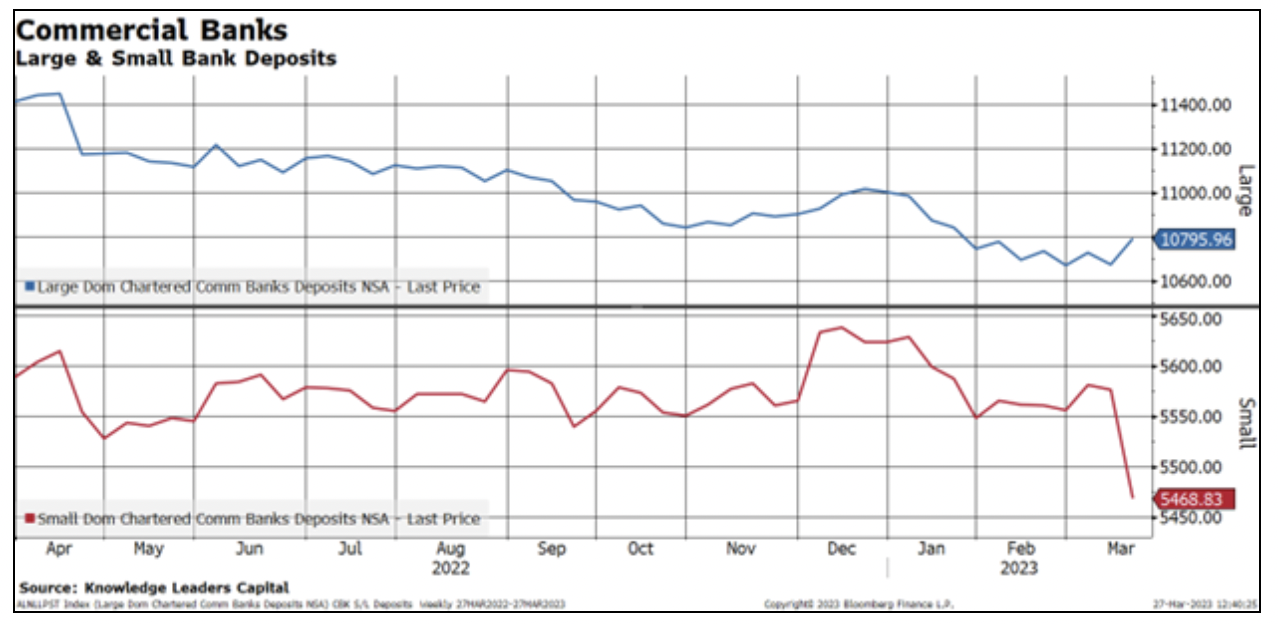
Worries about the health of the overall banking system have led to a drawdown in deposits, with investors yanking nearly $100 billion in deposits from U.S. banks during the week that ended March 15. What’s more, there are fears that the stresses in the banking sector could be the start of the next financial crisis.
Stocks built on overnight gains and Treasury yields inched lower following today's relatively benign February PCE inflation data.
Recession indicators are ringing loudly.
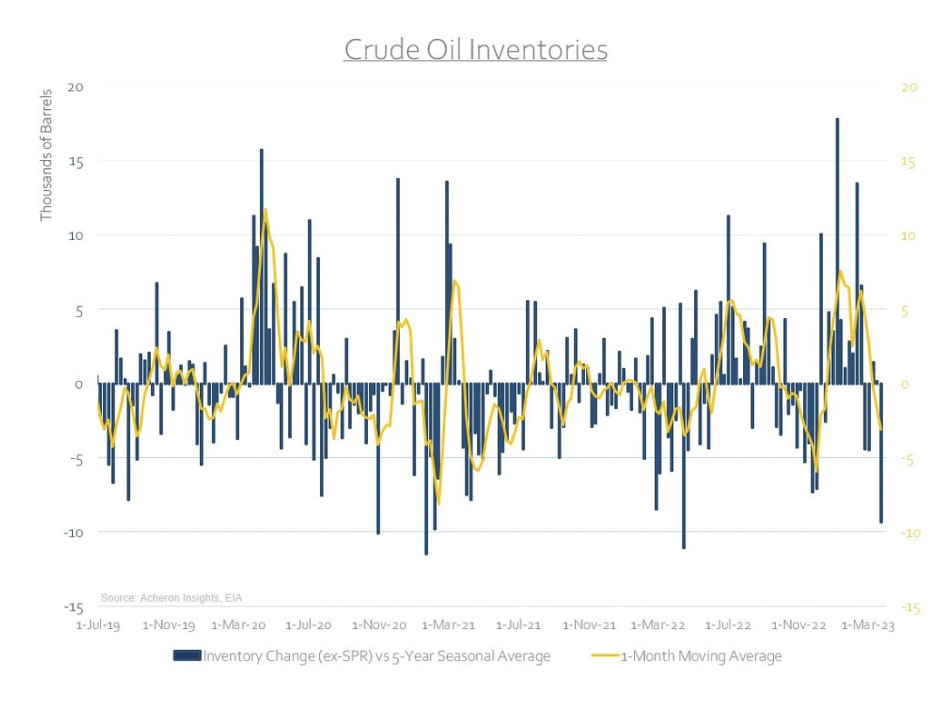
Up until recently, crude oil inventories saw continued build after build, suggesting the real time supply and demand dynamics in the market have been tilted toward the bearish side of the ledger.
It’s been—to put it mildly—an interesting time in the US Treasury market.
The investment landscape is pockmarked by intractable statistics that continue to impose strategic and psychological barriers to the short term potential of portfolio alpha.
Fixed income spreads have widened across sectors over the past few months.
What are the implications of the ongoing volatility in the banking sector, and what does it mean for markets in Europe and globally?
Not all stocks are the same, and not all stocks serves the investor’s needs.
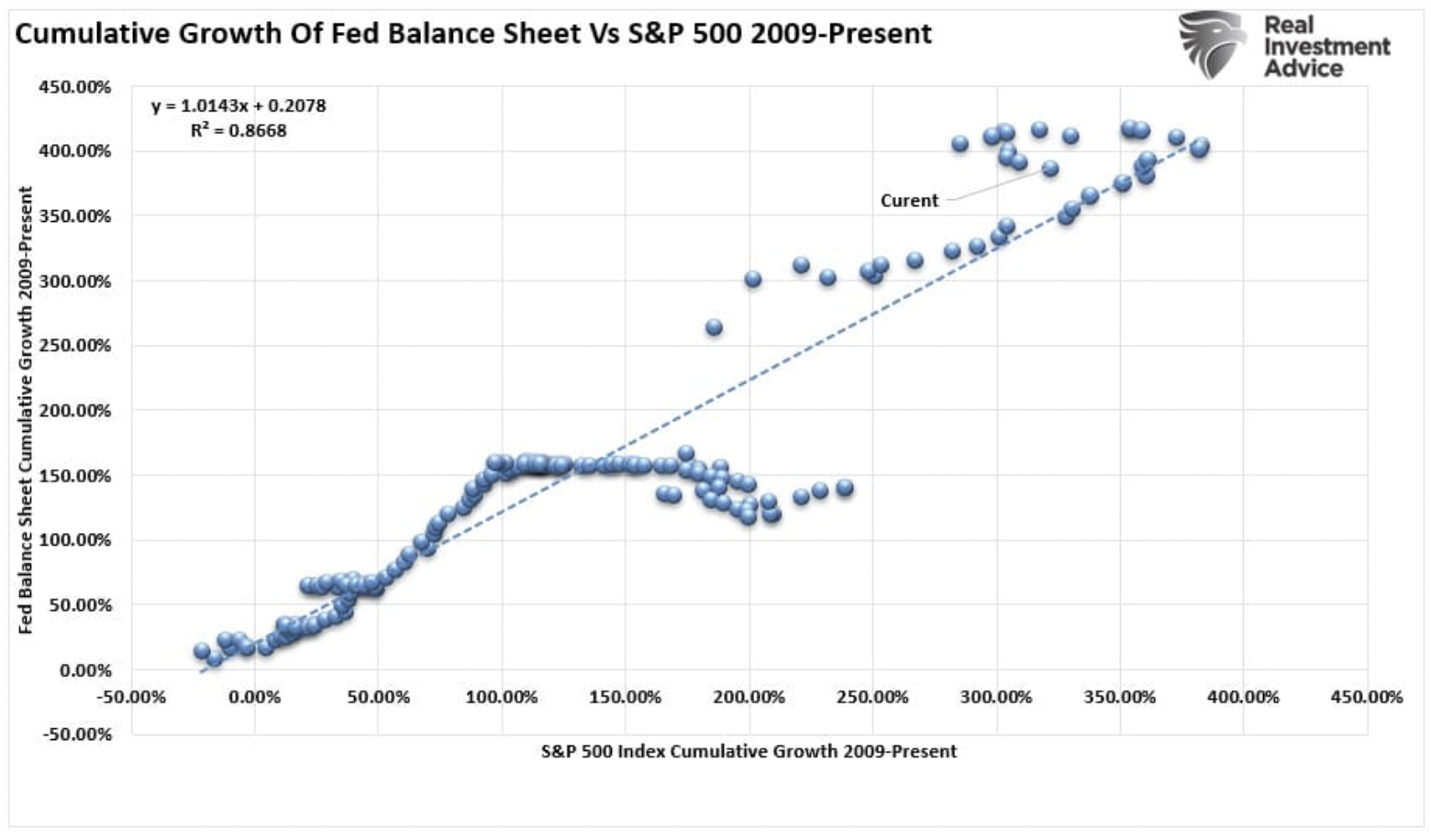
“QE” or “Quantitative Easing” has been the bull’s “siren song” of the last decade, but will “Not QE” be the same?
In the face of high and persistent inflation, recession risks, and now a looming insolvency crisis in the financial sector, central banks like the US Federal Reserve are facing a trilemma.
There has been surprisingly little worry reported by advisors and readers in the past couple of weeks.
The Northern Trust Economics team shares its outlook for growth, inflation, employment, and interest rates.
The bipartisan push to ban TikTok in the US reflects both the growing distrust of China and lawmakers’ limited understanding of the tech world.
The Senate Banking Committee held a hearing to investigate the collapse of Signature Bank (SBNY) and Silicon Valley Bank (SIVB/SIVBQ) that brought to discussion possible changes for the entire banking system.
From the perspective of the U.S. stock market, 2022 was a miserable year (with the S&P 500 declining 19.4%), but until recently, 2023 was shaping up to be a stronger year.
The failures of Silvergate Bank, Silicon Valley Bank, Signature Bank, and the current struggles of First Republic and Pacific Western Bank have seen bank deposits flee to the perceived safety of large banks.
VICI Properties Inc. (VICI) from their website: “VICI Properties Inc. is one of the country’s largest owners of gaming, hospitality, and entertainment destinations.
Predicting spot exchanges is tricky, but there are still ways of adding value in currency markets, including through a disciplined approach we call currency factor investing.
The demise of a major bank illustrates the global tensions in the financial sector.
Doug Drabik discusses fixed income market conditions and offers insight for bond investors.
Beyond the near-term turmoil, there may need to be a re-evaluation of the regional banking model in the United States, according to a recent panel hosted by Stephen Dover, Head of Franklin Templeton Institute.
As we discussed last week in Looking to the Futures, natural gas prices have been plagued by the perfect storm of lower demand and higher production throughout the withdrawal season.
The Federal Reserve’s balance sheet grew by $394B in the past two weeks.
The Federal Reserve raised short-term interest rates by another quarter point on Wednesday.
The fallout from SVB will make the Fed's job more difficult.
Review the latest Weekly Headings by CIO Larry Adam.
Stock and bond markets were shaken by the recent banking crisis in the US and Europe.
Realty Income, A.K.A. the Monthly Dividend Company, has rarely been attractively valued since the spring of 2010. However, rising interest rates have brought the price down to fair value.
Slower credit growth may curtail broader U.S. economic growth, taking pressure off the Federal Reserve.
Recently I saw someone share a clip from their weather app. It said, “Rain expected at 3 pm,” right above a little graphic showing a 30% chance of rain at 3 pm. What’s wrong with that picture?