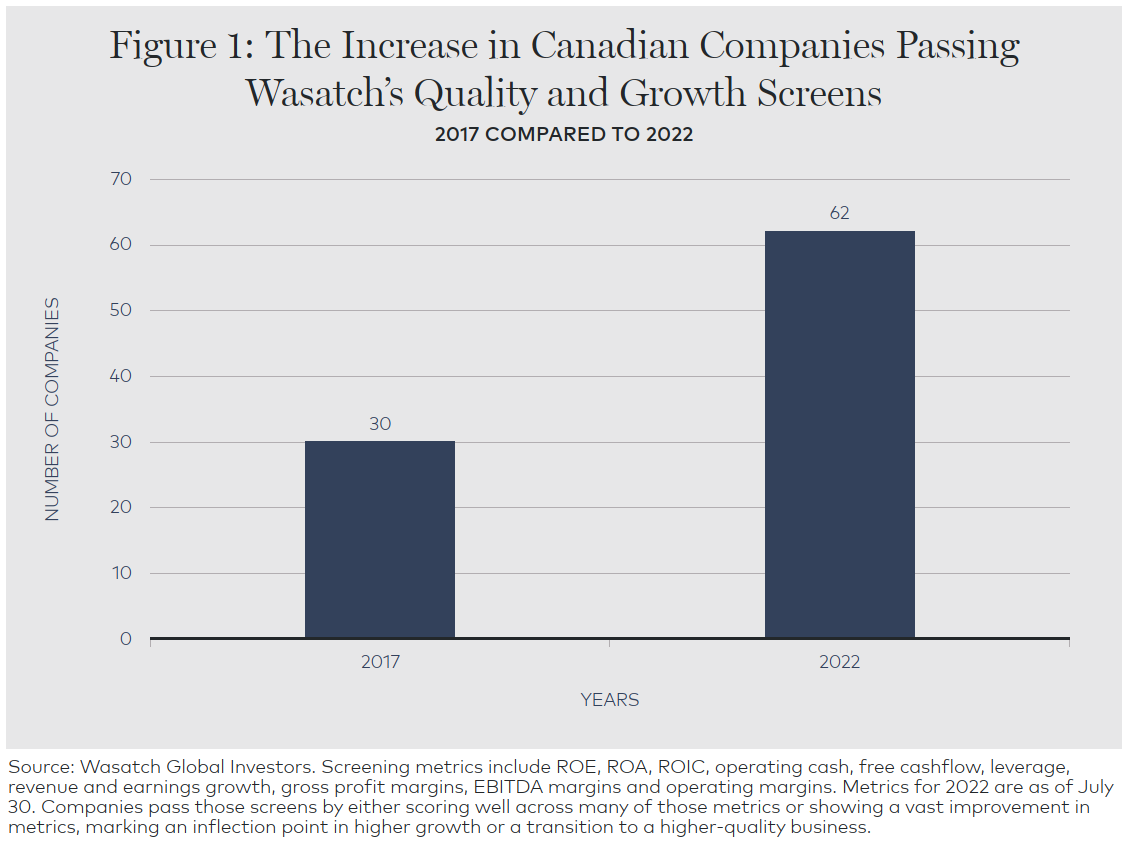
We’re currently finding the most compelling opportunities within three countries—Canada, the United Kingdom and Japan.
Since our last note for Advisor Perspectives, we have seen some more stock market volatility.
The S&P 500 had its worst day since March 2020, but don't lose sight of the bigger picture, said Larry Adam, chief investment officer at Raymond James.
We believe short-dated bonds can offer attractive yields, flexibility, and a means to proceed cautiously as central banks continue to raise interest rates.
The Northern Trust Economics team shares its outlook for growth, inflation and interest rates.
Over the years, I’ve explained at length why I’m not interested in forecasts, but I’ve never devoted a memo to explaining why making helpful macro forecasts is so difficult. So here it is.
Dividends and dividend-paying stocks are getting renewed attention in recent months.
Jim Pass, head of project finance for Guggenheim Investments, and Kate Newman from the World Wildlife Fund talk about the most recent research collaboration between Guggenheim and WWF, a survey of infrastructure investors and developers.
We more than doubled our portfolios’ duration in a single day this summer.
Using our proprietary point-and-figure-based charting system, I review a couple thousand charts per week in an attempt to identify interesting buy or sale candidates.
At the Jackson Hole Summit, Jerome Powell made it clear the Federal Reserve remains focused on combatting inflation despite recession signals rising in tandem.
The silver market scarcity has begun to resolve. We discuss what the data in the silver market is saying and why the market has become a Keynesian Beauty Contest.
I had dinner with a local friend of mine last week.
Yesterday’s inflation print was a big surprise—a bad one.
U.S. equities are modestly higher in afternoon action on the heels of yesterday's sharp drop that came as consumer price inflation surprisingly came in hot.
The S&P 500 is a popular proxy to represent the state of the stock market.
Chief Economist Eugenio J. Alemán discusses current economic conditions.
The Federal Reserve may be pressured to target a higher terminal fed funds rate as it seeks to tame U.S. inflation expectations following strong price rises in August.
Writing off a portion of student debt does not fix the core challenges of paying for higher education.
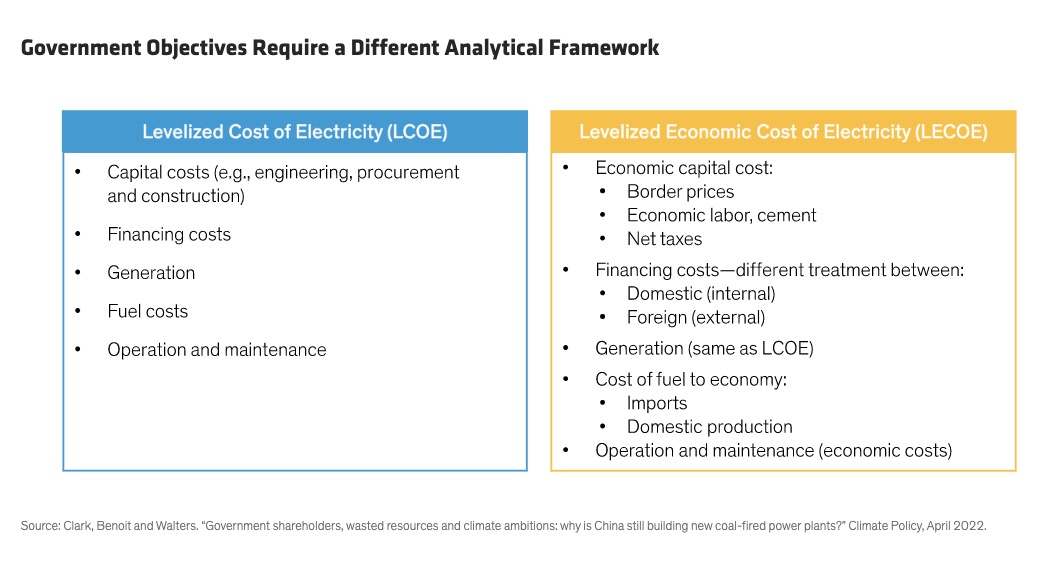
China has pledged to reach carbon neutrality by 2060, and state-owned enterprises (SOEs) are responsible for half the country’s CO2 emissions.
Over the summer, we’ve been told that inflation rose to a 40-year high.
Silver rallied to start the week as all contract months were up four percent or more.
Thanks to reading Spencer Jakab’s book, The Revolution That Wasn't, we've been thinking about what it is like to be in a short position when overwhelming demand affects prices.
Shopify is a leader in commerce solutions that allow merchants to set up online stores and sell their products.
The pandemic surge in demand for houses has run its course.
The Moscow World Standard has been the subject of rumors and speculation. Can it take out the LBMA incumbent? Will Russia be able to push up the price of gold? We breakdown the dynamics and discuss.
Widening participation in the Fed’s standing repo facility and bond buying programs could mitigate another liquidity crisis in the Treasury market.
If you’re still wondering how much the Federal Reserve will raise short-term interest rates next week, you should wonder no more: the Fed is almost certainly going to raise rates by three-quarters of a percentage point (75 basis points), just like it did back in both June and July.
U.S. stocks are starting the week in positive territory, extending last week's advance that snapped a three-week losing streak.
This year has been a tough one for retirement savings. Inflation is high, markets are volatile and it’s hard to know where we’ll be in a few weeks, months or even a year.
During this period of economic uncertainty and market stress, investors may be surprised to discover how a strategy targeting stocks that lose less in a downturn can beat the market over time.
We have always believed that common sense is the key to successful investing.
The war against inflation will be won when we no longer need to worry about it.
Last year, I wrote an article discussing that 2022 earnings estimates were too optimistic given the impending reversal of the economic “Sugar Rush” of massive liquidity injections.
Today, about 1% of our vehicles are electric. What will happen in 2035 when many more EVs need to be charged, potentially during another heatwave?
Many ask if Jerome Powell can emulate Volcker. We will certainly find out. But much has changed in 42 years. Does Powell even need to emulate Volcker? Here, some prominent economists disagree. Today we’ll talk about the issues.
U.S. stocks are continuing to trade higher in the final session of the week and are on pace to end a three-week losing streak.
Review the latest Weekly Headings by CIO Larry Adam.
Small business sales are the lifeblood of the economy.
The Fed's program of QT has flown under the radar for a lot of reasons. That low profile belies its importance, however. Not only is the Fed likely to persist in this program, but it will create a strong headwind for risk assets.
As one of us points out relentlessly, risk isn’t a number, rather it is a notion or a concept.
Value investing is all about finding bargains that meet your investment goals and provide a margin of safety long-term. HP Inc (HPQ) and Hewlett-Packard Enterprises (HPE) represent two dividend growth stocks with uncanny similarities regarding valuation and yield.
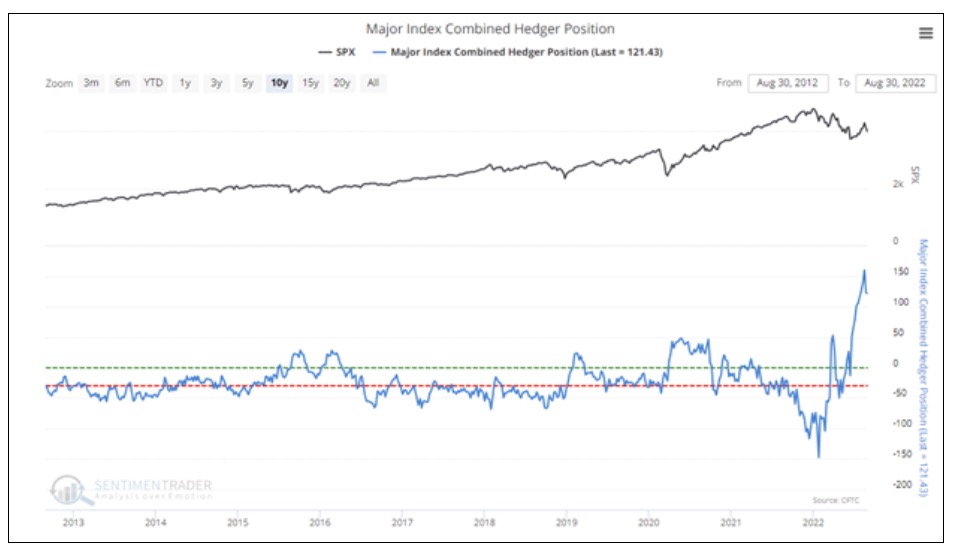
Last week, the combined dollar value of hedge positions on the S&P 500, NASDAQ 100 and Dow Jones Industrial indexes was $121.43 billion, not far from the August 16 peak of $160.02 billion.
Franklin Mutual Series’ Investment Strategist Katrina Dudley believes that higher inflation in Europe stemming from rising energy prices, as well as lower relative interest rates, may keep the euro under pressure.
Recent inflation is a poor forecaster of changes in treasury yields. Pronouncements of a break in long-term treasury yield trends based solely on inflation may be mistaken.
A few weeks ago, I said the bear market was over. What if it isn’t? Don’t interpret this as cold feet—it’s good to understand the other side of the argument.
August was a resumption of the earlier pullback after a surprisingly strong July.
Downside volatility has reappeared with markets responding sharply to Federal Reserve comments about the future of interest rates.
Workers take time to reach their full potential in new jobs.
CIO Robert Horrocks, PhD, says in order to reconcile assumptions on inflation with what might actually transpire, investors need to look through a wider lens and be prepared for a future that may not look too different from the past.