The war in Ukraine has contributed to inflation in the short term, but there’s much more to the story, which began way before Russia invaded its neighbor.
An unusually strong tug of war between economic forces is playing out in global markets, with a booming economy and low unemployment offset by the effects of the Russian invasion of Ukraine and expanded inflation. Expectations over the timing and magnitude of Fed interest rate increases rapidly evolved as clarity began to emerge around central bank responses to inflation.
Value has trounced growth this year, and high dividend companies have outperformed. Matt Wagner discusses the global dividend investment opportunity: emerging markets.
Today, we’re talking about why the war in Ukraine was such a dud for the bears.
The Northern Trust Economics team shares its outlook for growth, inflation and interest rates.
What does baseball have in common with exchange-traded funds (ETFs)?
Over the past decade it has seemed like Value investors have been very much left on the sidelines, bemoaning rampant speculation and valuations untethered from fundamental reality, while Growth investors have, quite frankly, been living it up in some style.
To start, let’s discuss what diversification is and what it is not.
While Beijing has set an ambitious growth target this year with a generous fiscal stimulus plan, new COVID-19 waves are adding to mounting headwinds amid a slowing global economy.
China’s currency, the renminbi (RMB), remains strong even though many of the factors that have driven its performance over the last two years have weakened.
The war in Ukraine is shifting the conversation on what a post-COVID-19 world will look like.
The market was tough in the first quarter. Find out what it means for long-term investors.
Central to my market and macro outlook at present is the likelihood we are amid a growth cycle downturn that is looking to decelerate meaningfully in the coming months.
In his federal budget for fiscal year 2023 that he unveiled earlier this month, President Biden proposed a huge new tax increase on America’s wealthiest citizens.
The "end of globalization" is a phrase that has come up a lot lately.
The Fed is tightening into a growth slowdown
As a firm, we refrain from delving into politics and political debates.
It’s not just interest rate changes that affect the markets, changes in the Fed balance sheet can also be a source of negative returns to equity and bond markets.
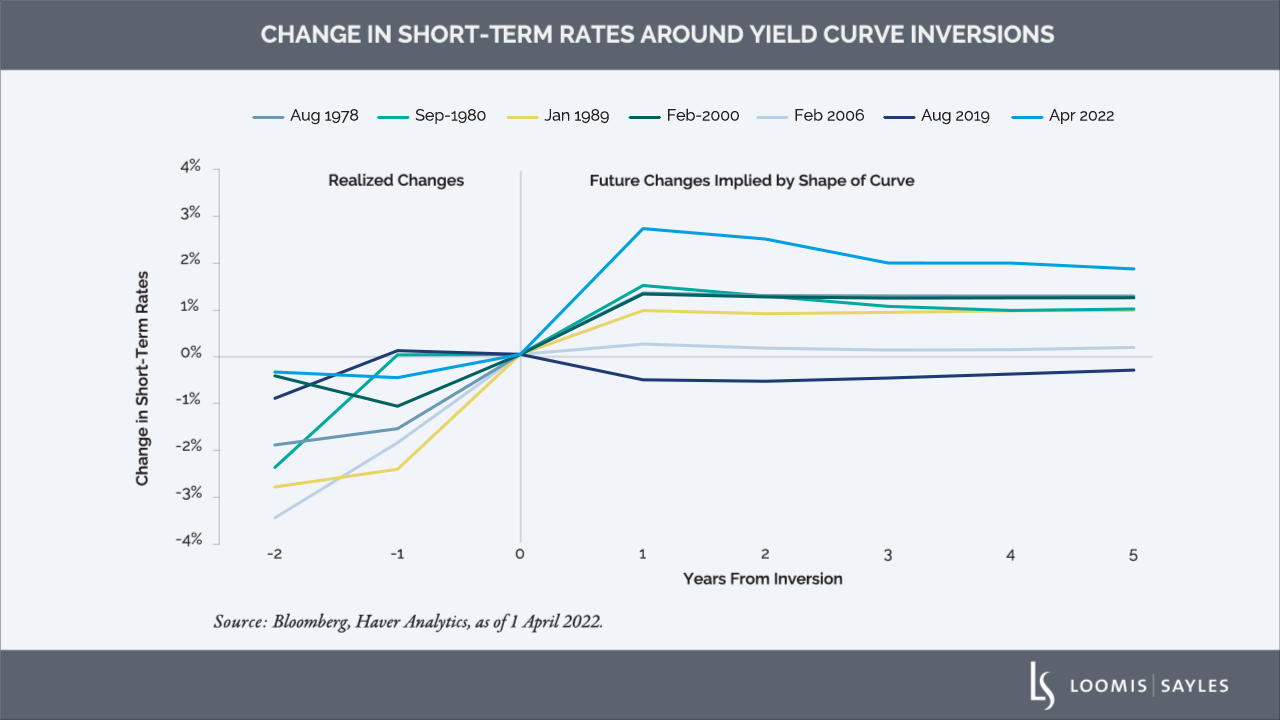
Though we are wary of suggesting that “it’s different this time,” we see reasons to believe the most recent yield curve inversion doesn't signal imminent recession
Review the latest Weekly Headings by CIO Larry Adam.
There was a little March Madness on Wall Street.
When interest rates go up, many analysts start to worry about recessions.
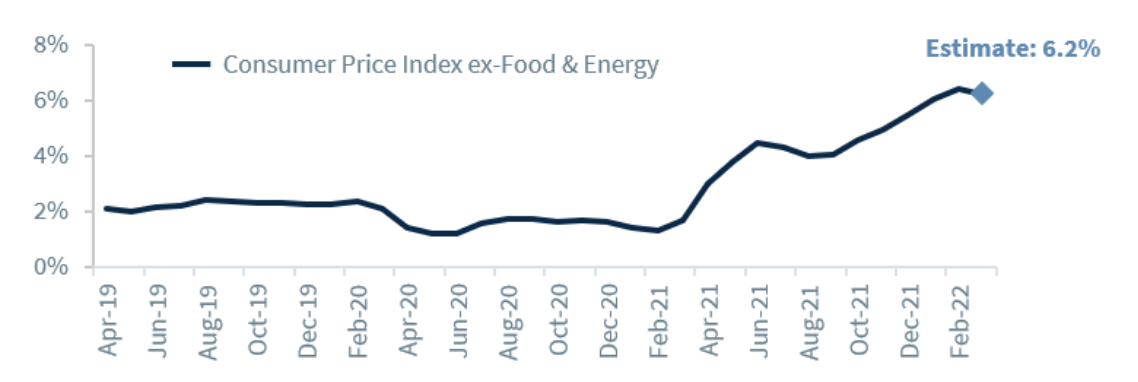
The Russian invasion of Ukraine has added pressure to the inflationary cycle that began in late 2020.
Markets rebounded in March, but it was not enough to offset earlier losses in January and February.
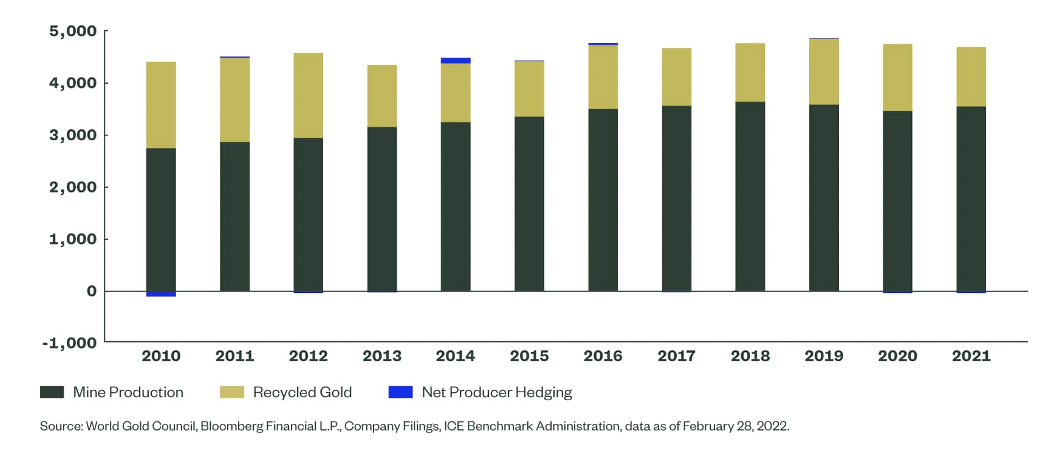
George Milling-Stanley, Chief Gold Strategist at State Street Global Advisors, discusses the current gold market environment as well as several reasons why investors can remain optimistic about gold’s outlook moving forward.
Did Goldman Sachs destroy a persistent myth about investing in stocks? Sam Ro recently suggested such was the case for the “sacred CAPE ratio.”
An estimated 30,000 people attended this week’s Bitcoin 2022 conference in Miami, which is rapidly becoming a major global crypto-finance hub.
Today we’ll consider the risks to my stagflation forecast. Note that’s different from the risks of my forecast, should it prove accurate. I’ve described those already but it’s important to ask how I might be wrong.
What role do financial statements play in climate change?
Supply-chain disruptions are testing companies around the world.
Underlying oil market fundamentals – good ol’ supply and demand – are as bullish as they have been over the past decade, says Pavel Molchanov, Managing Director and Energy Analyst for Raymond James Equity Research.
The bull market has created a lot of risk for prudent value investors.
For a confluence of reasons ranging from COVID to property sector problems, China has been experiencing slower growth. Many cross-asset relationships suggest that a devaluation in China could help spur growth.
“Anatomy of a Bear Market” by Russell Napier is a “must-read” manuscript. Given current market dynamics, a review seems timely.
A “soft landing” scenario is not so straightforward in the current context. We have emphasized companies that we believe have pricing power because of the mission-critical or value-add nature of their products and services.
A look at the recent shift in bank loan and high yield bond correlations and why it matters for fixed income investors.
It's no secret that in fixed income markets, excess performance above the benchmark is difficult to achieve over the long run.
With the US Federal Reserve (Fed) and other central banks going down the path of increasing policy rates, it seemed a good time to look at market impacts over the last 40 years or so.
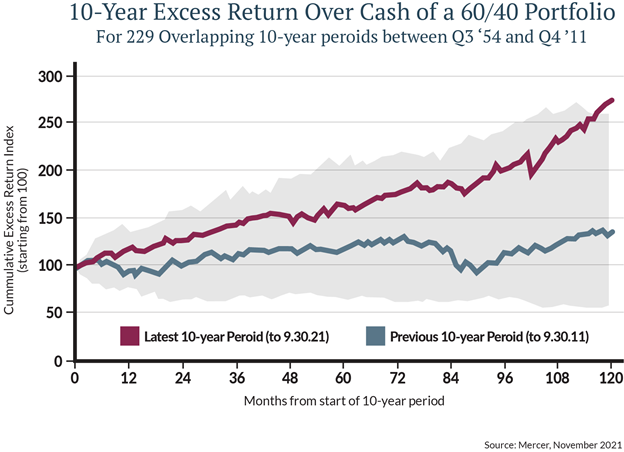
Given that (1) investors have benefitted from a market environment that reliably produced a source of positive returns from a 60/40 mix, and (2) we’ve just completed the best period for that mix in nearly 70 years of tracking, why would an investor want to consider a change?
Putin's invasion reminds us that we live in a finite world in which resource prices tend to rise.
As we have noted in this space in the past, there is a lot of the world that cannot be captured by the most elegant and detailed of spreadsheets.
The Bluetooth logo is a bind rune merging the Younger Futhark runes(Hagall) (ᚼ) and (Bjarkan) (ᛒ), Harald’s initials.
John Vail, Chief Global Strategist at Nikko Asset Management, discusses Nikko AM’s Global Investment Committee views on current global market drivers as well as expectations for the markets moving forward.
We saw a bit of a bounce in stock markets in March, but not enough to recover from a terrible first quarter.
…war is an old habit of thought, an old frame of mind, an old political technique.
The first quarter of 2022 brought violence that rocked communities – and markets – internationally. We look at what aftershocks may still be yet to come.
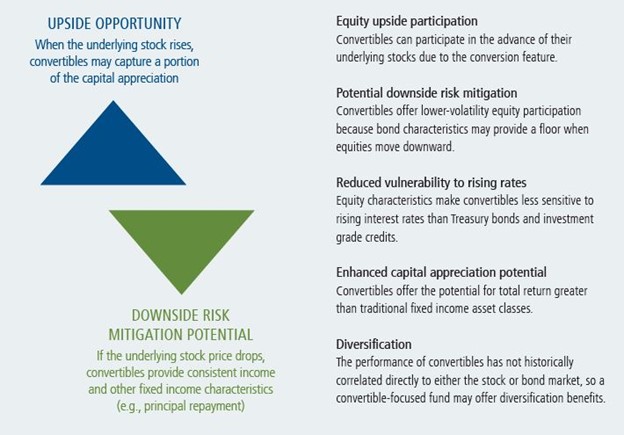
Diverse opportunities in Global Convertibles, as well as structural features, provide tailwinds to counter rising rates and equity volatility. In rising rate environments, convertibles have historically done quite well relative to longer-duration traditional fixed income investments.
The news of Berkshire Hathaway’s purchases in Occidental Petroleum (OXY) has been seismic in our minds, but to most investors it has been but a whimper
There is no shortage of headwinds facing both the market and the economy: the tragic Russian invasion of Ukraine and attendant commodity/energy crisis; the Federal Reserve's transition from accommodative to tighter monetary policy; and increased chatter of a recession on the horizon; among others.
CIO Robert Horrocks, PhD, examines the ramifications of Russia’s invasion of Ukraine on China’s trade and economic strategy and the implications the conflict has for Asia’s development and markets.