Global power demand is surging, energy security is the new macro imperative and innovation across grids and generation is redefining what “secure power” means for investors.
There are numerous hedging tools, each with its own benefits and drawbacks. One increasingly popular choice is the inverse exchange-traded fund (ETF), a vehicle designed to move opposite its benchmark and offer a straightforward way to target downside protection in a portfolio.
The “active” in active ETFs simply means there is not an underlying index. This somewhat obvious statement, made last February in my predictions column, was intended to dispel the misconception that active somehow means more risk or more tracking error, which certainly is not the case.
South Korea has been the top performer in 2025 in emerging markets equities through December 15, generating a 70.9% return in U.S. dollar terms. It has outperformed peers as well as developed markets, including the U.S.
Participants’ financial well-being is our top priority, and we know that they’re struggling with emergency savings, so we’re offering a way for participants to save with confidence—the Vanguard Cash Plus Account.
As we get ready to close out 2025, one stand-out trend in the U.S. Treasury (UST) market has been the steepening of the yield curve. The question now is whether this trend will continue into 2026, and if it does, how should investors position their bond portfolios?
AI remains the economy’s most powerful growth engine, but our Small Cap Growth team believes several other areas are also likely to deliver significant upside in the near-to-medium term.
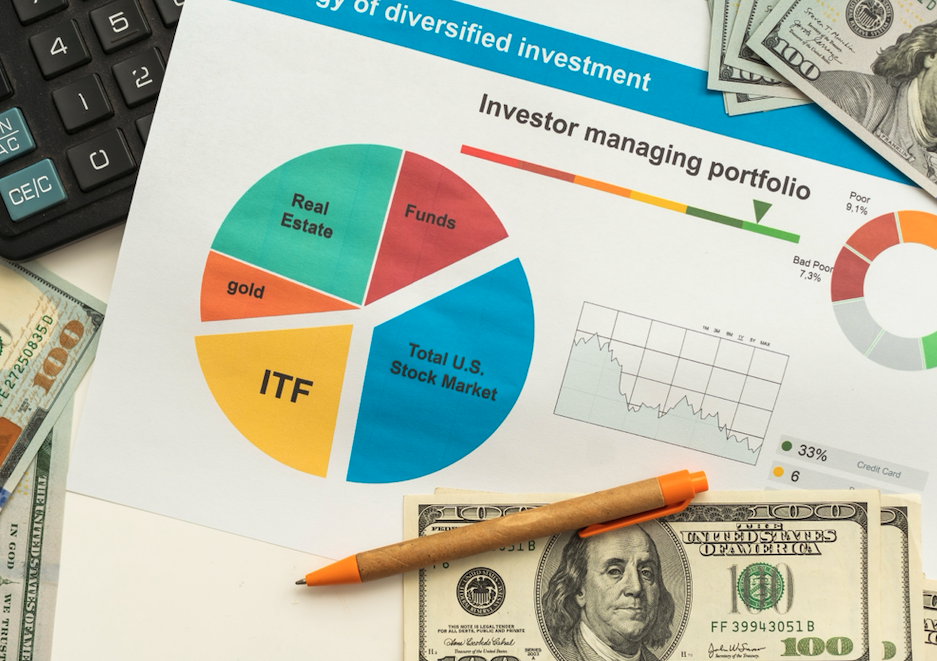
Finding ways to effectively diversify a multi-asset portfolio allows investors to maintain their strategic equity allocation while managing risk. We may be entering a period when bonds can, at least in part, start to once again fulfill that function.
In a recent episode of the Money Metals podcast, host Mike Maharrey sits down with Peter C. Earle, PhD, of the American Institute for Economic Research (AIER) to unpack what the gold standard actually is—and why it still matters in a world of fiat money.
2025 was a good year for most fixed income markets but we’re approaching 2026 with caution. All-in yields are still attractive for most markets, but spreads (the additional compensation for owning riskier debt) are low, suggesting investors aren’t getting paid to take on a lot of credit risk right now.
As the dollar weakens and the migration to international equities continues, investors might still be on the fence when it comes to getting exposure.
Barring a miracle, bitcoin will end 2025 in the red, marking just the fourth time the largest cryptocurrency has done so in its history.
The Santa Claus Rally often grabs headlines because markets tend to deliver solid gains during this short window — or perhaps because it falls during a typically quiet news cycle.
Now that the Bureau of Labor Statistics (BLS) released the delayed October and November nonfarm payroll numbers, do we know more about the US labor market than we knew before the release? Probably not.
We guess if you say something enough, a lot of people will start to believe it. The current refrain is that the labor market is cold, weak, struggling. A Google search for “labor market” is eye opening. The first five headlines use the words ‘weakened,’ ‘troubling,’ ‘risky,’ ‘slowing,’ and ‘warning signs.’
CIO Sean Taylor reviews a year of strong performance across key Emerging Markets and Asia and looks ahead to robust investment opportunities in 2026.
It’s that time of year when Wall Street polishes up its crystal balls and begins predicting returns for 2026. Since Wall Street never predicts a down year, which would be unwise for fee-based product revenues, these forecasts are often inaccurate and sometimes significantly wrong. Let’s review some previous years.
Challenging the conventional view of gold as a bubble, this analysis explores whether the metal's 109% surge since 2024 signals a permanent paradigm shift rather than a looming crash.
After three strong years in a row, major indexes ended the year seeking direction. While optimism abounds, here are some potential issues that could trip up U.S. stocks.
2025 is drawing to a close, and investors have plenty to look back on. Active ETF performance and proliferation was once again an important theme, and as the category matures, its standout performers have diversified.
While often overlooked, water management plays an important role in oil and gas production. Oil wells typically produce more water than oil, while hydraulic fracturing (or fracking) requires water to be pumped into wells. Water infrastructure related to oil and gas production is considered midstream and is classified within gathering and processing.
Before we turn the page on 2025, let’s take a moment to reflect on the key trends that shaped the economy and financial markets this year. Despite heightened policy uncertainty and persistent geopolitical tensions, both proved remarkably resilient.
Portfolio customization and tax management were once reserved for a financial advisor’s wealthiest clients. That era is ending. Tax efficiency and customization are fast becoming core components of wealth management beyond the top income tiers.
This week, President Donald Trump ordered a blockade of oil tankers entering and leaving Venezuela, dramatically escalating U.S. pressure on the Maduro regime.
Last week delivered welcome news on inflation in the United States. The November report showed headline inflation slowing to 2.7% year-over-year and core inflation easing to 2.6%—both below consensus expectations of 3.1% and 3%, respectively.
As your balance sheet grows, the questions you ask about money tend to change. You move from wondering how to build assets to asking how long they will last, who will manage them after you, and how to keep family relationships steady along the way.
Driven by a more predictable regulatory backdrop and a surge in large-scale deal flow, 2025 has delivered the strongest merger arbitrage returns since the post-pandemic boom. This resurgence, characterized by narrowing spreads and a notable lack of failed deals, has set a robust foundation for continued activity into 2026.
The market’s big “aha” moment last week was a CPI print that came in meaningfully cooler than expected, followed immediately by the usual chorus that it must be “distorted.”
In this year-end reflection, we eschew the typical theater of market predictions to instead examine the "knew-it-all-along" effect and the cognitive illusions that make past volatility seem orderly.
This reflection reexamines the traditional Nativity narrative, suggesting that the "no room at the inn" dilemma was a result of government-mandated census pressures rather than the greed of a private innkeeper.
Reflections on the unexpected outcomes of an unpredictable year.
While assets under management have grown modestly, the fund’s impressive Sharpe and Information ratios—outperforming the vast majority of its peers—validate the efficacy of its strategic partnership with Apollo.
Over the last couple of years, inflation alarmists such as Paul Tudor Jones, James Grant, and Jeff Gundlach have all said that inflation is returning with force. In different ways, they each stated that they would not own Treasury bonds due to the expectation that inflation would rise as the dollar declined due to the ongoing deficits.
AI’s third wave could represent a broadening opportunity set of companies for investors to capitalize with. Businesses that adopt AI into their operations could ramp up productivity and expand their valuations at a rapid pace.
While only two official dissenters opposed the December rate cut, dot-plot projections reveal that six Fed members, including four “silent dissenters,” were against easing, signaling deeper division within the Fed than headlines suggest.
This article explores the tension between individual economic outlooks and the institutional desire for collective stability in a highly scrutinized environment.
Shifting geopolitics are causing policymakers in Europe and Japan to step up fiscal spending to gain self-sufficiency and generate growth.
A Retirement Ready Dividend Portfolio for Young Investors In Part B of this series, Chuck Carnevale, co-founder of FAST Graphs and “Mr. Valuation,” continues building a dividend growth portfolio designed for younger investors who still have decades before retirement.
Energy can be either an enabler or a constraint. The latter happens when our creativity gets out of sync with the energy we can apply to it. This is happening right now and will get worse as artificial intelligence data centers demand more power than we have available.
Macro Signposts highlights takeaways from the data analysis conducted by our team of economists and other experts.
As enthusiasm for artificial intelligence and its potential to reshape business models and deliver extraordinary profits accelerates, we worry that rational, disciplined investing is taking a back seat. Many investors appear to be abandoning fundamental analysis and prudent valuation in favor of paying any price to own the hottest stocks.
GMO has posted a new 7-Year asset class forecast as of November 30, 2025.
The global race to build AI infrastructure has accelerated sharply. Estimated capital expenditures now total more than $5 trillion, equivalent to the annual GDP of Germany.
Mark Twain said, “History never repeats itself, but it rhymes!” Time magazine just came out with its “Person of the Year.”
Price inflation has slowed, but that doesn’t mean prices are coming down. They just aren’t rising quite as fast as they were.
The era of "easy" yield in money market funds is ending as the Federal Reserve begins its long-awaited series of rate cuts. To stay ahead of shifting borrowing costs, investors are increasingly looking toward the flexibility and proprietary research of actively managed fixed income ETFs.
In the current installment of The Roundup, Oaktree experts explore the need for renewed vigilance in the direct lending market, discuss the future of private credit in Europe, identify the evolution of the high yield bond market, and reflect on the backdrop for emerging markets equities.
Franklin Equity Group’s Grant Bowers suggests the US economy may be approaching a Goldilocks equilibrium in 2026, supported by stable growth, anchored inflation and policy tailwinds.
Understand how a recession is defined and how to avoid common investment mistakes during recession-driven stock market downturns.
Investors navigating the 2026 landscape must balance a fragmented "K-shaped" consumer market against the tailwinds of falling interest rates and the "One Big Beautiful Bill Act" (OBBBA). Despite a cautious Federal Reserve and potential government shutdowns, the prevailing view is that structural transformation and fiscal support will foster economic resilience.