In practice, many advisors use SMAs alongside ETFs, not instead of them—combining the scalability of ETFs with the customization and tax management SMAs can provide.
Modern markets have gotten used to central bank support whenever the global economy wobbles. But as the world confronts a fresh energy shock unfolding against brittle labor markets, investors need to prepare themselves for the possibility that central bankers won’t have their backs — quite the opposite.
Some forms of technical analysis are often too much “inside baseball” for many investors. However, the concept of moving averages is one of the most important technical indicators and an easier one to grasp.
Proposals to engineer secondary trading in private assets, often championed by vocal critics of public market liquidity, have gained renewed momentum. For some, enhanced tradability is viewed as a remedy to growing unease over the absence of transparent, real‑time valuation signals in private portfolios.
Many investors think about getting out of the stock market when it gets bumpy. But history shows that staying invested over the long term has resulted in positive gains.
Gold was the highest-returning major asset class of 2025, advancing approximately 64% on the year. Its appreciation was supported by multiple reinforcing factors: elevated geopolitical uncertainty driving safe-haven demand, U.S. dollar weakness, sustained central bank accumulation, and strong inflows into gold-backed ETFs.
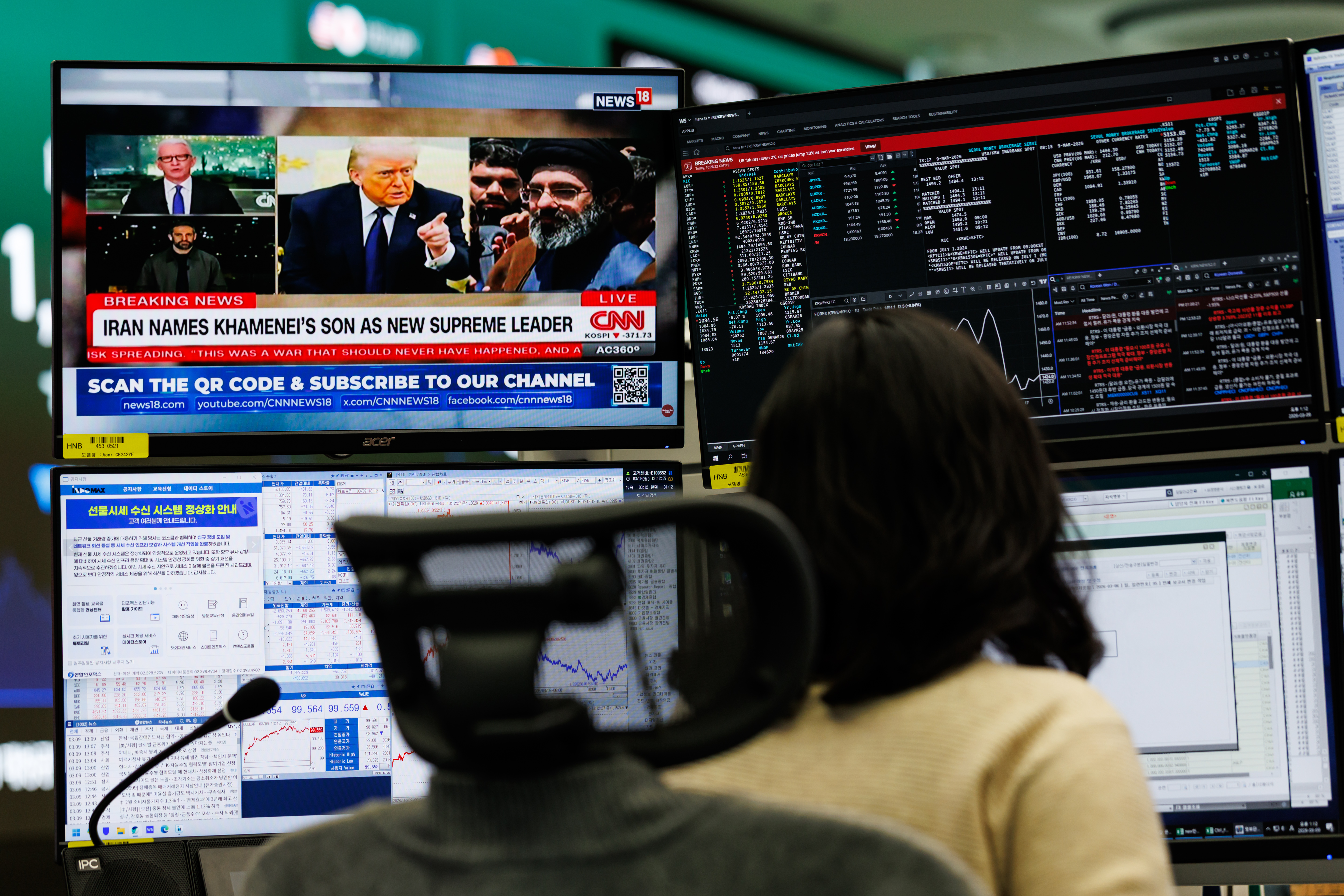
Confidence among global stock-market investors, who largely kept their cool in the face of an escalating conflict in the Middle East, is starting to wear thin.
Global markets stood on edge as the conflict in Iran upended energy markets and muddied the outlook for the global economy. Interest rate markets repriced as market participants processed the notion that hostilities and the closure of the Strait of Hormuz could last longer than expected.
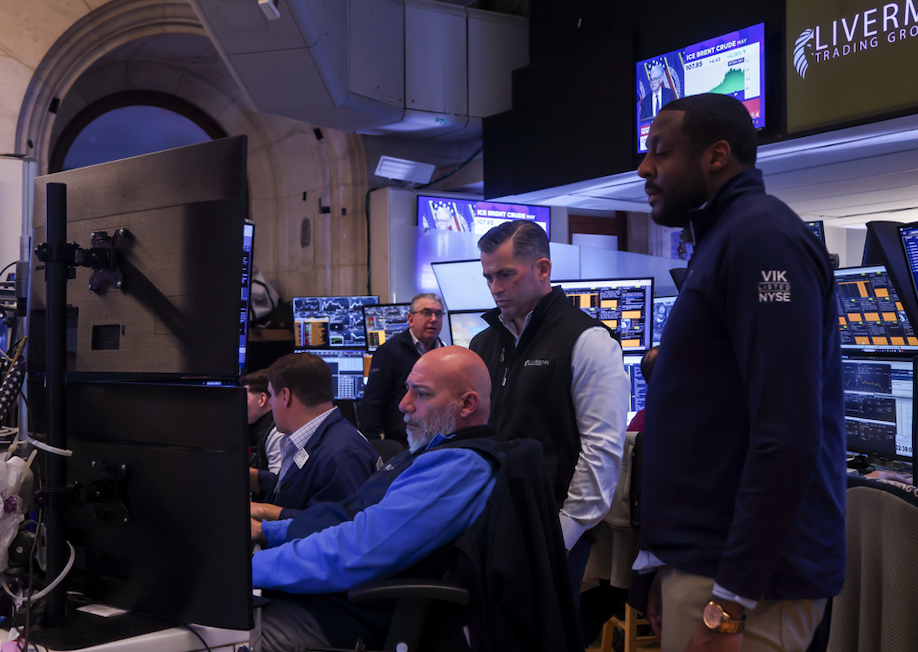
The Cboe Crude Oil ETF Volatility Index (OVX), which measures implied volatility in oil ETF options, estimates the expected volatility of crude oil prices over the next 30 days. The higher the reading, the more oil prices are expected to bounce around.
History made: Dimensional launches first active ETF share class. Access 40 years of micro-cap expertise in a tax-efficient ETF wrapper.
Muni bonds have been a strong performer so far in 2026, benefitting from an important transition to the ETF wrapper from mutual funds.
US futures extended a drop on Friday as earlier hopes for a quick resolution to the war in the Middle East faded. Meanwhile, traders braced for a historic amount of March options expiry.
As expected, there was no rate cut at today’s meeting, but changes to economic projections and comments at the press conference gave some light into how the Fed is processing political and geopolitical events, and how those events are shaping the Fed’s outlook.
A properly functioning Strait of Hormuz holds the keys to clarity around the growth, inflation, and market shock that has stemmed from the war in the Middle East.
Silver had a phenomenal 2025, more than doubling from around $30/oz to above $70 by late December, and the rally continued into the new year.
Private credit is a key pillar of debt capital formation alongside public credit markets and bank balance sheets. But an important part of its value proposition—to borrowers and end investors—is its illiquidity relative to public markets. That distinction is by design, and we think it should stay that way.
Economic dislocations create opportunities. While many market watchers are seriously concerned about the microshifts in markets and stocks, others may see the opportunities that emerge when oil prices spike.
Engaging with client family members may seem tricky, but it can start with simple questions to the client first. In fact, asking your client about the personalities and desires of their loved ones may be a way of deepening your understanding of your client’s financial needs.
Nate Geraci hosted a live ETF Prime episode from the Exchange conference in Las Vegas. The panel featured discussions on active ETFs and industry trends with Dimensional’s Wes Krill, and a roundtable of experts.
Alphabet Inc.’s Google is moving ahead with plans for a major data center in Michigan that features a 20-year electricity contract requiring it to cover the full expense of adding a haul of new clean power.
The federal funds rate will remain 3.5% to 3.75%. The 'dot plot' still projects a single rate cut this year, and the Fed sees slightly stronger economic growth and inflation.
Gold sank for a seventh session as the escalating war in the Middle East drove oil prices higher and reduced prospects for a US interest-rate cut in the near term. Silver slumped more than 10%.
JPMorgan Asset Management is issuing its first Taiwan-focused wealth management product in more than a decade, joining global rivals rushing into one of Asia’s hottest exchange-traded funds markets.
For ultra-high-net-worth families, the landscape of wealth stewardship is evolving. As the largest intergenerational transfer of capital in history unfolds, women are increasingly shaping the future of family wealth—not only as inheritors and beneficiaries, but also as creators of wealth, entrepreneurs, investors, and leaders guiding multigenerational strategy.
The FOMC held the fed funds rate at 3.50%–3.75% for a second straight meeting as policymakers weigh slowing growth, persistent inflation, with core PCE at 3.1%, and geopolitical uncertainty from the Middle East.
The wealth transfer didn’t create a new problem; it exposed one advisors have postponed for decades.
China’s underappreciated equity market and energy resilience amid current geopolitical tensions warrants consideration, according to Franklin Templeton ETFs’ Dina Ting. In this article, she discusses the different factors that underpin her views.
Royce Investment Partners: Co-CIO Francis Gannon discusses how US small caps remain market leaders even as volatility and uncertainty are on the rise.
Despite gold’s sideways performance in recent weeks, UBS still expects gold to gain 20 percent from its current price this year.
Now that investors are aware of withdrawal limits, they’ll have a greater incentive to always ask for the maximum, requiring further asset sales that will depress returns — which, in turn, will encourage more withdrawals.
Outsourced chief investment officer (OCIO) relationships have evolved dramatically. What once teed up primarily as a solution for smaller institutions seeking a roadmap to improving their governance, strategy and execution is now being adopted by much larger asset owners.
Historically, major geopolitical or economic crises, such as the war against Iran, have prompted investors to sell riskier assets and buy “safe-haven” investments whose values were expected to remain stable or even rise amid the disruptions.
Rob Arnott, founder & chairman of Research Affiliates, took part in a session at Exchange 2026 to discuss this, his views on growth opportunities, and more. Roxanna Islam, CFA, CAIA, head of sector & industry research at VettaFi, moderated the session.
Federal Reserve officials left interest rates unchanged and continued to expect one rate cut this year as they acknowledged increased uncertainty due to war in the Middle East.
If someone has deeply entrenched views — either to the right or to the left — they are not likely to change their minds because they listened to you. You could definitely offer some education here by talking about the long-term impacts of this war.
The recent 30% surge in crude oil prices has led many observers—drawing on memories of past energy crises—to immediately warn of recession. That may ultimately prove correct, but we’re cautious about narrative-driven, back-of-the-envelope predictions.
It’s been a volatile stretch for US equities as Wall Street tries to wrap its arms around the war in Iran. But with the fighting now in its third week, investors are becoming more sanguine about the stock market as signs emerge that the worst may be over.
US stock futures extend a two-day rally as investors remain cautiously optimistic amid rising energy prices and before the Federal Reserve’s interest-rate decision.
It took a war in Iran to reveal the full extent of billionaire Mukesh Ambani’s sway over the White House — and his centrality to mending the frayed US-India bilateral relationship.
Investigation of Federal Reserve chair hits an obstacle, while the Department of Homeland Security remains shut down amid funding standoff.
As has been the case from day one when the first airstrikes began, the key factor in assessing economic and market impact is the duration of the effective Strait of Hormuz closure and resulting effects on prices of energy and other commodities. Prediction markets are split on whether the conflict ends by the end of May.
Comparing business-cycle-related primary trends of the falling 2-year Treasury yield shows that this is the slowest business cycle since WWII. I argue the slowness of this cycle is evidence of the 6+% average pro-cyclical fiscal deficit over the last three and a half years.
For decades, the 60/40 portfolio was the gold standard for balanced investing. However, as correlations between stocks and bonds fluctuate and traditional safe havens face new pressures, advisors are looking toward alternatives to increase portfolio efficiency.
With 2026 now in full swing, it’s time to announce the global podium for robotics — brought to you by the ROBO Global Robotics and Automation Index (ROBO).
Understanding how traditional RIA growth models have evolved is essential for advisors making deliberate decisions about the structure, scale, and long-term direction of their firms.
JPMorgan Chase & Co. is leading a push by Wall Street banks to offload risky loans for acquisitions. The latest is a $2 billion debt sale to finance the purchase of asset manager Janus Henderson Group Plc by Nelson Peltz’s Trian Fund Management and General Catalyst.
Every financial crisis has a moment — usually identified only in retrospect — when an obscure product intended to mitigate risk spreads through what author Rick Bookstaber called “tightly coupled” interconnections to cause widespread damage.
Morgan Stanley is sticking with a forecast that sees the Federal Reserve resuming interest rates cuts in June and delivering another reduction in September, even as soaring oil prices prompt traders to curb bets for how much policymakers will lower borrowing costs this year.
When geopolitical tensions flare up, the natural assumption is that gold should immediately surge. War breaks out, markets panic… and the metal rallies as investors rush to safety.
Skyrocketing oil prices were accompanied by mixed inflation readings last week. The headline Consumer Price Index (CPI) inflation rate held steady in February at 2.4 percent annually, while core CPI, which excludes more volatile food and energy costs, rose a modest 0.22 percent for the month.