Part of the reason behind Japanese stocks’ discount to the U.S. is the profitability gap; the U.S. has a Return on Equity (ROE) of 18.3%, while Japan’s broad market has yet to break above 10% on that measure (though some forecasters believe Japan will get its act together).
By far the most finicky part of OpenAI’s necessary conversion into a for-profit company was reconciling its convoluted partnership with Microsoft Corp. With the year-end deadline fast approaching, they have made a deal both sides can live with for now, though it sets out the timeline for an eventual split.
We live in what Brett Arends claimed as“The Dumbest Stock Market In History,” but I believe it is potentially the most dangerous era. That phrase is not hyperbole as it reflects structural distortion, extreme valuations, and an investor base intoxicated by momentum and narrative.
As major tech firms report this week and next, investors will focus on how much they're spending on AI. Cloud competition is also top of mind, along with early iPhone 17 sales.
With the stock market in record-high territory and up about 35% off the April lows, market participants clearly haven’t been too scared lately. But that doesn’t mean there aren’t plenty of things to worry about.
The US Federal Reserve will soon face a crucial decision: What to do with the vast portfolio of securities it has amassed in its efforts to manage the economy?
The robotics space is entering earnings season with positive momentum, as solid performance in Q3 has continued into October. This note recaps the key themes and performance drivers from the quarter for investors, while previewing Q3 results.
Investors plowed cash into exchange-traded funds that buy China stocks last week amid optimism that it was nearing a trade deal with the US ahead of an upcoming meeting between the two countries’ respective leaders.
Strong credit ratings remain a key feature for midstream companies, providing significant cost savings on debt. The subsector is largely dominated by investment-grade players, which also offer attractive dividend yields. Learn more below about the importance of an investment-grade rating and why midstream indexes are skewed towards these creditworthy names.
On this episode of the “ETF of the Week” podcast, VettaFi’s Head of Research, Todd Rosenbluth, discussed the Direxion Daily Semiconductor Bull 3x Shares (SOXL) with Chuck Jaffe of Money Life. The pair discussed several topics related to the fund to give investors a deeper understanding of the ETF.
Aniket Ullal, Head of ETF Research & Analytics at CFRA, highlights the ETF trades that have and haven’t worked in 2025. Cinthia Murphy, Investment Strategist at VettaFi, explores recent ETF launches, including the Roundhill Meme Stock ETF (MEME), Defiance Trillion Dollar Club Index ETF (TRIL), and ARK DIET Q4 Buffer ETF (ARKT).
The future of wealth management — especially in the HNW segments — depends on advisors' ability to provide tailored, cross-disciplinary solutions. Case design is central to delivering that value.
Artificial intelligence (AI) continues to be a prime catalyst for large-cap ETFs tilted toward growth. Companies integral to meeting the hardware demands of AI infrastructure buildout may be Broadcom, Palantir, and Nvidia. All three are core holdings currently in the VictoryShares Free Cash Flow Growth ETF (GFLW).
Equity bulls are lining up to wager the S&P 500 will surge past 7,000 now that it looks as if a seasonal bout of volatility has passed.
Investors expect the Federal Reserve to cut its policy rate on Oct. 29, and once more by the end of the year. Right now, amid enormous uncertainty about where the economy is headed, the case for cutting is weak. The Fed would be wiser to pause.
Earlier this week, several of my friends texted me in frustration, letting me know that they couldn’t place trades on Coinbase or Robinhood. The culprit wasn’t market volatility or government regulation, but something far more mundane: a cloud outage.
If gold were the perfect hedge for inflation—it isn’t—then gold prices divided by the overall price level would be constant over time. However, real gold prices (adjusted for inflation by dividing by the CPI price level) are currently at multi-decade highs.
Recently, I attended the North American Blockchain Summit 2025, a digital asset conference in Dallas. Last year’s agenda leaned heavily on legislation and policy.
Kinder Morgan (KMI) announced its third-quarter results this week. It reported in-line results as well as a robust outlook for growth. Beyond earnings results, company commentary focused on its so-called shadow backlog and the recently announced binding open season with Phillips 66 (PSX) for the Western Gateway pipeline.
There have been no innovations to TDFs in their entire 19-year history, until now. It’s time. This article introduces trailblazing innovations that improve participant results.
This reviewer found Breakneck one of the most provocative and insightful national-level policy discussions he has come across: Despite its shortcomings, the general reader wishing to understand just why China seems to be overtaking the US, and what can be done about it, cannot do better.
This article does not discuss the rationale of owning gold as a long-term asset. Instead, it questions the recent jump in gold prices and whether the current levels are fundamentally justified.
It’s not just the US, China, and Japan that have debt issues. It’s a large portion of the developing countries, and especially Europe. The developed world now has as much debt in terms of GDP as it did during the Napoleonic Wars. And as much or more debt (and growing!) than it did following World War II.
Nuclear-related stocks have seen significant positive momentum this year. In addition to policy tailwinds, investors are recognizing the critical need for reliable, carbon-free power generation for years to come. Nuclear represents a compelling opportunity in that vein.
Technology stocks have continued to benefit from enthusiasm over the transformative potential of artificial intelligence (AI). Yet many investors are concerned that share prices and valuations may reflect overly exuberant earnings expectations.
As we move into the final quarter of 2025, I’m cautiously optimistic. The extreme policy uncertainty that plagued the first half has diminished significantly. The Fed is cutting rates but not in panic mode. Corporate earnings remain healthy.
For many investors, the fear of missing out on market gains is usually second to the pain that comes from taking a loss in their portfolios. This is why many struggle to stay invested during rocky markets.
Many people see the stock market as a casino, but according to Chuck Carnevale, co-founder of FAST Graphs and “Mr. Valuation,” the truth is far more rational. How does the stock market work? The market isn’t about luck — it’s a mechanism for allocating capital and rewarding disciplined investors who understand value.
Friday, October 10 was a forgettable day all the way around for risk assets. Those included cryptocurrency and crypto-related equities. The CoinShares Valkyrie Bitcoin Miners ETF (WGMI) wasn’t immune to the broader market pullback.
JPMAM has converted a major muni bond fund to the ETF wrapper, as muni bond ETF JMUB arrives on the stage.
While the ongoing government shutdown continues to delay the release of many reports, a key piece of economic data managed to break through last week.
Up to now, the Federal Reserve and the bond market have been operating under the assumption that the employment setting has been cooling in a somewhat visible fashion. In fact, recent comments from Powell & Co. underscore how the employment aspect of their dual mandate is where the greater risk may lie.
Though deemed to be “Modern” portfolio theory (MPT), the primary framework used to construct diversified portfolios and deliver risk-adjusted investment returns is now well over 50 years old. Enhancements have helped keep MPT’s 60% equity and 40% bond allocation formula relevant for decades.
Jane Fraser’s elevation to chair as well as chief executive officer of Citigroup Inc. is a reward for progress and a bulwark against potential pretenders to her throne. Her restructuring of the lumbering and longtime dysfunctional beast that is the US’s third-largest bank by assets is taking time and is far from done.
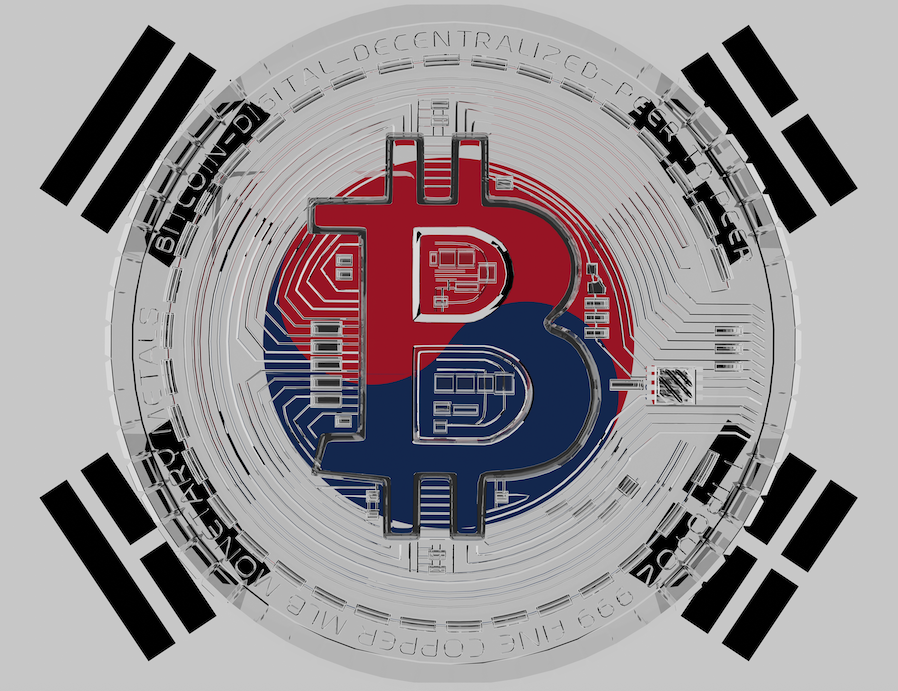
A weakening greenback is being compounded by global de-dollarization and lower interest rates, creating an environment for emerging markets (EM) ETFs to prosper. In turn, more investors are flocking into EM equities, but for more targeted exposure, South Korea could present an intriguing alternative.
For those new to the practice, it’s relatively straightforward. Nearly every investor and advisor has an investment that is on track for a loss this year. Not all investments hit, after all. Selling at a loss helps tamp down a portfolio’s overall gains for the record books, reducing the end-of-year tax bill, “harvesting” losses to offset gains.
For half a century, Vanguard has been the high priest of passive investing. Its low-cost index funds have reshaped finance, humbled stockpickers, and made the Pennsylvania-based firm an $11.6 trillion behemoth.
The core consumer price index, excluding the often volatile food and energy categories, increased 0.2% from August, according to Bureau of Labor Statistics data out Friday. That was restrained by the smallest increase in a key measure of housing costs since early 2021.
The investment case for private assets in DC plans hinges on choosing high-performing managers—specifically those in the top third of the performance spectrum, committing to long holding periods, and accepting the risk of underperformance over time.
To analyze the impact of the Fed’s rate cut on the bond market, we are going to look at the impact of Treasuries maturing between 2 and 10 years and Treasuries maturing between 10 and 30 years. We will explore the month prior to the Fed’s September meeting and the month after, in order to understand the full impact of the Fed’s decision to cut rates.
The interest rate volatility over the last three years has many investors reaching for bond ladders. We think there’s a best number of bonds to navigate the market and, coincidentally, it has something in common with a sci-fi classic.
Aggressive policy changes from Washington have introduced potential long-term economic risks, but markets continue to rally because the near-term conditions remain favorable.
As noted by TMX VettaFi Head of Research Todd Rosenbluth, fixed income ETFs are having a banner year amid record inflows. The Vanguard Total Bond Market ETF (BND) and Vanguard Total International Bond ETF (BNDX) were two of the top funds responsible for the $325 billion in net inflows (as of October 15).
The world’s largest alternative asset manager sent the strongest signal yet that dealmaking is coming back. Blackstone Inc.’s distributable earnings surged 48% in the third quarter, fueled by a burst of investment exits from its private equity arm, the firm said Thursday.
Gold and silver saw their steepest selloff in years as investors locked in profits on concern that the recent historic rally in the precious metals left them overvalued.
Secondary economic indicators have taken on heightened importance amid the ongoing government shutdown. Read through a handful of these secondary reports from the week of October 13th-18th.
Earnings season gets underway this week, with reports from major banks providing the first look at corporate performance. The technology sector is expected to be the standout performer with over 20% projected earnings growth, driven by the ongoing "AI arms race".
Even thoughtfully managed strategies may underperform or suffer sharp losses. This can encourage poorly timed emotional decisions that exacerbate the decline. A systematic risk-management framework that employs stop losses can help minimize such behavioral biases.
The U.S. has become the world’s top producer of natural gas liquids (NGLs) thanks to abundant supplies. Rising worldwide demand for plastics and clean fuels has sent U.S. NGL exports soaring, establishing a compelling long-term growth story for midstream players.
Although specific themes come in and out of favor, thematic investing is here to stay, as investors seek diversified exposure to hot new trends and industry disruption.