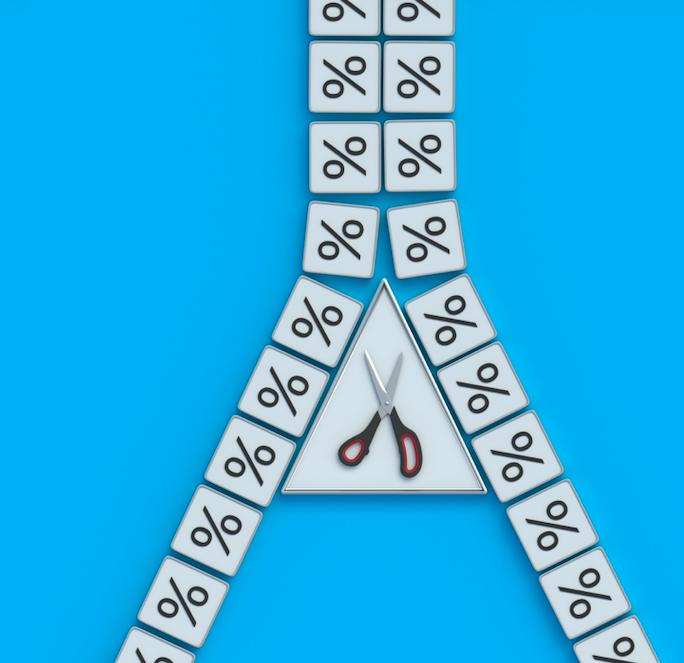
Kevin Warsh’s nomination for Fed Chairman initially reassured bond markets by offering a known, crisis-tested Fed veteran with a reputation as an inflation hawk, reducing uncertainty at a critical juncture for monetary policy.
After more than two decades of talks, the EU has reached a free trade deal with Mercosur, the South American common market that includes Brazil, Argentina, Uruguay and Paraguay. More recently, Europe concluded an agreement with India, an accord nearly twenty years in the making.
In recent months, the cost of living has consistently polled as the top issue for American voters, with housing affordability standing out as one of the biggest pressure points.
Push will come to shove in the weeks ahead as tech executives take questions at key investor conferences over the back half of the first quarter.
Global equity markets posted modest gains to start the year, driven by selective strength in technology and cyclical areas as leadership rotated. Beneath the surface, performance diverged across companies, sectors, and regions. While macro uncertainty continues to unsettle markets, outcomes are increasingly shaped by company fundamentals.
SEC White Paper: Do fund mergers lower fees? Explore how economies of scale impact expense ratios and performance for ETFs and mutual funds.
There are reasons people dig storm shelters in Tornado Alley, build their houses on higher ground on the coast of Florida, and at a basic level why most of us buy insurance.
Despite headwinds, ESG ETFs saw a 6.62% growth in AUM in 2025, according to State Street Investment Management.
Gold’s stomach churning volatility – up some 30% in less than a month since the start of the year, only to subsequently lose 20% in a matter of days – has, unsurprisingly, left some investors doubting its role as a hedging asset.
Over the last three months, the housing conversation has warmed up again. Markets seem to be saying the next chapter could be “more activity”; i.e., more housing starts, more remodeling, more jobs coming off the sidelines as confidence improves.
Janus Henderson affiliates Privacore Capital and Victory Park Capital are launching their first interval fund focused on private asset-backed credit, the Privacore VPC Asset Backed Credit Fund (AltsABF).
As Trump and Powell argue over rates, the Taylor rule uses data to suggest where rates should be. But some argue this is an outdated way to set policy.
The recent decline in cryptocurrency prices has unsettled parts of the market. I talked with Christopher Jensen, Director of Digital Asset Research and a Portfolio Manager in the Digal Asset Investment Strategies group for his views which I share below.
Prices in efficient markets will rapidly adjust to reflect new risks and developments. The year has started with a flurry of geopolitical events, which have created significant volatility in the markets for currencies and commodities.
Whether these diversified firms can maintain their positions indefinitely is an open question, but market history suggests the competition always catches up.
Private assets are gaining traction in many portfolios, as investors seek new frontiers given a more challenging market landscape. Returns of traditional asset classes in the years ahead are likely to be lower on an inflation-adjusted basis, and public markets offer fewer options for diversification today, at a time when managing risk is becoming increasingly important.
The mid-term elections are still more than eight months away, but that hasn’t stopped stories and headlines being posted about possible outcomes and what are perhaps the main drivers come voting day. Without a doubt, the number one issue appears to be the notion of affordability, and of course, what plans do the Republicans and Democrats have in store to address this issue.
The year is young, but already, a clear theme is emerging: investors are looking to add international equities exposure to their portfolios. ETFs already offer a wide variety of options for investors to get that exposure, but which fund or funds make th
The surge in active ETF launches aligns with broader market trends. For example, active ETF strategies accounted for roughly 60% of new ETF launches in the early months of 2025, underscoring the category’s growing momentum and advisor interest.
There’s no stopping the momentum in the ETF market. January 2026 brought a record $166 billion in net inflows, surpassing the last three Januarys combined.
The year is young, but already, a clear theme is emerging: investors are looking to add international equities exposure to their portfolios. ETFs already offer a wide variety of options for investors to get that exposure, but which fund or funds make the most sense?
As the economy struggled in the wake of the crisis, Warsh was primarily concerned about the risk of inflation—even as unemployment pushed near 10%—and indeed, over the next decade the primary policy concern turned out to be inflation consistently running below target.
Blended families are built on love, resilience, and second chances. They are also financially complex, particularly for high-net-worth families with substantial assets, business interests, and multigenerational goals.
Despite the recent selloff, Canadian Imperial Bank of Commerce (CIBC) remains bullish, forecasting $6,000 gold and $100 silver in 2026.
LPL Research highlights five reasons emerging markets look attractive in 2026, from dollar weakness to accelerating earnings, and AI-driven growth.
At the start of my career, the Federal Reserve was content to operate in the shadows. Today, by contrast, the Fed is a much more public entity. And so the fact that the derby to become the next Chairman played out so vividly in the media was not surprising.
Weakening global ties may lead to economic disruption and lasting investment implications. Here's what investors should know about navigating the changing landscape.
A couple of weeks ago, on Jan. 23, 2026, we dedicated part of the weekly commentaries to the mismatch between the economy and how American consumers feel about it. We said that measures of consumer confidence and consumer sentiment were not in sync with the strength of economic activity.
The market got off to a strong start in 2026, with investors chasing industrials, materials, and commodity-related stocks as the reflation narrative gained traction. The “reflation narrative” is the belief that a range of policies will boost the rate of economic growth in the U.S. without triggering inflation.
In our latest “Alternative Allocations” episode, Matt Katz of Fiduciary Trust International explores the unique structural advantages of the middle market and shares tactical insights on using secondaries and due diligence to navigate today's evolving private equity landscape.
The ALPS Clean Energy ETF (ACES) jumped 9.26% in January as investors turned their attention to the massive power requirements of AI data centers and the infrastructure needed to support them, according to recent ALPS Advisors insights.
Markets may appear orderly heading into 2026 — but beneath the surface, risk and opportunity are becoming increasingly uneven.
Just eight years ago we were celebrating 25,000, which means equities have doubled in less than a decade. By the Rule of 72, that’s roughly a 9% annual return including dividends—nominal, yes, but still a powerful reminder that equities continue to reward patience even through extraordinary volatility, policy shocks, and repeated predictions of recession.
Recent tech headlines have stirred up fresh disruption fears, weighing on software stocks and the sector more broadly. Below, we break down key takeaways from 4Q25 earnings and share our latest views on tech:
Equity valuations are top of mind among investors as we move into February, amid stretched sentiment and positioning and challenging corporate earnings expectations.
2025 turned out to be a year for the ages for agency mortgage-backed securities (MBS), as the Bloomberg U.S. MBS Index registered its best calendar year of returns since 2002. The benchmark index’s 8.58% total return outperformed every major fixed income sector other than high yield (+8.62%) in 2025.
The fund’s outperformance comes as investors debate whether market leadership will broaden beyond mega-cap technology names. While passive index funds must hold all constituents regardless of fundamentals, CNEQ’s structure enables its portfolio manager to concentrate capital in companies they believe are showing accelerating growth.
This past week, I had the privilege of attending the 2026 Harvard Presidents’ Seminar alongside some of the nation’s top executives and thought leaders. One of the most compelling speakers was Ambassador Kevin Rudd, former prime minister of Australia.
For high-net-worth individuals, investing success is not singularly defined by returns. Taxes, often the single most considerable drag on long-term wealth, play an equally critical role. As tax policy continues to evolve, the difference between a reactive approach and a coordinated, tax-aware strategy can be substantial.
The AI spending scare that rattled investors during Microsoft’s earnings call nearly two weeks ago intensified last week as Alphabet and Amazon followed suit. On Wednesday, Google’s parent company reported record annual revenues exceeding $400 billion and a 48% surge in Google Cloud growth.
DroneShield’s rising success shouldn’t come as a particular surprise to the investment community. As drones continue to become more of a part of everyday life, both for defense and commercial use, demand will continue to mount for companies and software designed to preserve public safety and mitigate the threat of military drones.
The Federal Reserve System has a critically important role in the economy, but it is designed to act slowly. The modern economy isn’t slow at all. Things change before Fed officials even notice them, much less understand them. That’s why Kevin Warsh’s nomination as Federal Reserve chair is so important.
For nearly two years, markets were driven by the same speculative narrative that “this time is different.” Speculative narratives are not only seductive but also contribute to investment behaviors that obscure reality. Speculation disguised as investing is a losing proposition.
Chuck Carnevale, co-founder of FAST Graphs, aka Mr. Valuation explains what he believes is the single biggest and most avoidable risk investors face: overvaluation.
The U.S. labor market showed further signs of cooling last week as private sector hiring slowed and job openings reached their lowest levels in over five years.
Buildout of blockchain-based infrastructure is entering a new phase. The focus in 2025 was on stablecoins and their emergence as the cross-over use case that captured interest from both crypto-native and traditional financial participants.
Barely a month into 2026, markets have already weathered multiple bouts of rolling, event‑driven volatility. Geopolitical surprises and policy pivots have triggered sharp price moves from the U.S. to Japan to Europe, from sovereign bonds to currencies to mortgages.
The cryptocurrency market has expanded rapidly, with new technologies and networks gaining traction each year. As the broader crypto market continues to evolve, the leaders of today aren't guaranteed to be the leaders of tomorrow.
After more than a decade of U.S. dominance, the tone has shifted, and investors understandably want to know whether this is a brief rebound—or the start of a new leadership cycle. While we do not time markets or make predictions, we believe long-term investors can benefit from maintaining international exposure by understanding the broader structural forces that have historically shaped these cycles.
Corporate pension funding continues to improve. Market moves over the last five years, both in yields and equity returns, have corporate pension plans at funding levels not seen since before the Tech Bubble.