LPL Research reports on Fed rate cut, U.S.–China trade truce, strong earnings, and AI spending scrutiny amid narrowing market breadth and volatility risks.
Advisors may sometimes feel like they’re venturing out to solve the world’s personal financial problems alone. They don’t have to feel that way when they’re recommending active funds with the requisite expertise and experience behind them. Vanguard active ETFs can offer that.
Every month, TMX VettaFi publishes hundreds of articles across our ETF-focused websites. Reviewing the pieces that capture our readers’ attention provides a clear picture of prevailing advisor and investor sentiment. In October, five articles stood out. They primarily focus on the surging themes of AI, international equities, and alternatives.
Advisors are using exchange traded funds to expand beyond public markets to private markets to modernize 60/40 portfolios.
Investors who watched the robotics space peak back in 2021 may see the current rally with apprehension. Back then, the narrative of a China-driven logistics and e-commerce boom sent robotics stocks to dizzying heights. What followed was China’s economy first slowing down, and then a pandemic-fueled demand shock. The sector fell hard.
Following this year’s impressive rally in gold (the best year for the metal since 1972) investor attention has once again turned toward its role as a long-term portfolio component.
Actively managed ETFs, particularly those of the fixed income variety, are among the fastest-growing ETF segments today. That growth has been facilitated in part by advisors moving away from higher-fee mutual funds and issuers converting popular mutual funds to the ETF wrapper, among other factors.
An advisor or allocator needs to do three things: understand the goals of their client, find different ways to earn returns for taking risks, and then take the right amount of risk to meet those goals.
While many commentators have criticized Argentine President Javier Milei's draconian approach to economic reform, the results of the October legislative election show that the Argentine people would prefer short-term economic pain over a return to Peronist policies. Milei now has a clear path to finish what he started.
October was a good month for financial markets, with a broad-based rally across geographies and sectors. Tech stocks and gold led the way, and the dollar finally had an up month. QuantStreet's strategies, across different risk levels, moved in line with or slightly exceeded benchmarks.
Classical conditioning teaches us a valuable lesson regarding the current investor dilemma. Pavlov’s research discovered a basic psychological rule: when a neutral stimulus is repeatedly paired with a reward‑stimulus, eventually it will trigger the same response even when the reward is absent.
As policy priorities evolve, Japan’s focus on “responsible fiscal expansion” could reshape bond dynamics.
Every innovation follows a lifecycle, from breakthrough to ubiquity to obsolescence. The Edison bulb once lit up the world, transforming how we lived and worked. But it was ultimately replaced by more efficient and sustainable alternatives.
Last week’s main story for markets was the meeting between U.S. President Donald Trump and Chinese President Xi Jinping. Following the talks, both sides announced a modest set of agreements aimed at improving trade relations.
Markets were taken by surprise by Federal Reserve (Fed) Chair Powell’s strong suggestion that a rate cut in December is not a certainty, as they were sure they were going to get one at December’s Federal Open Market Committee (FOMC) meeting.
October saw some strong data for bond ETFs, according to recent research, suggesting opportunities may abound in the category.
Rising electricity demand continues to be a key trend for investors to watch, with the latest news revolving around Google (GOOG). GOOG, a key AI hyperscaler, announced a collaboration with NextEra Energy (NEE) for the restart of the Duane Arnold nuclear plant earlier this week.
The Halloween week Fed meeting was more trick than treat for bonds with only a mild and temporary scare for stocks. As soon as Chair Powell signaled the next cut is “not a foregone conclusion – far from it!,” the Dow swooned before recovering about half the drop, while the 10-year drifted higher.
The good news for investors is that history may be on their side. According to the Halloween effect—also known as the Halloween strategy or indicator—stocks have tended to outperform in the six-month period from November to the end of April, compared to the six months from May to the end of October.
History is absolutely clear – Capitalism is the best system ever developed (actually evolved by human experiment) to boost living standards. At the same time, Socialism has a seriously lousy record.
Progress toward resolving the US government shutdown remains limited despite increased bipartisan dialogue. Senate Majority Leader John Thune noted that “a lot more conversations” are happening across the aisle, suggesting some softening in tone compared with previous weeks.
The term 'digital gold' is often used by cryptocurrency enthusiasts to describe Bitcoin, Ethereum, and similar assets. However, our latest research shows they behave differently in portfolios. We look at how liquidity and uncertainty drive returns, and why that matters for positioning.
The U.S. government shutdown is about to enter its second month. We did not rush to comment on it, because we didn’t think that it would have much of an economic impact. But the risk that lasting damage will be done is rising.
The market has become much less cyclical over time, and valuations have increased alongside growth and quality.
As global rate pressures ease and fundamentals strengthen across key economies, conditions appear increasingly favorable for EM local bonds and currencies.
Everyone is wondering if we’re in another tech bubble. Tech companies are breaking valuation records, with Nvidia Corp. leading the charge. On Wednesday, it became the first company ever to reach a $5 trillion market cap.
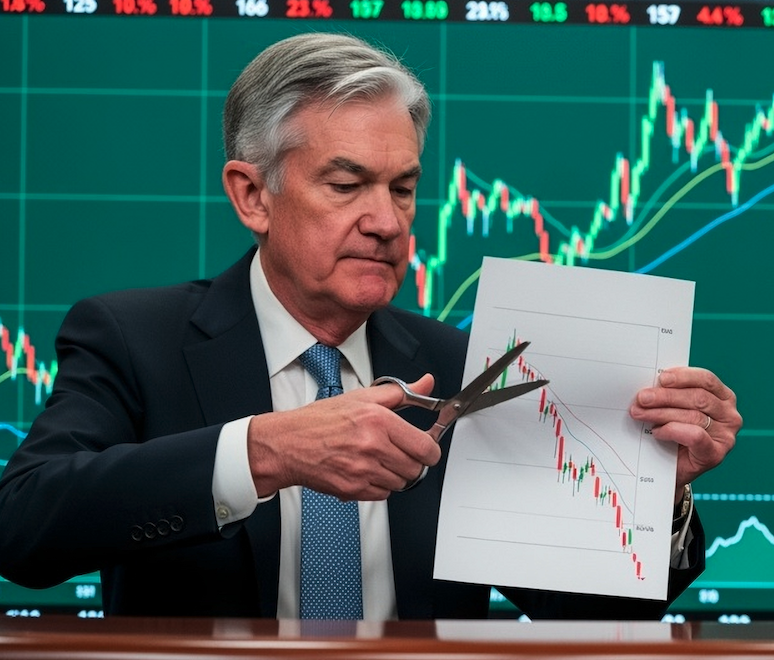
For the second straight meeting, the Fed cut the federal funds rate by a quarter percent on Wednesday. In an even more aggressive move toward monetary easing, the FOMC also announced balance sheet reduction will end in December.
Five of the so-called “Magnificent Seven” firms reported earnings this week in a major milestone for 2025’s economic narrative. Apple (AAPL), Amazon (AMZN), Microsoft (MSFT), Google (GOOGL), and Meta (META) all shared their earnings, offering some important insights into key tech firms amid the AI revolution.
My series on Ray Dalio’s book raised a bunch of questions, one of which stood out above the others. To paraphrase, readers asked, 'How do we get ready for this?' It is certainly fair for you all to ask what I am personally doing to prepare for the big picture I anticipate. It’s tough to answer because the coming debt crisis could unfold in many different ways.
Gold is not immune to market cycles. It’s a volatile asset driven by shifting narratives and capital flows. If you’re buying gold today, understand what’s supporting the price, and what could shake that support loose. Treat gold as a hedge, not a core growth asset.
One of the things we have in common with Warren Buffett is that we started our risk-taking career handicapping at racetracks. Buffett handicapped the horse races in Omaha, and I handicapped greyhound races near Portland at Multnomah Kennel Club in Gresham, Oregon.
As transition consultants, we read a lot of press releases announcing financial advisors moving to new broker-dealers. You probably don’t torture yourself by doing that, but it’s part of our job.
The federal government shutdown shut off the steady stream of economic reports relied on by investors to gauge the health of the economy and financial markets. However, the much-anticipated September Consumer Price Index (CPI) report was released last week, as it was needed to determine cost-of-living adjustments for Social Security payments.
The Federal Reserve lowered its policy interest rate by 25 basis points, as widely expected. However, dissenting votes may cloud the path forward.
We see the global economy as undergoing a period of “global rewiring” on a number of fronts—evolving patterns and relationships that we anticipate affecting certain economies and markets for some time to come. Such rewiring could cover relationships between countries or developments within particular regions or economies.
China’s ability to sustain fairly robust economic growth despite a massive property sector downturn is now facing new tests as global trade barriers rise, and domestic demand shows fresh signs of weakness.
Stock valuation answers a deceptively simple question: What is a business truly worth? Price is what you pay; value is what you get.
Global electricity demand is accelerating as AI data centers, electrification, and economic growth drive an unprecedented need for reliable energy. Nuclear power is uniquely positioned to meet this challenge, delivering clean, zero-emission baseload electricity with the highest capacity factor of any major energy source.
Last week’s economic narrative centered around the Federal Reserve's latest rate cut, a decision complicated by the government shutdown and lack of economic data.
Over nearly every meaningful time frame, Bitcoin has dramatically outperformed traditional asset classes. In the last 3 years, it has returned an astonishing 79.2% annualized, compared to 18% for the S&P 500, 24.4% for gold, and just 2.6% for the Bloomberg U.S. Aggregate Bond Index.
Rather than toil over the construction of an ideal fixed income portfolio for a client, advisors can simply apply a template primed for success using Vanguard’s model portfolios. On that note, Vanguard just introduced two new dynamic asset allocation fixed income model portfolios that can suit various investor profiles.
Effectively reading the Federal Reserve's Beige Book can help investors spot economic, industry, and consumer trends that could potentially impact investment portfolios.
One of the most fundamental decisions facing fixed-income investors is determining the optimal maturity for their Treasury holdings.
We continue to hold gold across all strategies, viewing it as a strategic asset. Central banks remain steady buyers, underscoring gold’s role as both a store of value and an inflation hedge.
The three themes we laid out will take a few years to play out, if at all. Our portfolio positioning reflects our belief in the economic strength and momentum of the US Tech / AI trade, and we would want to see more policy clarity and earnings confirmation before we make any large shifts into international.
This bull market has been on quite a run. The S&P 500 is up 35% since its April 8, 2025 year-to-date low, and up over 92% since it began on October 12, 2022, excluding dividends.
The Federal Reserve’s October rate cut, to 3.75%–4%, signals a continued “risk management” approach, with December’s policy path tilting toward another cut.
The Federal Reserve on Wednesday announced a widely anticipated 25-basis-point (bp) rate cut, bringing the federal funds target range to 3.75%–4.00%. With markets priced for this move and the Fed operating in a data vacuum due to the U.S. government shutdown, the rate cut and modest statement changes were largely uneventful.
The consumer sector was in sharpest focus during the conference. That wasn’t surprising, given the negative headlines surrounding fraud allegations at subprime auto financer Tricolor Auto Acceptance and its subsequent bankruptcy filing.
The politics of the government shutdown are about to get trickier. Today is Day 28 of the government shutdown. The Senate will be in session this week, but the House of Representatives remains in recess.