Many investors have turned to MLPs over the years for their income, which makes the outlook for distributions a perennial focus for investors. With MLP yields currently elevated relative to long-term averages and a flattish near-term outlook for U.S. energy production, the distribution outlook is particularly topical.
Three things to watch this month from Franklin Templeton Emerging Markets Equity: China's Golden Week, tariffs on India and the likelihood of a year-end market rally.
We believe corporate America will follow up an outstanding second quarter earnings season with another good one in the third quarter.
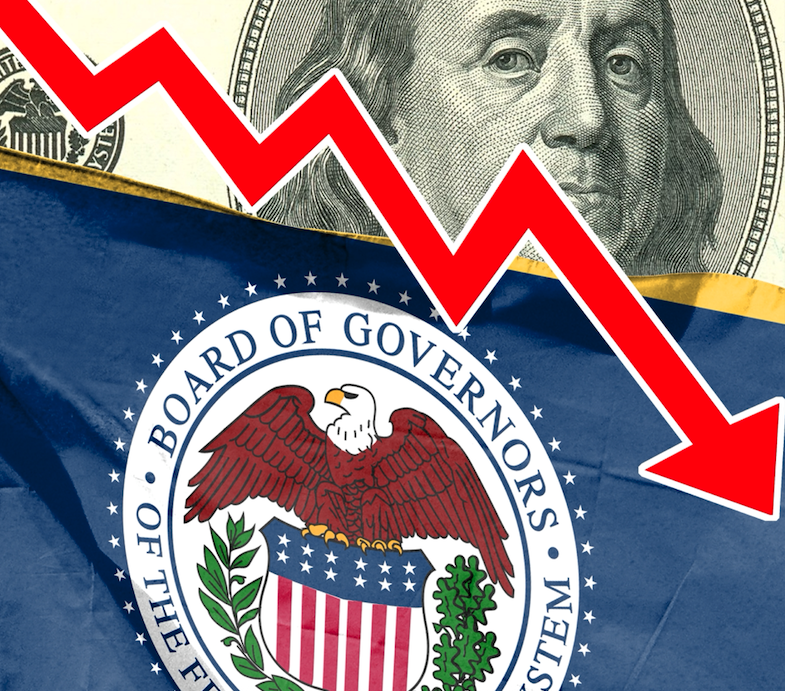
With equity markets reaching new heights, the market’s expectation that the US Federal Reserve will cut rates to head off a labor-market slowdown is itself creating a policy challenge for the central bank.
Emerging markets investing has had an overall positive year in 2025. Entering the year, with many U.S. investors underweight foreign equities, some market watchers anticipated big opportunities abroad.
With the global economy proving more resilient than expected, we upgrade equities to overweight.
No one, that we know of, is saying Artificial Intelligence (AI) isn’t an amazing new technology that will have an important impact on life, investing, and the economy.
Markets digested a quiet jobs Friday without the official payrolls report, but the signal from the other indicators was clear enough: the labor market is slowing at the margin but not falling off a cliff.
The office real estate sector is working through a difficult cycle.
Defined contribution (DC) plans form the backbone of retirement security for millions of Americans. And while stocks often steal the spotlight for their growth potential, bonds play a crucial role in managing risk, providing diversification, and delivering reliable income—especially as participants approach retirement.
Like AI stocks, precious metals look overbought; but unlike AI stocks, they’re structurally underinvested. As such, I believe they deserve another look.
It will depend on how long the budget stalemate drags out, but from a historical perspective, the impact of government shutdowns has been relatively short-lived and contained.
Electricity demand is on the rise globally thanks to electrification, adoption of electric vehicles, wider use of air conditioning, and the rise of AI-related data centers.
Over the past three years, the economic conversation has been a “promised recession.” If you read the headlines, tracked economist surveys, or even listened to Wall Street strategists, you would have assumed a downturn was imminent. And yet, here we are, late into 2025, and the U.S. economy is still standing.
Government shutdowns are not unprecedented. Although some volatility is possible, historically, there has been no clear relationship between U.S. government shutdowns and market returns.
In the absence of primary government indicators, policymakers and investors alike must turn to private sector releases to find clarity. These secondary reports paint a picture of a cooling labor market and an increasingly cautious consumer.
In this article, Russ Koesterich discusses how September, typically a month that exhibits seasonal market weakness, is showing surprising strength.
Within the emerging markets story in 2025 is a potentially even more intriguing subplot: the strong performance of Africa equities.
Vanguard announced the debut of a new low-cost, emerging markets (EM) exchange-traded fund (ETF) — the Vanguard Emerging Markets ex-China ETF (VEXC). EM assets have been garnering increased investor attention this year and could see additional interest with the prospect of more interest rate cuts to come.
From harvesting pollen for industrial use to commercially available drone delivery to osmotic power plants—Franklin Equity Group’s Matt Moberg highlights some of the most exciting innovations in the latest “Innovation Insights Quarterly.”
Powering intelligence: the molecules, metals, and markets behind AI.
With the third quarter (Q3) behind us, we decided to conduct a deep dive into the key factors that shaped Q3 performance. Below, we’ve highlighted what we believe to be 10 of the key takeaways.
The U.S. government bought shares of Intel and other companies and made a deal with Nvidia for some of its revenue. What does this mean for investors and for those firms?
Debt is a curse that can also be a blessing, depending on how the borrower uses it. Sadly, human nature seemingly ensures we often use debt unproductively—and not just as individuals. Governments have their own special way of using debt to buy benefits (and votes?) today that future generations will pay for.
The newest member of the Federal Reserve Board, Stephen Miran, recently outlined his reasons for wanting interest rates to come down by roughly 2 percentage points—far more than any other Fed member.
Physical artificial intelligence (AI), the convergence of robotics and AI, is here. With autonomous vehicles and industrial automation moving into mainstream adoption, Matt Cioppa from Franklin Equity Group explains why this could represent a generational opportunity for long-term investors.
As of midnight Tuesday, the U.S. government shut down, as lawmakers couldn’t reach an agreement on a short-term bill to continue funding government expenditures. Currently, none of the 12 appropriations bills have been passed.
Overfunded pension plans don't have to die—they can live on in a 401(k) plan.
How the shutdown may impact the Federal Reserve, the economy, stocks and bond yields.
Given the current market environment, should investors include China, the top economy in emerging markets (EM), or simply avoid it?
Locking in attractive bond yields can support long-term returns, especially as central banks cut interest rates and tariff effects pose risk to global economic growth and inflation.
Central banks are walking a tightrope, carefully fine-tuning their next moves as they face lingering inflation and subdued growth.
The government shutdown may spark some short-term volatility, but investors aren’t likely to bear the brunt of a red October.
Despite inflation remaining a concern, the Federal Reserve (Fed) cut interest rates in response to weakening jobs numbers. This allowed small-cap equity performance to lead a month that was generally positive across sectors, cap sizes and asset classes.
September’s rate cut may be exciting for many investors’ equities holdings, but those same investors may feel less excited about the income on offer from bonds going forward. Falling rates, of course, lead to falling yields in numerous debt securities and offerings.
Fall is here, making now an ideal time to address your year-end financial goals and begin mapping out new goals for the year ahead. Sequoia’s Special Needs Financial Planning team is a comprehensive financial planning partner, ready to support you on multiple fronts.
There has been a lot of controversy around the Trump administration’s policy toward the Federal Reserve recently. What is less obvious to most investors is what they’re aiming to accomplish. Trump continues to talk about getting rates lower, and this has been echoed in other parts of the administration as well.
Social Security is a key component of a comprehensive retirement income plan. As a result, making the right decisions around claiming benefits is critical for long-term success in retirement. Married couples in particular need to think carefully about how to best access benefits based on their individual needs and circumstances.
In the coming week, several Federal Reserve officials will speak following the recent decision to resume rate cuts.
Portfolio manager Lew Sanders has quietly built a legacy as one of the most influential value investors of the past 50 years.
Despite a weaker end to the month, the equity market “melt-up” successfully navigated what has historically been a tricky month for equities, as represented by the S&P 500 in September (average returns -0.61%), closing out the month (as of September 29) with a handsome gain of over 3%.
There are many ways to navigate market uncertainty, and pursue both upside participation and some level of downside protection. Options-based approaches such as the Defined Outcome ETF category loom large here, fit for purpose.
At this point, it’s no longer just a crypto-friendly government propelling movement forward — it’s real regulations that have been created.
Earlier this year, GMO’s Asset Allocation Team invested a sizeable 13% of its flagship unconstrained Benchmark-Free Allocation Strategy into the GMO Alternative Allocation Strategy (ALTA). ALTA provides daily liquidity and seeks to deliver equity-like returns with sensible and competitive fees, allowing for realistic return forecasts and prudent risk management.
AI technology has the potential to profoundly improve industries and markets, but not without some risks—like valuation and profitability—that investors should be aware of.
Last week, my colleague wrote about Anchoring Bias, a psychological phenomenon that attaches a particular price or specific yield level to a bond.
LPL Research analyzes recent market performance as Fed expectations, strong economic data, government shutdown concerns and more continue to have an impact.
Market sentiment has come a long way since the Tariff Tantrum. Earlier this year, the VIX volatility index shot up into the 60s, a fear level previously seen in such episodes as the October 1987 crash and during 2008’s rolling bank insolvencies.
Nomi Prins brings rare credibility to these conversations. She holds a PhD in international strategic studies with a specialization in political economy, and her career spans some of the most powerful financial institutions in the world.
In this video, Chuck Carnevale, co-founder of FAST Graphs, dives deep into Comcast (CMCSA) to evaluate whether today’s low stock price represents risk or opportunity.