Flows of gold into Asian ETFs exploded in April, driving global ETF gold holdings higher for the fifth straight month.
Assessing a bear market rally proves challenging when you experience it firsthand. It is only in hindsight that the complete picture reveals itself to investors. Of course, after a bear market rally, investors tend to review their investments and speculate on what they should have done differently.
The surprisingly large reduction in mutual tariffs between China and the U.S. announced early Monday morning has sent the markets flying. Trump has softened his approach dramatically and markets are expecting future deals. The base case: everyone at 10%, China at say 20% is still a jump, but at least will likely prevent a recession. Trade and tariffs remain the main focus for markets.
The more duration risk taken, the more reward or yield demanded by investors. This is why, historically, the yield curve provides incrementally more yield for longer-maturity bonds.
In the report, Portfolio Managers John Kerschner, Nick Childs, and Thomas Polus highlight three reasons why agency mortgage-backed securities (MBS) look attractive in the present environment.
The U.S. may not walk back all of the new tariffs.
In this video, Chuck Carnevale, Co-Founder of FAST Graphs, aka Mr. Valuation discusses the volatility of the stock market, the truth about the S&P 500’s valuation, using the S&P 500 (SPY) as a proxy.
Commonwealth Financial Network®, a national RIA dedicated to providing financial advisors with holistic, integrated business solutions, has initiated a new partnership with Messina College, a two-year, all-residential degree program of Boston College that welcomed its first-ever class of students to the school’s Brookline Campus last summer.
The early-April announcement of a broad new round of tariffs against virtually all U.S. trading partners—followed by a pause for many of them—has triggered a tidal shift in the global economy. Uncertainty created by tariff negotiations, as well as burgeoning federal debt levels and other ongoing concerns, has far-reaching economic implications, leading us to reassess our 2025 outlook.
Tariff talk has been at a fever pitch for the past three months. Its dominance of the news cycle has crowded out discussion of other important economic issues, such as the sustainability of America’s national debt.
The roller coaster continues! A stronger than expected first quarter earnings season and encouraging signs on the trade front—highlighted by the US-UK trade deal—helped lift the S&P 500 from its April 8 near-bear market lows, reversing nearly all post-Liberation Day (April 2) losses.
It may seem risky to lend against recurring revenues, not earnings. With proper underwriting, it doesn’t have to be.
In the latest edition of Design Matters, titled “What’s the Frequency… Russell?” Greg Behar of Westwood’s Managed Investment Solutions (MIS) team examines how the Russell U.S. Indexes’ decision to return to a semi-annual reconstitution schedule is transforming risk management practices, market participation and the future of custom indexing.
China and the U.S. conducted their first formal trade talks of 2025 over the weekend. And on Monday, May 12, they announced the outcome of their negotiations.
The April plunge in stocks ushered in a huge washout in investor sentiment, but more so on the attitudinal side as opposed to the behavioral side.
The Q1 2025 earnings season heads into its final peak week with mostly positive results from S&P 500 companies thus far. With 90% of companies from the index now reporting, 78% have beaten Wall Street’s expectations, slightly better than what we’ve seen historically.
For my entire decades-long career in capital markets, I’ve made the case that gold is not just a shiny relic of the past, but a serious, strategic asset for modern investors. After years of pounding the table, it feels pretty good to say that the world’s central banks—and now the U.S. banking system—are finally catching up.
Back on January 10, 2025, it cost $1.024 to buy one Euro. Last Friday, the $/Euro exchange rate was $1.125 – a drop in the value of the dollar of about 10%. Similar moves in the value of the US dollar versus the British pound, Japanese yen, and Canadian dollar also occurred.
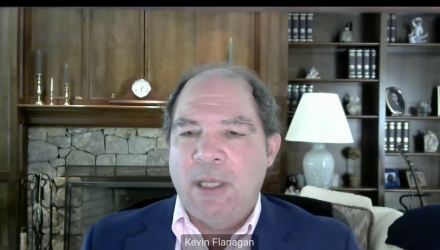
Kevin Flanagan, head of fixed income at WisdomTree, joined a VettaFi panel to break down the most attractive fixed income strategies.
Chief Economist Eugenio J. Alemán discusses current economic conditions.
I’ve been writing about tariffs for a couple of months now, focusing mostly on the macroeconomic harm and the costs they impose on small businesses. Today I want to consider something else: the new risks they are adding to the financial system alongside the old risks.
While coming in much stronger than expected, the latest employment data confirmed what we already suspected: the economy is slowing.
Warren Buffett opened his 60th—and final as CEO—Berkshire Hathaway annual meeting with the same understated clarity that has defined his career: "This is my 60th annual meeting... I think it'll be the best yet."
When navigating the unknown, an experienced guide can ensure you don’t veer off the path to your chosen destination, can prevent you from stumbling across hazards, and ensure you have the tools you need to finish the journey safely and soundly.
As the effects of US import tariffs begin to emerge, we shift our stance on equities to underweight.
In the report, Portfolio Managers Andy Acker and Dan Lyons say that despite growing policy uncertainty, plenty of healthcare companies have managed to put up big returns.
In a rare moment of honesty, Federal Reserve Chairman Jerome Powell admitted he and his fellow central bankers don’t know what they’re doing as they wrapped up the May Federal Open Market Committee (FOMC) meeting.
Bonds and stocks falling together stirs painful memories of the 2022 inflation surge. This time, trade and tariff uncertainty is to blame, along with a dose of questioning the Fed’s independence.
Last week featured a light economic calendar, with the Fed holding its benchmark interest rate steady for the third consecutive meeting.
At Wednesday’s press conference, Chair Jay Powell signaled a wait-and-see approach, as the Fed keeps a close eye on inflation pressures and the job market.
China drove the surge in retail investment demand, charting the second strongest quarter on record.
Preparing for retirement involves more than finances and should include a focus on health, wellbeing and goals. Our Mike Dullaghan explains why it’s important to start preparing 10 years ahead of retirement.
Fed officials remain patient, likely awaiting hard evidence of a weaker U.S. labor market before considering rate cuts.
The federal government recently resumed student loan collections after a multi-year pause. This affects millions of borrowers who have been in forbearance since March 2020. Our Bill Cass outlines some options for borrowers in default.
Central banks continued to stockpile gold in the first quarter.
The Fed held the federal funds rate steady but noted that the risks of slowing economic growth and higher inflation have risen.
As investors wait for updates on trade deals during the pause in tariff implementation, the focus for many has turned to economic growth and the conflicting data surrounding it.
The Federal Reserve held rates steady today, while emphasizing that elevated uncertainty has clouded the path forward. If, when, and how much tariff policy will change in the months to come will play a large part in dictating the next move for the Fed.
Elite golf is a mental game as much as physical—and so is investing. This year’s Masters tournament was one of the most compelling I have ever witnessed, and Rory McIlroy’s long-awaited playoff victory contains a number of life lessons that are relevant for investors.
I hate to be the one to break it to you, but the economy and the markets are not working efficiently. It’s been that way for at least all of my adult life (2008), and maybe a handful of years before that.
Once again, the Federal Open Market Committee (FOMC) decided to keep rates unchanged at today’s meeting, leaving the Fed Funds trading range at 4.25%-4.50%, keeping the level for overnight money 100 basis points (bps) below last year’s peak reading.
S&P 500® earnings per share estimates have come down sharply. According to FactSet, calendar year 2025 is now expected to show $266 in operating EPS for the Index.
The current geopolitical climate has injected an extra dose of unpredictability into the economy.
Investors bearish on the dollar have generated attractive returns in the current environment with Invesco's UDN.
“Compounding” is a word often used among investors to describe what they hope to achieve for their capital. Compounding is invoked so frequently that one would think it was the standard aim and practice among investors.
Currently, the Three Tactical Rules are a “flashing yellow light” - a roughly neutral rating which represents a slight downgrade.
Our Cash Indicator methodology acts as a plan in case of an emergency. Importantly, each of these systems work together.
After entering the year with a cautious outlook, managers have become more defensively postured as the U.S. tariff policy has increased uncertainty.
Market headlines may change daily, but the role of a financial advisor remains remarkably consistent: to be the calm in the storm, the strategist with a plan and—most importantly—the voice of reason when clients need it most.
Over years, the US cemented its position as an exceptional source of earnings growth that fueled outsize equity returns. Many investors are now questioning whether the US will retain its advantages as President Trump’s trade policies add uncertainty to the outlook across industries.