China’s policymakers plan to sell a record 3 trillion yuan ($411 billion) of special treasury bonds in 2025, Reuters reported on Tuesday, a move aimed at bolstering the slowing economy.
A rude surprise could be in store for the millions of Americans who get health coverage through the Affordable Care Act. If Congress doesn’t act next year, enhanced premium subsidies will expire by December, causing enrollees’ payments to increase by more than 75% on average.
People often make a distinction between “good debt” and “bad debt,” in terms of both personal finances and public spending.
Emerging markets-focused investors have had little to celebrate over the past year.
The crypto market’s center of gravity is back in the US as 2025 approaches, courtesy of Donald Trump’s reelection to the presidency and widening demand for the nation’s digital-asset funds and derivatives contracts.
Some hedge fund managers are sounding the alarm on overvalued nuclear power stocks and scaling back exposure after a stunning rally this year.
As investors continue to step out of cash and potentially rebalance out of equities following their strong performance, we expect bonds to play a larger role in diversified portfolios next year.
It’s that time of year when Wall Street polishes up its crystal balls and predicts next year’s market returns. Since Wall Street never predicts a down year, these forecasts are often wrong and sometimes very wrong.
If you happen to be a Bitcoin skeptic, you’re not alone. A recent Pew Research survey found that 63% of Americans are not confident in the reliability or safety of cryptocurrencies in general.
The Bible story of the virgin birth is at the center of much of the holiday cheer this time of year. The book of Luke tells us that Mary and Joseph traveled to Bethlehem because Caesar Augustus decreed a census should be taken.
Index funds emerged in the early 1970s and were designed to match rather than beat the market. For decades, they were associated with the capitalization-weighted (CW) market indexes that defined their investment approach.
As we near the end of 2024, researchers, businesses, and investors have begun to question the overheated artificial intelligence sentiment.
Since we are not going to publish Weekly Economics on December 27, 2024, we will take this opportunity to say farewell to 2024 and to all our readers, we want to wish you a very happy holiday season and a very prosperous New Year 2025!
Displaying your expertise is an attempt to prove your value, and it’s how the industry has always taught advisors to win new clients. However, it does not work.
AI has the potential to elevate industries by blending mechanical precision with human creativity. The key lies in balance: harnessing its capabilities while preserving the uniquely human touch that remains irreplaceable.
After years in the investment world as an institutional manager, an academic researcher and lecturer, and an independent advisor to individual investors, I’ve learned that there are three main objectives we’re trying to achieve when we design client portfolios.
J.P. Morgan’s Jon Maier highlights the firm’s suite of ETFs and discusses the industry’s accelerating momentum behind active management. VettaFi’s Roxanna Islam offers insights into the recent Nasdaq-100 index rebalance and its connection to broader ETF trends.
Has the U.S. economy diverged from the global economy, or are a lot of economic canaries in coalmines keeling over and warning the U.S. is soon to catch down?
On this episode of the “ETF of the Week” podcast, VettaFi’s Head of Research Todd Rosenbluth discussed the iShares Nasdaq Top 30 Stocks ETF (QTOP) with Chuck Jaffe of Money Life. The pair discussed several topics related to the fund to give investors a deeper understanding of the ETF overall.
CAPE, or the cyclically adjusted price-to-earnings ratio, introduced in 1988 by economists John Campbell and Robert Shiller, is arguably the best-known indicator of broad market valuation. And CAPE is now at an almost (though not quite) all-time high level, according to data from Robert Shiller's website.
Wall Street expects the stock market to earn a return in 2025 that is similar to the average return over the past 100 years. Do you agree?
To Michael Saylor’s online fanbase, it’s the next step in the great normalization of crypto: Bitcoin proxy MicroStrategy Inc. enters the S&P 500 next year, forcing the likes of index-tracking funds to buy his controversial company en masse. Whether they like it or not.
Orders placed with US factories for business equipment rebounded in November, posting the strongest monthly advance in over a year.
Bond traders have rarely suffered so much from a Federal Reserve easing cycle. Now they fear 2025 threatens more of the same.
Forced to seek a government rescue barely a year ago, Siemens Energy AG was an unlikely candidate for Europe’s best performing stock of 2024.
This is the first part of a series of Bloomberg Opinion columns exploring the risks related to the US’s rapidly expanding debt and budget deficit.
OpenAI is preparing to launch a new artificial intelligence model that it said is capable of more advanced human-like reasoning than its current offerings, ratcheting up the competition with rivals such as Alphabet Inc.’s Google.
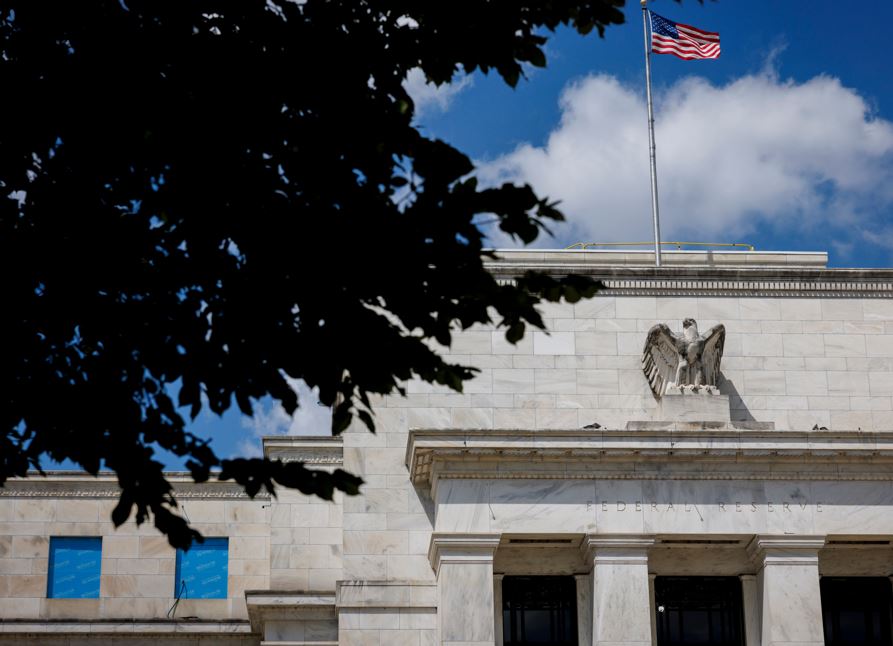
The Federal Reserve cut interest rates for the third time this year but signaled the path forward will likely be more gradual – and less certain – than previously forecast.
In an actively managed portfolio, there’s no way to escape capital gains taxes altogether. But understanding the importance of tax efficiency is crucial to long-term success for investors and advisors.
Macroeconomic uncertainties prompted the Federal Reserve to signal a slower pace of policy rate cuts in 2025 and beyond.
From start to finish, 2024 was a year of change, with a multitude of implications for investors.
Taxpayers may want to consider a Roth IRA conversion for 2024 but need to act before the end of the year to realize income this year. Our Bill Cass explains when a Roth conversion may make sense.
Start the new year right by reviewing and revamping your financial plan.
We expect the opportunity set to widen for income investors in 2025, though less clarity around the second half requires a dynamic approach.
Today’s video on the Industrials Sector is another in the continuing series of videos where we are looking for value in each of the 10 major sectors as reported by Standard & Poor’s.
We believe that there are several guardrails in place that considerably limit the extent of presidential influence over monetary policy decisions.
I must confess, I have been aware of quantum computing for quite some time, but it was one of those things that always seemed far off. It’s now getting much closer.
This brief market commentary will run through some stats and provide context to the market’s recent fluctuations.
From Brazil to South Korea, emerging-market central banks are forming a line of defense as a rising dollar pushes their currencies to multi-year lows.
Delivering the first cuts in interest rates since the early days of the pandemic was the easy part.
As the year comes to a close, we revisit some of the key market themes and moves for 2024 and the year ahead.
Private credit firms want more than corporate lending. The largest are laying the groundwork to finance everything from auto loans and residential mortgages to chip manufacturing and data centers in an effort to swell the size of the market by the trillions.
Amid Donald Trump’s chaotic, last-minute intervention into congressional negotiations about government funding, he has stumbled upon a good idea: He wants to abolish the debt ceiling.
Take it from Niels Bohr: “Those who are not shocked when they first come across quantum theory cannot possibly have understood it.”
Despite the expectation of rate cuts, a push-pull dynamic could exist if high inflation continues, opening the door for short-term bonds.
Surely one of the silliest things that happened in tech stocks in 2024 was the sudden tumble in Nvidia Corp. shares moments after its fiscal second-quarter earnings release in August.
Bitcoin extended its slide from this week’s record high to almost 15% as hawkish signals from the Federal Reserve prompted traders to sell an asset that has more than doubled this year.
The $10.4 trillion US exchange-traded fund industry’s blockbuster year comes with an asterisk: even amid record inflows and launches, funds are shuttering at a nearly unprecedented clip.
US Treasuries gained after a closely watched batch of inflation data came in below expectations, leading traders to lift the outlook for Federal Reserve interest-rate reductions next year.
Central banks’ climbdown from the post-pandemic inflation peaks commenced amid both optimism and trepidation.