Join Baron Capital for a product due diligence session covering Baron SMID Cap ETFTM (BCSM).
Join the experts at MassMutual Strategic Distributors for an educational webcast exploring income riders and how to evaluation variable annuities beyond surface level features so you can match the right rider to each client’s investor profile and retirement goals.
With the challenges presented in the broader market environment and the rate regime, are you making the most out of your fixed income exposures? Active management can help fixed income investors navigate today’s unusual environment, giving funds the flexibility to react to events in real-time. Join Fidelity for a product due diligence session exploring three active strategies: FBND, FLTB, and FAAA.
Join the experts at SS&C ALPS Advisors and GSI Capital Advisors for a product due diligence session exploring their active REIT strategy.
We invite you to join NEOS Investments, an award-winning ETF issuer, for a timely discussion on how advisors can evaluate options-based income ETFs, cut through the noise, and identify strategies designed to seek consistent monthly income with a focus on tax efficiency across client portfolios.
Join the experts at J.P.Morgan and VettaFi for a, 30-minute discussion on Thursday, June 4, at 2 p.m. ET as they explore the use case for MLP ETNs and an overview of the Alerian MLP Index ETNs (AMJB).
Join the Dallas-based experts from the Texas Stock Exchange, Texas Capital, and VettaFi as they discuss the business landscape in Texas and related investment opportunities.
Join Dan Chung, CFA, CEO at Alger, as he explains how his role as Chief Investment Officer makes him uniquely positioned to see across all of Alger’s product portfolios to identify the “best ideas” for ATFV.
Geopolitical risks are still lingering in the background, but the story lately has been all about earnings. A strong 1Q26 season, paired with a steady drumbeat of upbeat management commentary, has helped push the S&P 500 to 21 record highs this year.
Businesses are racing to build the physical infrastructure that makes AI usable at scale – data centers, the graphics processing unit (GPU) hardware stack, power, and cooling.
Economies around the world aren’t just reliant on AI investments for growth. The appreciation of AI stocks has supported spending, which is following “K-shaped” patterns. A significant correction to the valuations of tech leaders would therefore be even more likely to result in recession.
Join the experts at VettaFi and Exchange Traded Concepts for a 60-minute discussion on the investment opportunities related to the rapid expansion of the world's large and small reactor fleets.
Join the experts at J.P.Morgan and VettaFi for a timely, 30-minute discussion on Monday, June 1, at 12:30 p.m. ET as they discuss the outlook for MLPs, key fundamentals for the space, and expectations for distribution growth.
Equities extend gains as earnings and semiconductors lead markets higher. Consumer confidence remains subdued despite economic resilience. Inflation is easing gradually but remains above the Fed’s targey.
Recent Federal Reserve communications have turned more hawkish, reflecting concern that persistent supply-driven price pressures could begin to feed into inflation expectations. But unlike in prior cycles, today’s environment is not defined by supply shocks alone.
Ahead of next week’s May employment report, the summer jobs market is coming into focus as teenagers and students finish the school year. According to Challenger, Gray & Christmas, teen hiring from May through July is expected to total just 790,000 jobs this summer, down slightly from 801,000 last summer.
In this video, Chuck Carnevale explains the true meaning of value investing and why valuation is one of the most important concepts investors can understand. - Why Value Investing is the Safest Way to Build Wealth. Chuck argues that value investing is not simply about buying “cheap stocks,” but about making prudent, rational investments that control risk while allowing investors to fully participate in a company’s long-term growth.
Artificial intelligence (AI) poses many ethical issues that may translate into risks for consumers, companies and investors. AI regulation, which is developing unevenly across jurisdictions, adds to the uncertainty. The key for investors, in our view, is to focus on transparency and explainability.
Last week’s data tracked a shifting economic trajectory over the last several months. While the latest reading on first-quarter GDP confirms the economy started the year with steady growth, subsequent inflation metrics moved higher and ultimately weighed on consumer confidence.
The reality is, the American people wouldn’t accept the level of taxation necessary to maintain the warfare/welfare state. There would be a tax revolt. So, the government resorts to a less obvious tax.
Many debates in defined contribution (DC) circles focus on fees, new asset classes, and ever more complex solutions. But the biggest improvement available to plan participants may come from something far simpler: how their fixed income is managed.
U.S. equities moved higher last week, with the S&P 500 advancing 0.9 percent – its eighth consecutive weekly gain and the longest such streak since 2023. The Russell 2000 fared even better, rising 2.7 percent.
Risk appetite remains firmly intact as optimism surrounding a potential resolution to the war with Iran continues to improve investor sentiment. The S&P 500 has now advanced for eight consecutive weeks, with price action remaining remarkably resilient throughout the recovery.
The next IPO wave may create a different kind of portfolio challenge for institutions already holding private stakes in companies like SpaceX and OpenAI.
Valid until the market close on June 30, 2026
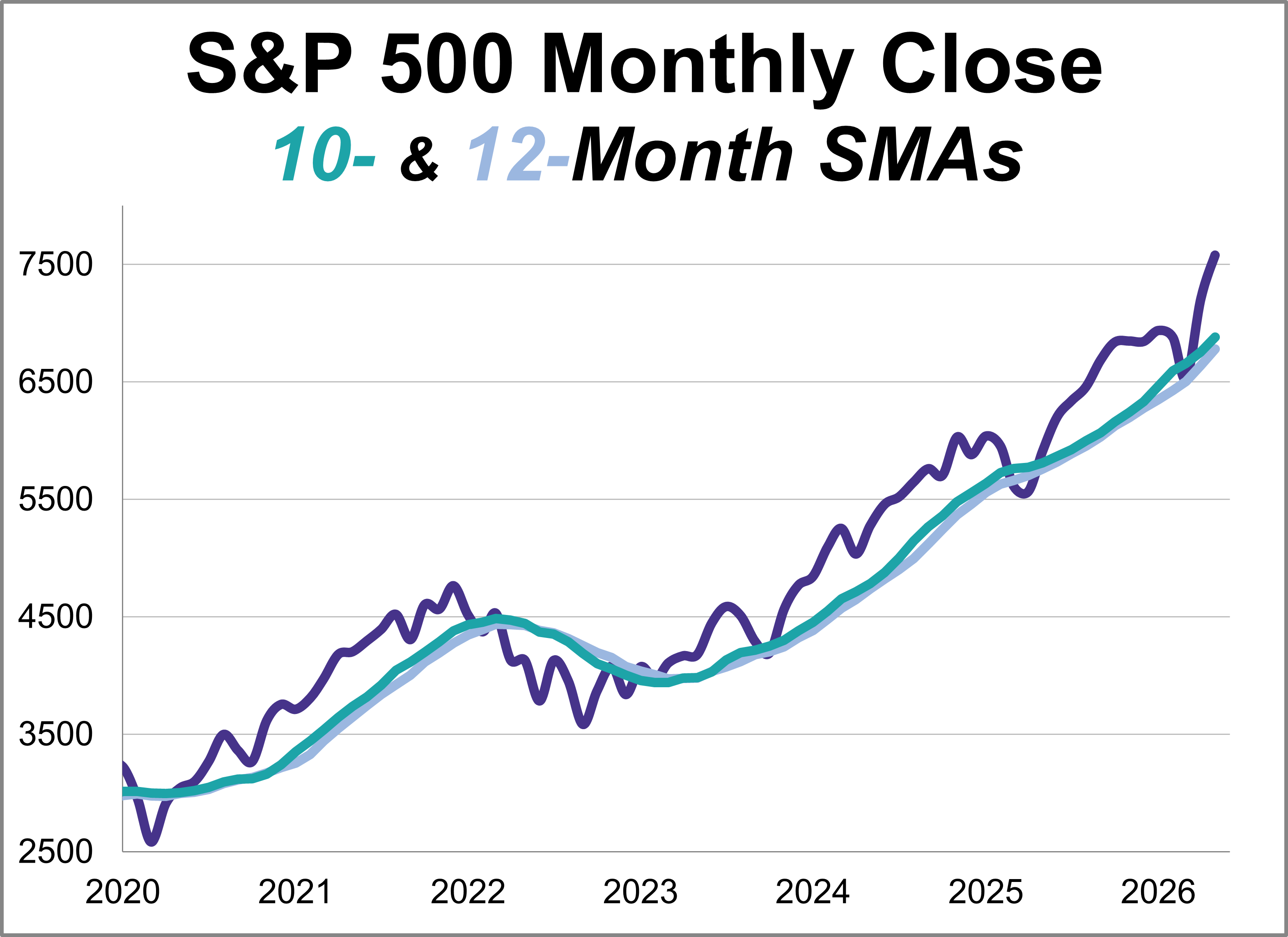
This article provides an update on the monthly moving averages we track for the S&P 500 and the Ivy Portfolio after the close of the last business day of the month.
Building on the last week's strength, the S&P 500 rose every day this week and set multiple new record highs. With a 1.6% weekly increase, the index secured its ninth straight weekly gain, matching its longest winning streak from 2023.
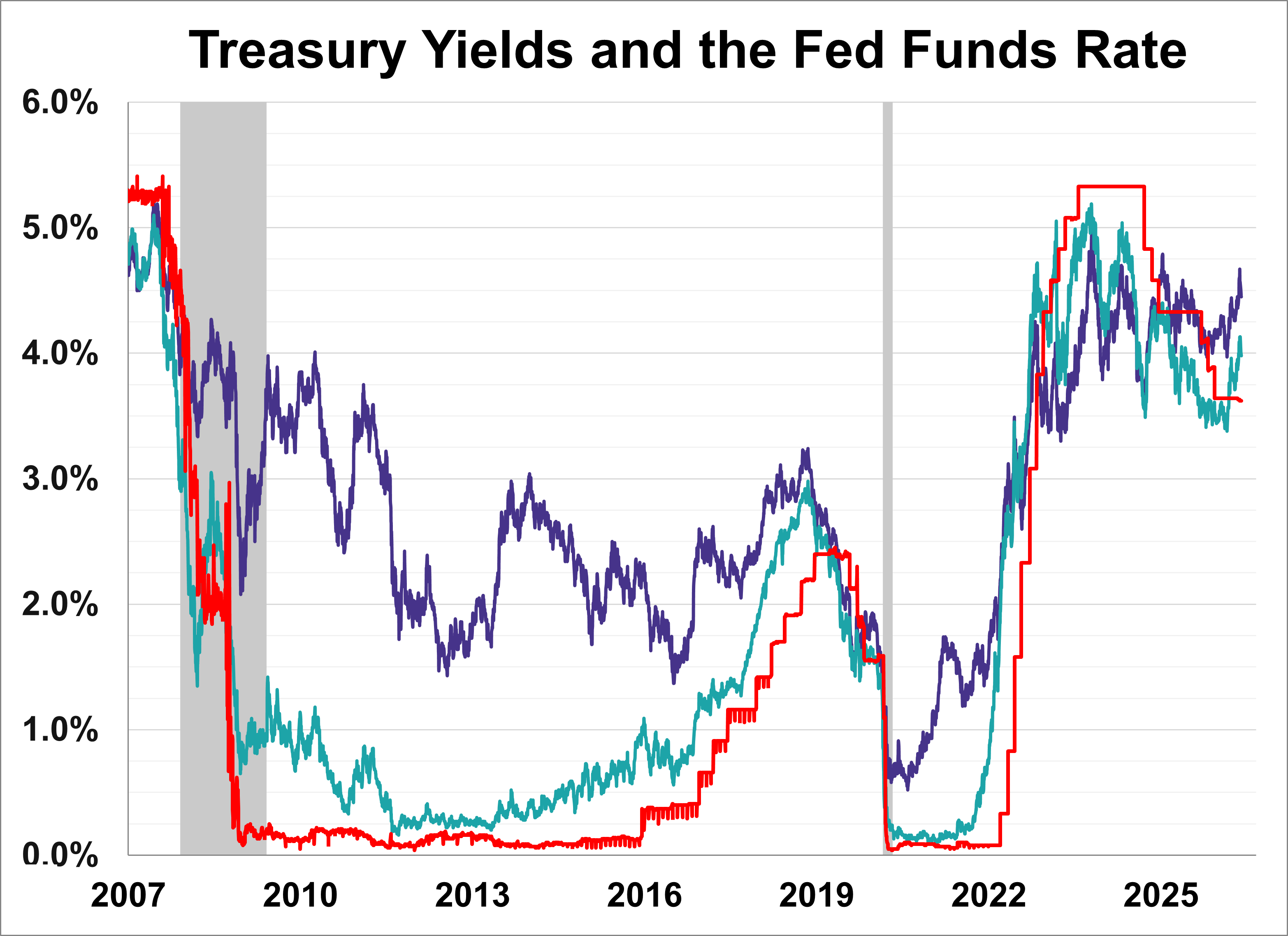
The yield on the 10-year note finished May 29, 2026 at 4.45% while the 2-year note ended at 3.98%.
Massachusetts Mutual Life Insurance Co. agreed to have Nationwide Mutual Insurance Co. reinsure a book of life insurance policies, freeing up about $6 billion of reserves.
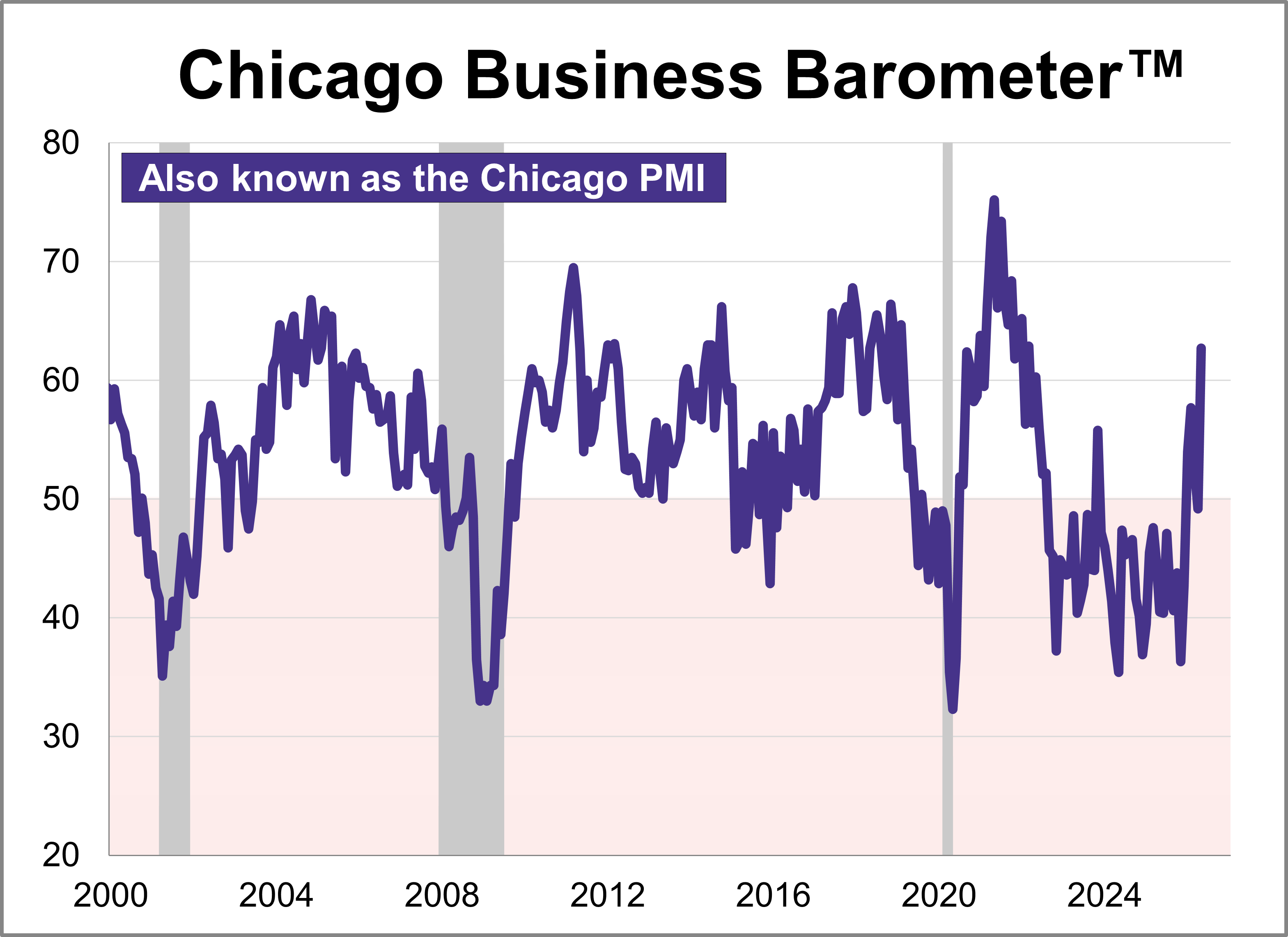
The Chicago Purchasing Managers’ Index surged 13.5 points in May to a four-year high of 62.7, signaling an expansion in regional business activity. This marks the largest monthly increase since 2020 and was significantly higher than the projected 50.6.
The Bloomberg Dollar Spot Index is up 0.7% so far in May, as investors ramped up bets that the Federal Reserve will raise rates by early 2027, boosting the appeal of US assets. The gauge is on track for only its fourth monthly gain since the greenback’s 2025 downtrend began.
If you want a blueprint for how countries can survive this era of great power rivalry, look no further than Vietnam.
Growing excitement around the burgeoning space economy is increasingly favoring companies positioned to benefit not only from Elon Musk’s SpaceX filing for a public offering, but also from rising enthusiasm for space exploration and increased funding.
Large asset managers are rolling out a wave of actively managed emerging-market ETFs, pitching them as alternatives to benchmarks increasingly dominated by AI stocks.
As globalization gives way to reshoring and resurgent resource nationalism, emerging markets may offer fresh alpha opportunities through their ability to supply the raw materials required to fuel the AI boom.
Kevin Warsh was officially sworn in as 17th Federal Reserve chair on May 22. Warsh is likely to build consensus at the Fed rather than push for aggressive action to cut rates.
The U.S. government’s decision to invest $2 billion directly into nine quantum-computing companies through minority equity stakes—not just grants—signals a major shift toward treating quantum as a strategic commercial industry, with potential implications for investors seeking targeted exposure through funds like the WisdomTree Quantum Computing Fund (WQTM).
May is 529 Month. As college costs rise, learn five practical ways to maximize your plan’s tax benefits, flexibility and growth potential to prepare for the future.
Commodity market trends: Commodity markets have been on an impressive, and volatile, run so far this decade, with leadership oscillating between energy and precious metals. Not surprising, after commodities’ “Lost Decade” of the 2010s, given the asset class tends to move in long capital cycles.
Equity investors are facing monumental questions about their allocation strategies in a new market regime. Market concentration has risen sharply, valuations have climbed to record highs in parts of the market and factor volatility has dominated returns.
Recent market volatility and the conflict in Iran have understandably pushed many emerging market investors to the sidelines. But periods of uncertainty have historically offered attractive entry points into emerging market debt (EMD), particularly when underlying fundamentals are improving and asset flows are likely to increase.
Since early April, U.S. stocks have rallied sharply despite an ongoing war, rising inflation fueled by soaring oil prices (near $100/barrel), higher bond yields (up 0.6 to 0.7 percentage points), and frothy valuations (21 times projected earnings vs. a historical average of 17 times for the S&P 500 Index).
The ETF industry has exploded in popularity in recent years. Old mutual fund heavy firms have increasingly leaned into the space, while new shops have proliferated, adding all kinds of new ETFs for investors to consider. That has benefitted investors and advisors immensely.
On the surface, last week looked engineered to embarrass our positioning. The dollar index climbed to a six-week high above 99.3 by Friday and finished the week roughly flat at those levels.
California continues to demonstrate fiscal resilience, supported by strong liquidity balances and the absence of projected cash‑flow borrowing through FY 2026–27. However, Medicaid cost pressures, a progressive tax structure highly sensitive to equity market swings, and constitutional spending constraints remain key differentiators between California and other large states.
An unexpected rap on your front door is sometimes cause for anxiety. You are not sure who or what is out there, wanting to get in.
This persistent growth highlights how central low-cost core index products remain to advisor and retail portfolios alike. Even as asset managers roll out specialized strategies, capital continues to flow within broad-market beta.
A tidal wave of conversions has siphoned an unprecedented amount of capital out of mutual funds and into the ETF wrapper. Last year’s record 60 mutual-fund-to-ETF conversions in 2025 across 31 firms pushed total converted assets past $260 billion, and the past five years have now seen a grand total of 203 conversions.
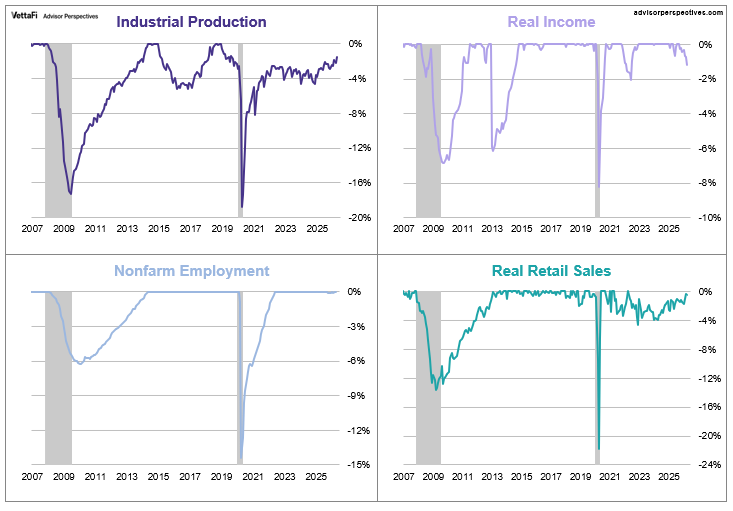
Official recession calls are the responsibility of the NBER Business Cycle Dating Committee, which is understandably vague about the specific indicators on which they base their decisions. There is, however, a general belief that there are four big indicators that the committee weighs heavily in their cycle identification process.
The second estimate for Q1 GDP came in at 1.62%, an acceleration from 0.48% for the Q4 final estimate. With a per-capita adjustment, the headline number is lower at 1.44%, a pickup from 0.18% for the Q4 headline number.
Real gross domestic product (GDP) is comprised of four major subcomponents. In the Q1 2026 GDP second estimate, three of the four components made positive contributions.