For shareholders, the upside justifies the gamble. For bondholders, the downside is real and the upside belongs to someone else. That wedge – the classic asset substitution problem – is what credit investors are increasingly pricing, and until the re-leveraging impulse shows signs of reaching a plateau, the divergence across the capital structure is likely here to stay.
Emerging market debt is compelling as a medium‑term structural allocation, particularly for investors seeking to diversify away from concentrated U.S. exposures.
Tax-equivalent yields on high-quality munis are hitting 7% to 9%. Discover how WisdomTree ETFs, WTMU and WTMY, exploit the steep yield curve.
As inflation lingers and market dynamics shift, advisors are rethinking the 60/40 portfolio with managed futures and options income ETFs.
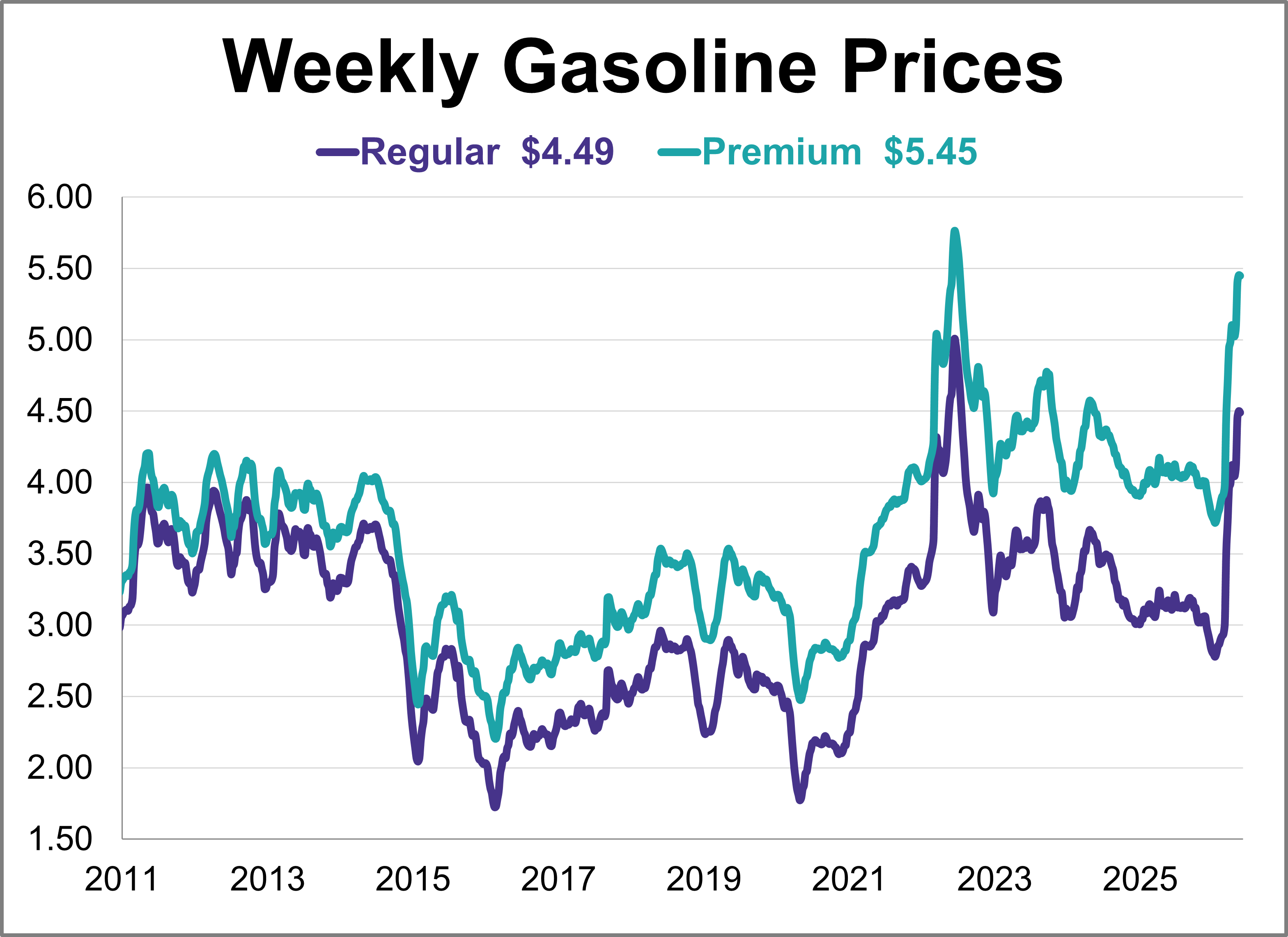
Gas prices were relatively flat this week, remaining at their highest level in nearly four years. As of May 18th, weekly prices were down 1 cent for regular and were unchanged for premium.
Join Dr. Ankur Crawford, Portfolio Manager at Alger, for an in-depth discussion on how she is evaluating the AI cycle, managing volatility, and identifying durable opportunities amid rapid change.
Investors need to understand what they own, how it may perform in different environments, and why it is structured the way it is. When advisors build this education into their work, it gives clients the discipline and expectations they need to stay the course when volatility rears its head.
Student loan debt is a legitimate concern, and the return on a college degree varies enormously by field, institution, and student. The key is to look realistically and specifically at each student’s needs and interests, each family’s finances, and all the sources of funding and support that might be available.
The percentage-of-assets fee is so embedded in advisory economics that most firms treat it as a fixed constant rather than a business decision. It shapes how you staff, how you plan, and how you define the relationship with clients. But the AUM model is neither as old nor as inevitable as it feels.
Bringing family into an advisory firm is not a shortcut. It can add complexity and raise expectations. But when the mission is clear, standards are applied consistently, and systems are strong, involving family can create meaningful long-term stability. That stability, however, depends on fairness.
If Donald Trump and Xi Jinping's Beijing summit produces a sustained Sino-American trade truce and a path to reopening the Strait of Hormuz, that will give the world economy something it has lacked for the past year and half: a reduction in tail risks. In a year when so much has gone wrong, that is a welcome prospect.
The 30-year rate increased six basis points to 5.18% on Tuesday, a level last seen on the brink of the global financial crisis in 2007, rising alongside US government yields across maturities.
Investors are pouring money into commodities funds as the US-Iran war stokes inflation, according to Invesco Ltd.
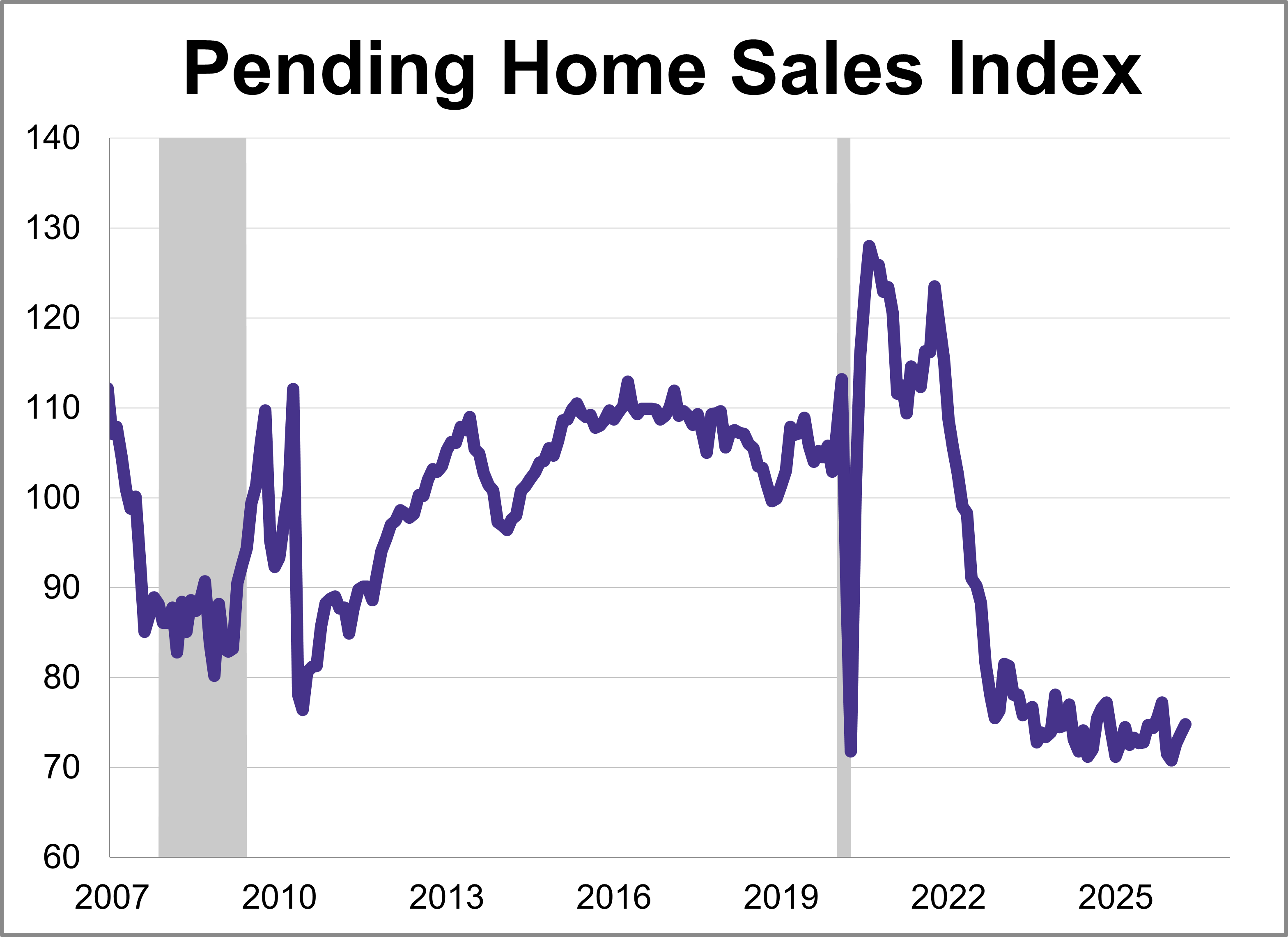
The National Association of Realtors® (NAR) pending home sales index rose 1.4% in April to 74.8, markings its third consecutive increase and highest level since November.
The nothing-burger that came out of the Xi-Trump summit drove home a new reality for global investors. The NACHO trade, which stands for “not a chance Hormuz opens,” is on. Prospects of prolonged inflation have risen, sending global bond yields higher and the US dollar stronger.
Federal Reserve chair Jerome Powell steps down this month after proving himself an exemplary public servant. Compelled to deal with a president intent on telling the central bank what to do, his response was exactly right. Reluctant to confront the White House until he had no choice, he then did so firmly, without needless drama or any trace of ego.
We’ve all been in meetings that “could have been an email,” so why not have a jury trial that could have been an AI prompt?
I’ve long been a student of game theory, the branch of mathematics that studies how rational actors make decisions when their outcomes depend on what everyone else does. It’s a helpful framework for understanding markets and geopolitics, and right now, there’s no better place to apply it than Taiwan.
A frequently asked question in recent weeks is whether the market is simply ignoring the risks stemming from the current geopolitical conflict, especially given the spike in oil prices that has pushed inflation pressures higher.
In this thought provoking presentation, Chuck Carnevale, co founder of FAST Graphs and widely known as “Mr. Valuation,” challenges one of Wall Street’s most accepted investing principles, the traditional 60/40 portfolio split between stocks and bonds. Drawing from decades of investment experience, Chuck explains why he believes blindly allocating large portions of retirement assets to fixed income may actually increase long term financial risk rather than reduce it.
AI has moved from buzzword to business reality. For Advisors and RIAs, the question is no longer whether AI will matter. It’s how fast your practice can use it to remove friction, improve service, and stay focused on the work clients actually value.
The artificial intelligence (AI) evolution moves at breakneck speed. While generative AI is still a significant part of the underlying investment thesis, physical AI is rapidly accruing momentum.
The summit in Beijing between US President Donald Trump and Chinese President Xi Jinping delivered little in the way of diplomatic breakthroughs but bears important cross-asset implications.
As Kevin Warsh takes over as Federal Reserve chair with his own goals, he may face challenges even beyond rate policy, from inflation to independence to a bulbous balance sheet.
Chemistry is a vital component when building an organizational powerhouse. This applies not only to just sports, but also the executive world. In the NBA, the New York Knicks assembled the “Nova Knicks.” This effectively reunited a championship-caliber core of Villanova alumni in Jalen Brunson, Josh Hart, and Mikal Bridges.
Leadership transitions at the Federal Reserve (Fed) are rare. Only seven individuals have served as Fed chair since the 1970s, underscoring how infrequent turnover is at the Fed’s top job. That rarity is why investors pay close attention when a new chair is appointed, especially when the incoming leader brings a different perspective. Kevin Warsh has been a vocal critic of Fed policy and communication in recent years.
Kevin Warsh was confirmed this week as the next Chair of the Federal Reserve’s Board of Governors. As we discussed in a recent article, his transition comes at a delicate time; inflation is rising, and questions about the Fed’s independence are pressing. The honeymoon period will be brief.
Vanguard research suggests that one practical answer may lie in pairing traditional target-date funds with a modest allocation to deferred-income annuities (DIAs).
The sooner the mass of retail private credit managers realize they are zombies and give up the ghost, the sooner we can burn the whole thing to the ground and conjure a better model from the ashes. But there is no time like a crisis to have conversations about how to make the structure work better for everyone in the future!
Semiconductor stocks, along with some computer hardware companies, are the market’s latest AI darlings. Momentum and gamma are driving the outperformance, and, in their wake, a supportive narrative is trying to justify it.
You are undoubtedly seeing in the news that high earners are leaving New York, Los Angeles, and other metro areas. This does not begin to address the magnitude of the problem. There are dozens of cities that are trending towards fiscal collapse. Indeed, taxpayers are leaving.
What do “the utilities of retirement” refer to? Buy gas and electric stocks and live off the dividends? No. Not in this article. We’re talking about utility as an economic term of art, meaning reward, pleasure, and satisfaction.
I was in West Texas recently to witness firsthand the emerging practical applications of artificial intelligence. What I saw bolstered my conviction about the technology’s progress and the need to mold it rather than resist the change.
Investors were forced to pay attention Friday, when the most interest-rate sensitive corners of the market saw big plunges in an ugly market selloff. The small-cap Russell 2000 Index dropped 2.4% for the biggest single-day decline since November.
NextEra Energy Inc. agreed to pay about $67 billion in stock for Dominion Energy Inc. in the biggest power acquisition ever, creating a giant utility extending from Florida to the data centers clustered in Virginia.
Yields on US bonds dipped as much as three basis points Monday after Iran’s semi-official Tasnim reported that Washington proposed a temporary waiver on Iran oil sanctions until the final agreement, citing a source close to the negotiation team.
In the race to build the infrastructure that powers artificial intelligence, Alphabet Inc.’s Google has an enviable position: The company has a healthy cloud computing business, makes its own chips, and has struck deals to share them with companies like Anthropic PBC and Meta Platforms Inc.
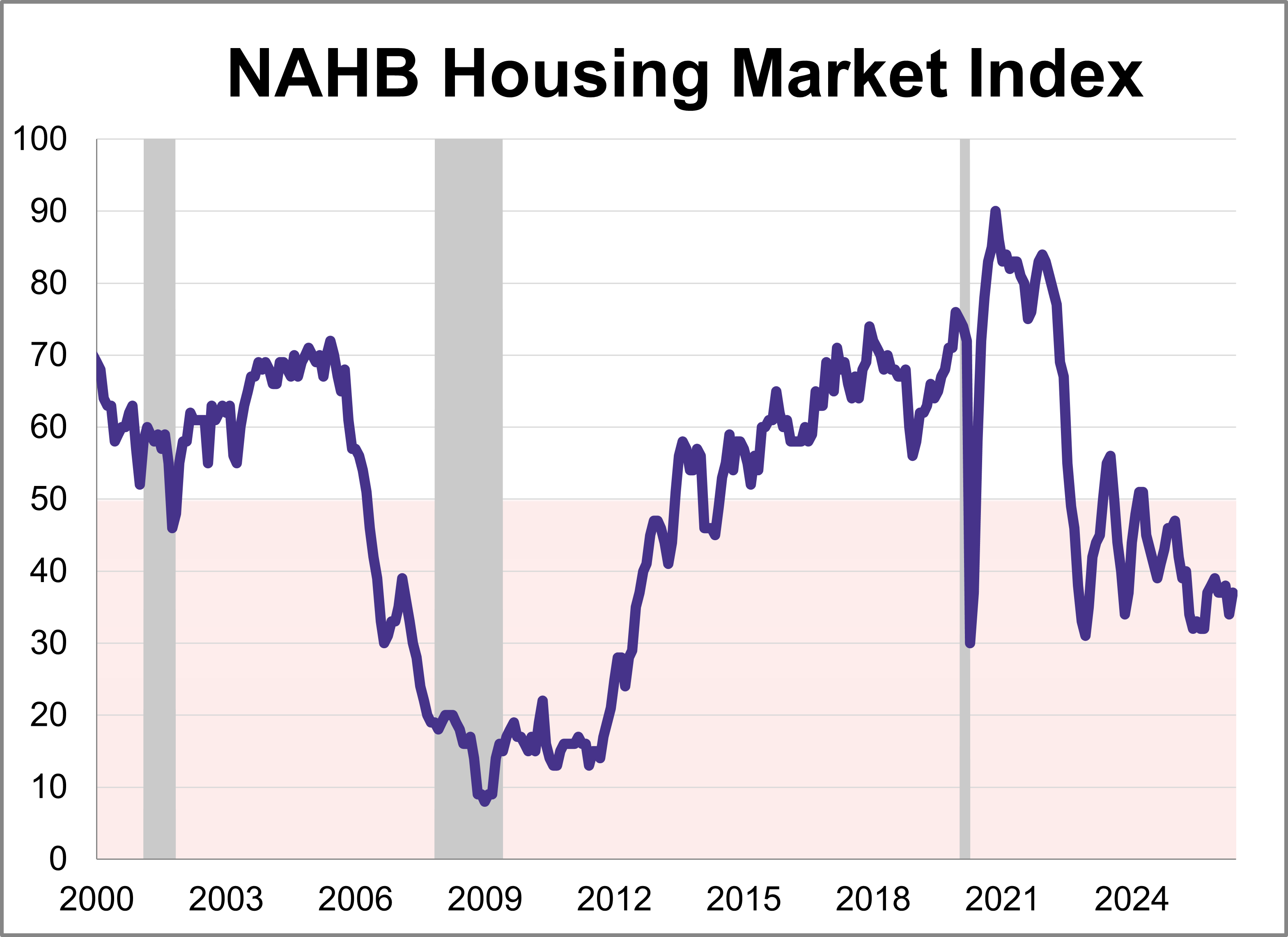
Builder confidence posted a modest gain in May despite persistent affordability challenges and economic uncertainty. The National Association of Home Builders (NAHB) Housing Market Index (HMI) rose 3 points from April to 37 this month, marking the 25th consecutive negative reading.
I think inflation is heading higher. That is going to take a rate cut off the table. Warsh is going to start reducing the balance sheet quickly. And will use the balance sheet contraction as a way to deal with inflation rather than actually raising rates.
Against this challenging macro backdrop, a stark divergence is expected as major retailers report earnings next week. Discounters are projected to perform well, with Walmart (WMT) expected to outpace Target (TGT) by gaining market share from high-income households trading down for groceries, while Target remains more vulnerable due to its heavier mix of discretionary goods.
The stagflation narrative dominating financial social media isn’t completely wrong. That’s what makes it so dangerous. After more than 30 years of managing client portfolios through actual inflationary cycles, not watching them on YouTube, I’ve learned that the most damaging investment advice isn’t built on outright lies.
U.S. inflation and rates remain elevated. Credit markets continue to show resilience. Opportunities are emerging across securitized and high yield assets
First quarter 2026 earnings were stronger than expected and we think that there might be continued strength in the second quarter, unless there is a major macro shift.
US equities continue to march higher in 2026 despite geopolitical uncertainties, supported by resilient economic data and strong corporate earnings. Much of the market narrative remains focused on mega-cap technology and artificial intelligence (AI).
Yes, this time is different, but not because inflation itself is unprecedented. What has fundamentally changed is the macroeconomic starting point. Unlike the post-Global Financial Crisis period, when persistent disinflation and repeated downside surprises dominated policy decisions, the economy today is operating in a world where structural disinflation is no longer the default backdrop.
In our Q2 Equity Market Outlook, we identified healthcare as one area where artificial intelligence (AI) is having tangible benefits and presenting investors with new expressions of the AI investment theme. While healthcare may glean some luster from an AI halo, the investment case is also one of counterbalance to the AI juggernaut.
Emerging markets bonds and the related ETFs are delivering for investors. Meanwhile, other, supposedly more dependable, less risky corners of the bond market are dithering. Market participants can capitalize on that trend with the VanEck Emerging Markets Bond ETF (EMBX), which is coming off an impressive showing last month.
The U.S. economic landscape in April was defined by a significant rebound in inflation across both consumer and wholesale sectors, complicating the path for future monetary policy.
The United States has not felt the greatest costs of the Iran conflict, but challenges are becoming visible. Energy prices have risen, with limited prospects for relief. Inflation measures are poised to spread to other product and service categories. Inventories that helped to blunt the impact are depleting; supply chain distortions are accumulating.
For many ultra-high-net-worth families, philanthropy is not simply about giving; it is about creating meaningful, lasting impact. A thoughtfully structured family foundation can become a powerful vehicle for aligning wealth with values, supporting communities, and engaging future generations in purposeful stewardship.