With the US-Iran war demonstrating not just how captive the world economy remains to fossil fuels, but also how easily energy can be weaponized, whether to drill at home is becoming an even more pressing question for some countries.
Most business owners spend decades building their business. For many, it represents 70–80% of their net worth. As your client’s trusted advisor, your role isn’t to become a transaction expert. It's to recognize where risks lie, ask the right questions, and spot red flags.
The S&P 500 Index is on track to close at its first record since January, as traders bid up stocks amid optimism over the ceasefire between the US and Iran and robust corporate fundamentals.
Wall Street has gotten repeatedly burned calling a bottom in software stocks, which have been hit hard by fears that artificial intelligence will make the companies obsolete. But this week’s bounce is bringing some bottom-fishing investors back to the group on hopes that the worst may finally be over.
Pacific Investment Management Co. bought all $400 million of bonds issued Monday by a Blue Owl Capital Inc. private credit fund, according to people with knowledge of the matter.
Bank of America Corp. disclosed it has about $20 billion in private-credit exposure, as the bank and its Wall Street peers seek to calm concerns about the industry’s exposure to the asset class.
Morgan Stanley’s traders got a boost from President Donald Trump’s deregulation agenda. In the first three months of the year, Morgan Stanley plowed capital that was freed up after US regulators relaxed a key rule into its prime brokerage division and its macro trading desks, according to Chief Financial Officer Sharon Yeshaya.
When I teach my graduate classes in leadership, we talk about the essence of motivation. Even the best leaders cannot motivate other people to do something. They can create an environment within which the person becomes self-motivated. But motivation is intrinsic.
Compliance officers hold qualifications that take years to earn, develop an understanding of regulatory frameworks most people in financial services never fully acquire, and build institutional knowledge that no keyword-match system can replace.
Over the past several years, those patterns have been changing. The evolving flows of both tourists and emigrees will have important economic effects.
Outside of energy commodities, capital markets posted a downbeat March as cross-asset volatility spiked in response to the outbreak of hostilities in the Mideast, and kicked off April in similar, choppy fashion before posting a swift bounce following last Wednesday’s two-week ceasefire agreement.
Rapid development of AI technology poses a direct threat to the SaaS sector, but the risks are not necessarily terminal or universal and vary based on time horizon.
While infrastructure companies are not immune to a potential economic slowdown, they may provide a longer-term investment opportunity amid an uncertain macroeconomic backdrop.
In a rare plot twist, Goldman Sachs front-run the banking pack today, marking the first time the firm has kicked off the earnings season ahead of JPMorgan Chase since 2018. The storied investment bank delivered notable results, comfortably surpassing analyst’s estimates on both the top and bottom-line.
Behavioral finance is the study of how emotions, cognitive biases, and human behavior may influence financial decisions, often in ways that can conflict with logic, data, and long-term goals.
Diversification is finally paying off. After more than a decade of U.S. dominance, international equity ETFs are enjoying monster inflows, outpacing their domestic counterparts for the first time since early 2023.
Rapid technological shifts and shifting interest rate expectations continue to define the current market environment. Amid the uncertainty, investors are looking for a reliable North Star to guide their growth allocations. They can start with the Fidelity Blue Chip Growth ETF (FBCG).
Yield curves exist for many products and can be interrelated, yet they also carry distinctive characteristics. Normally, long-term rates are higher than short-term rates because investors demand a higher return for lending money over longer periods. This arrangement would create an upward-sloping curve much like the Treasury curves displayed to the right.
In a year that started with volatility, direct indexing had ample opportunity to take advantage of loss harvesting opportunities.
Join ProShares Global Investment Strategist Simeon Hyman for a timely discussion on why many covered call ETFs lag in rebounds—and how newer approaches aim to better balance income generation with long-term equity participation.
Novo Nordisk A/S will integrate OpenAI’s artificial intelligence across the company to accelerate drug development.
Treasuries traded steadily after a reading of US wholesale prices last month rose less than anticipated, affirming wagers that the Federal Reserve will cut interest rates at least once this year even as the broader inflationary outlook remains murky amid the war in Iran.
JPMorgan Chase & Co.’s traders posted their highest-ever quarterly revenue in the first three months of the year, with record stock-trading results boosting the total past the firm’s previous record by almost $2 billion.
BlackRock Inc. Chief Executive Officer Larry Fink sees increased demand for private credit from big institutional investors like insurers, even as retail clients grow skittish over the asset class and seek to redeem more of their shares.
The leading cause of recurring tax-time friction is simple: HNW households rely on a roster of professionals who communicate inconsistently, if at all.
Economic conditions are set to be even rockier in 2026, as the US-Israel war with Iran has set inflation on a continued upward trajectory and further rankled markets. Even if there were a de-escalation in the conflict, a domino effect has begun.
Shadow advisors don’t have to be a problem. If a family member has genuine knowledge or carries enough emotional weight to influence your decisions, it may be better to include them than to pretend they don’t exist. The key is transparency.
The gap between what advisors are doing and what's now possible in tax-aware portfolio management has never been wider. The tools have outpaced the practice. Here's where I see advisors falling short, and what to do about it.
When advisors discuss referral strategies, the collective feelings on the subject tend to be very similar. The language varies slightly, but the sentiment is consistent: Such conversations feel awkward, forced or misaligned with the nature of the client relationship.
Saving for education can feel like a race against rising tuition costs, but 529 college savings plans offer families a powerful way to stay ahead.
A strong professional network does far more than provide camaraderie. It’s a growth engine, a source of expertise, a safety net, and often a long-term competitive advantage. The path forward might not be another software upgrade or marketing campaign — it might simply begin with finding the right peer group.
Once upon a time, not so long ago, about a third of all American workers had a gold-plated pension: When they retired, someone paid them nearly their full salary for the rest of their lives. They didn’t have to worry about the market, or inflation, or running out of money.
Tax management is about more than just deferring taxes to reduce this year’s bite. It’s also about managing where and how taxes show up over time. For high-net-worth investors with diversified portfolios, permanently reducing taxes versus deferring them may bolster long-term after-tax wealth. Many investors overlook a potent tax reduction tool: bonds.
The market remains remarkably resilient, but I have expressed a more cautious outlook in the near term as rising oil prices and a renewed pickup in money growth complicate the inflation outlook.
Beyond keeping party balloons aloft, helium plays a far more serious role in the modern economy. Extracted as a by‑product of natural gas production, it is an essential input across semiconductors, medical imaging, aerospace and defense systems.
The Middle East ceasefire sparked a relief rally last week as markets dialed back the risk of a deep, drawn‑out oil supply shock. Stocks have already erased much of the post-conflict drop. Bonds haven’t gotten the memo: Yields are still elevated, keeping a bit of extra term premium on the table.
Investor anxieties surrounding negotiations between the U.S. and Iran paused a rally on Friday, initially sparked by roughly in-line inflation data and the announcement of a two-week ceasefire on Tuesday night.
The question that is increasingly on everyone’s mind is simple: Is this time different? The answer will hinge squarely on what happens to core inflation, specifically the core Consumer Price Index and the core PCE price index.
If you expect Kevin Warsh to quickly take the helm at the Fed and start cutting rates, you need to adjust your expectations.
The first quarter of 2026 ended with a downpour of volatility as the CBOE Volatility Index (VIX) rose 69%. Nonetheless, Goldman Sachs (GS) reported first-quarter 2026 earnings that outpaced Wall Street expectations though a thick fog of uncertainty still lingers in Q2.
Michael Bell of Meketa Capital joins the Alternative Allocations podcast to explore why infrastructure investing is shifting from an institutional-only play to a foundational piece of the modern portfolio and what that means for today's market participants.
In a rapidly shifting geopolitical environment, gold continues to demonstrate both its resilience and its complexity as a financial asset.
For financial advisors, tax season should not be the only time to talk to clients about municipal bonds. However, with April 15 arriving this week, the timing is ideal to examine how muni bond ETFs are rapidly becoming a cornerstone of fixed-income allocations in 2026.
Jason Chura, head of global consulting at Voya Investment Management, outlines a behavioral framework to help advisors project confidence, build credibility, and guide clients through uncertainty.
Over the last few weeks, we have published real-time market commentary as the correction proceeded. The goal was to help investors navigate the more dire outcomes promoted on social media. A largely unexpected outcome was that the S&P 500 outlook changed dramatically in a matter of days.
New ETF launches address concentration and liquidity risks exposed by volatile markets through active and passive strategies.
While artificial intelligence is unlikely to replace financial advisors, it can certainly enhance both the quality and the productivity of advisors who embrace it. I agree that AI will boost productivity, but I wanted to put it through the test now to see how accurate and insightful it was. To do so, I gave Anthropic’s Claude a spin.
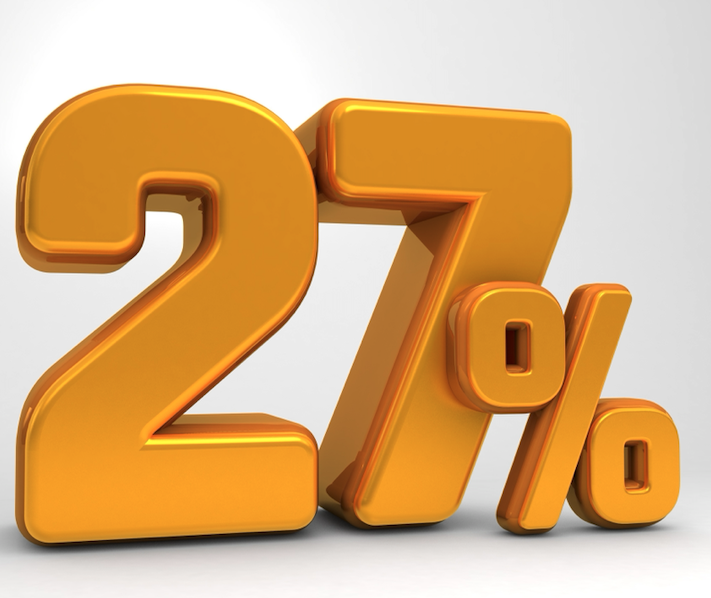
Over 6,537 trading days from 2000 through 2025, about 27% fall into the pure beta category. That 27% is sitting in every trailing return anyone’s ever used to evaluate an active manager, quietly diluting the signal.
While tech giants race to invest billions into AI, executives at Apple are quietly sitting on their hands and a mountain of cash. The puzzling question, however, is why Apple isn't following suit. Or is it taking a different approach to winning the AI arms race?
Inflation fears are not new, but the current path is beyond alarming. The U.S. is spending its way into a rampant inflation catastrophe. That is why gold and commodities are being bid up in price and will likely continue to be bid up.