Chinese stocks overcame a bout of early volatility to post their biggest gain in a week on Monday, suggesting that investors are hopeful the government will deliver on its promise of more fiscal support.
When most people hear the word “risk,” they think about wild market swings, scary headlines, and losing money overnight, but Howard Marks, Co-Chairman and Co-Founder of Oaktree Capital Management, takes a different approach. In his new video series How to Think About Risk, Marks digs deep into what risk is and how investors should handle it. Spoiler alert: It’s not just about volatility.
Everything I’ve learned and experienced in 50+ years of watching the economy tells me not to expect a soft landing. But maybe that’s because I’ve never actually seen one.
With over 36,000 metric tons in reserves—about one-fifth of all the gold ever mined—central banks know something we should too: Gold is the ultimate safety net.
The latest Employment Situation Report released on October 4, 2024, showed nonfarm payrolls increasing by 254,000 in September, with the unemployment rate holding steady at 4.1%.
As the Fed shifts its stance, investors must now weigh the broader economic implications.
For decades, a key component of many investors’ portfolios was a fixed income ladder. It was intended to provide ballast to the more volatile equity allocation and help reduce interest-rate risk.
Commodity returns are hard to predict, yet all commodities have something in common—prices that tend to return to their long-run average, a characteristic described as mean reversion. For investors, this behavior could offer an exciting opportunity to improve long-term performance potential.
China’s leaders appear to be back on a pragmatic macro policy path, but more course corrections will be required to change the direction of the world’s second-largest economy. Beijing must continue to be less stubborn, and we will need to be patient.
In the past few years it certainly has been. No wonder.
Credit indices rallied during the third quarter, despite a variety of economic headwinds, and it appears FOMO (fear of missing out) is fueling the bullish sentiment more than fundamentals.
The latest S&P 500 rebalance introduced Dell and Palantir to the index, and Apple’s weight grew with annual float changes, signaling technology’s ongoing influence.
The US debt is near its highest level in history and on track to grow. Neither political party currently seems intent on making it more sustainable.
The bond market is growing less convinced by the day that the Federal Reserve will embark on two further interest-rate cuts this year.
The key moment during the Tesla Inc. robotaxi event Thursday night came when a member of the audience interrupted Chief Executive Elon Musk’s spiel about the benefits of autonomous vehicles. He had just opined about Airbnb-like fleets of money-earning robotaxis that you could care for like a shepherd tends their flock — stirring stuff, this — presaging “a glorious future” when someone shouted: “When will they be available?”
The market continues to trend higher on Goldilocks pixie dust.
Our research shows that on average U.S. stocks performed well a year after the start of a Federal Reserve rate cut cycle.
BlackRock Inc. reaching $450 billion in alternative assets is putting a finer point on a case it has been making all year: it’s not just an ETF powerhouse.
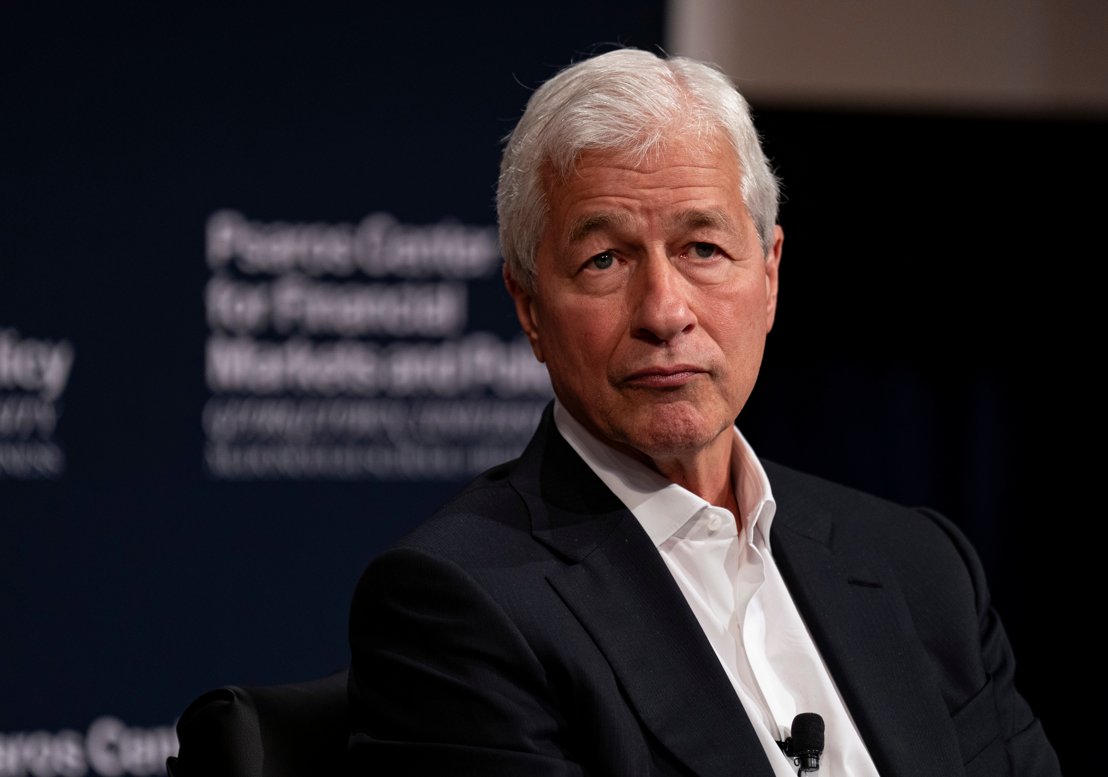
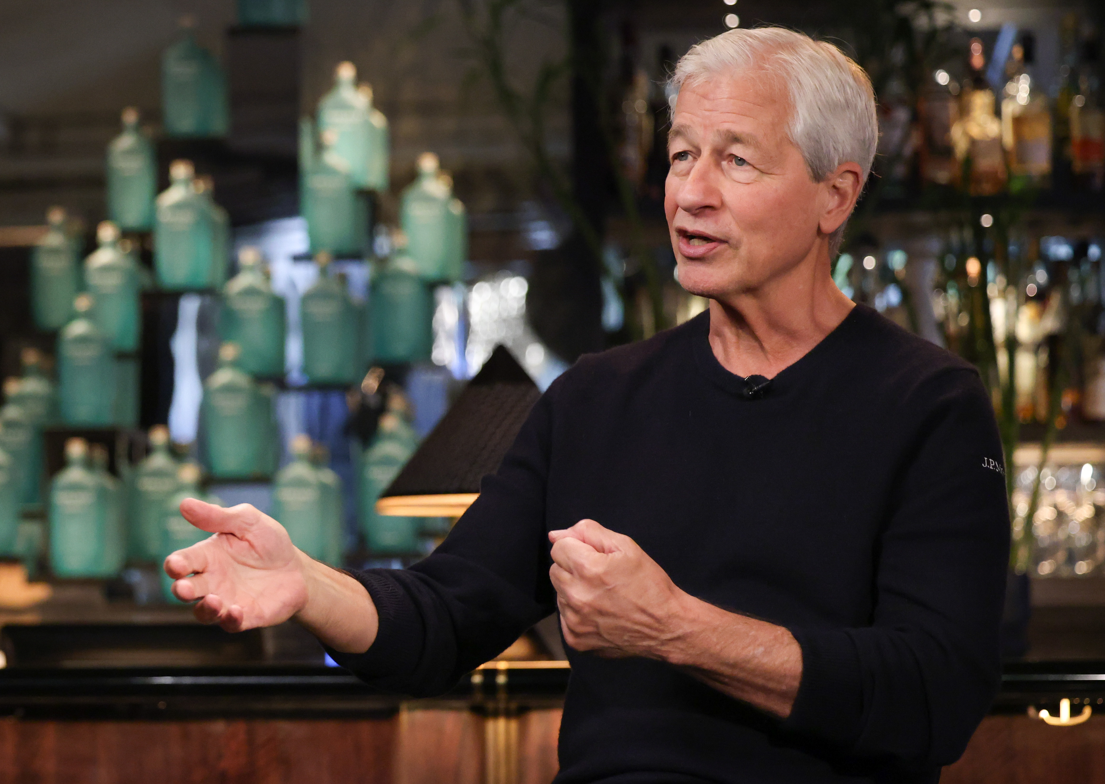
JPMorgan Chase & Co.’s net interest income was the hot topic of its third-quarter results, much to the irritation of Chief Executive Officer Jamie Dimon, who grew impatient with quibbling over details of the bank’s outlook on its earnings call on Friday.
September was a solid month for investors, capping off a strong quarter for markets. Falling interest rates helped support stock returns, with the S&P 500 and Dow Jones Industrial Average setting new record highs during the month. Even bonds were up, marking five straight months with positive fixed income performance.
VettaFi looks at midstream/MLPs by subsector and underlying trends driving strong performance through the first three quarters of 2024.
Quarterly recap: Fed rate cut and Chinese stimulus take the spotlight.
Taxes are top of mind for many. See what the US presidential candidates stand on tax policy as we enter the final weeks before the election. Our Bill Cass compares their plans.
Foreign investors have been buying more US corporate bonds, a trend that will likely continue as Federal Reserve monetary easing lowers the cost of hedging and investors hunt for yield.
Investors in Hong Kong have bet a record amount on exchange-traded funds that profit when stocks decline, showing how quickly sentiment is shifting following a breakneck rally.
Traders are pushing the dollar toward its second-straight weekly gain in anticipation of a slower pace of interest-rate cuts by the Federal Reserve.
Two senior Wall Street executives complained this week that over-regulation is discouraging initial public offerings. JPMorgan Chase & Co. CEO Jamie Dimon partly blamed the zeal of securities regulators for the drop in IPOs that began in March 2022, a sentiment echoed by Citadel Securities CEO Peng Zhao.
Elon Musk unveiled Tesla Inc.’s highly anticipated self-driving taxi at a flashy event that was light on specifics, leaving investors questioning how the carmaker expects to achieve its ambitious goals.
After the Fed's 50-basis-point rate cut, big banks kick off earnings season amid fears that lower rates could hurt the net-interest income that propelled growth the last two years.
With storm clouds forming above equities and fixed income markets, is now the right time for institutions to grab their private credit labeled umbrella?
We have openly promoted increasing duration over the last several months. An increase may seem like an odd “wish” as it implies taking on greater price risk.
In the wake of pandemic shocks, economies appear more “normal” than at any time since 2019. Yet policy rates remain elevated.
Distressed US real estate presents one of the best opportunities in a generation – but the investment window is closing. Advisors can benefit, but given distressed investing’s complexity, it’s critical they partner with the right managers.
The 2022 broad market downturn across major asset classes came as a nasty surprise to investors. Historically, such an event is very rare, and no one was expecting to see almost all asset classes down for the year. Yet, even though it might seem as if diversification was of no help in 2022, the story changes if we look beyond the major headline asset classes.
In the last year, we’ve written about the poor performance of clean energy, while highlighting the strong long-term outlook for the sector and the attractive valuations. These are typically the sorts of things we focus on…valuations and the long-term fundamental prospects for companies. We tend to shy away from overanalyzing short-term market dynamics.
Supply chain disruptions related to the port workers’ strike loom, the impacts of which we know can be incredibly destructive.
Long-term US Treasury yields rose last week as investors digested mixed economic data that reinforced the idea of a "Goldilocks" economy.
Join the experts at Invesco for an educational webcast exploring strategies and ETFs for tax optimization.
A series of unprecedented and historic events has completely shifted the candidates and dynamics of the race for the presidency and Congress.
Should China deliver sufficient stimulus to break the cycle of tightening fiscal policy, we may find China, and emerging markets, investable again.
The puck has certainly moved since our last market commentary. This month, we argue that the needle on portfolio construction should move with it. Equities have been the driver of returns for much of the last few years.
Alpha (α) is a fundamental yet poorly understood concept in finance. Simply put, it is the difference between the return of an investment and that of a risk-adjusted benchmark. In a more advanced definition, alpha is the residual in an asset pricing equation (see Appendix A). Alpha is what active managers strive to achieve and passive managers do not pursue.
The wait is over for earnings watchers, as the latest quarterly read on US corporations kicks off with reports from JPMorgan Chase and Wells Fargo on Friday. Earnings will provide a gut check on the state of the US economy, and investors will be looking for these results to confirm the mostly improving economic data that’s been released in the last month or so.
A return to lower yields has been every bond fund manager's dream since the nightmare of 2022. But now, with expectations dashed that they’d get their wish this year, it appears they’ll have to hang their hopes on 2025.
With many having characterized China as “uninvestible” just a few months ago, investors’ enthusiastic response in recent weeks to a perceived shift in the authorities’ policy reaction function is also likely to be an overreaction. It grossly oversimplifies the competing priorities of a country with internal imbalances, inefficient resource allocation channels, and exposure to further geopolitical tensions.
Underlying US inflation rose more than forecast in September, representing a pause in the recent progress toward moderating price pressures.
Wall Street banks are expected to launch a barrage of bond sales as soon as next week, capitalizing on ultra-low credit spreads and strong demand from investors after they report quarterly results.
Investors who buy bundles of loans packaged into bonds are increasingly using exchange-traded funds to do so, according to a report from Bank of America.
Private capital – encompassing private equity and private credit – is in the midst of a bit of a renaissance at the moment. IPO activity hit a peak in 2021, the year after the pandemic and then promptly plunged to levels not seen in years.
Tougher stances on trade are a point of bipartisan agreement.