Not surprisingly, Donald Trump and Kamala Harris are floating opposite approaches to modifying the corporate tax code. If enacted, both proposals would significantly impact corporate profits and, thus, share prices. Currently, the plans are only campaign promises
The ERISA Advisory Council is conducting hearings on Qualified Default Investment Alternatives (QDIAs), seeking recommendations for improvements. The big challenge is making better decisions for people who do not want to engage.
Today, I’m going to share stories about my best and worst investment decisions. Don’t worry, this isn’t just a brag-and-cringe session about making or losing money. These stories are about the valuable lessons learned, and how these adventures in investing helped shape my current approach.
I’m moving up a letter I was planning to share with you on my birthday weekend in two weeks. The story about sandpiles and the financial system may be the most popular letter I’ve written in the last 25 years. It is one we should all re-read every few years to remind us how change happens slowly, then suddenly.
For years, the U.S. has been the dominant player in military spending, with American companies like Lockheed Martin and RTX (formerly Raytheon) commanding the global arms market. But now, Europe—specifically its arms manufacturers—may be the next big opportunity for savvy investors.
More than two years after first taking steps to contain swelling inflation, the Federal Reserve (the Fed) has taken a step back, suggesting monetary policy decision-makers have confidence that inflation will continue to move closer to the Fed’s target, allowing them to turn some attention to economic growth.
We expect the Fed to cut rates by 25 basis points at each of its remaining meetings in 2024 and to sustain that pace into 2025. This trajectory would get the Fed down to our estimate of the normal or equilibrium rate of interest of 3%-3.25% this time next year.
As GMO celebrates its 30th anniversary managing emerging debt this year, we offer our comprehensive guide to emerging debt markets. Given the tumultuous recent events – a global pandemic, defaults, repricing of interest rates, relentless strength in the U.S. dollar – we’ll focus on the Why as a starting point. Then we’ll dive into the proliferating How, covering strategies and vehicles.
From "how" to "why now," here are four things investors should understand about bond investing.
The Northern Trust Economics team reacts to the Fed's decision and shares its outlook for U.S. growth, employment and inflation.
Despite forthcoming volatility, it's an ideal time to get municipal debt exposure, especially in the current market environment.
Trend-following is an exercise in technical analysis, systematic rules following, and signals reading that’s objective and agnostic.
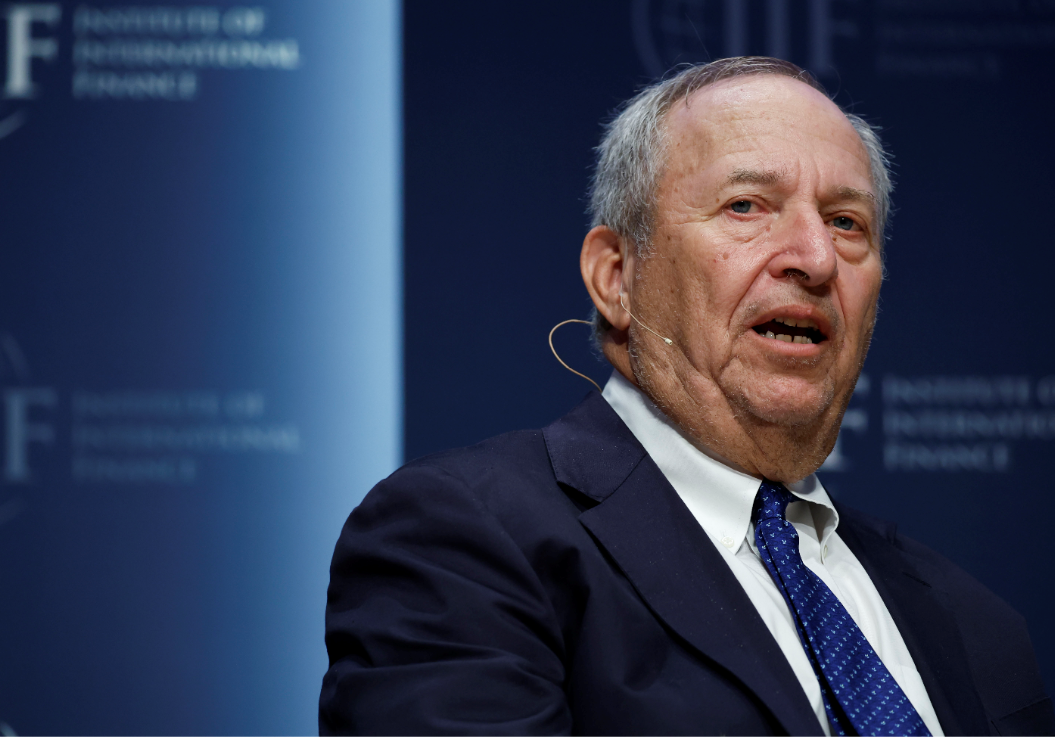
Former Treasury Secretary Lawrence Summers said inflation will probably prevent the Federal Reserve from lowering interest rates as much as expected in coming years.
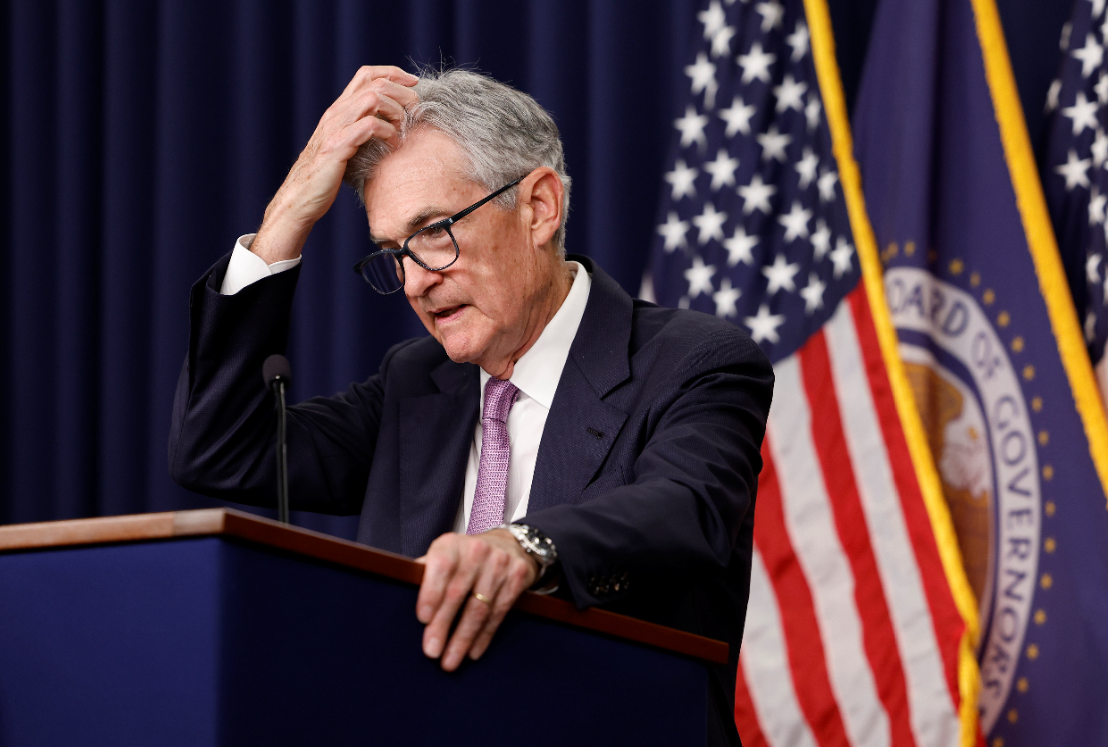
Jay Powell: Federal Reserve Chair, soft-landing pilot … car dealer extraordinaire?
With interest rates on the decline, investors may want to consider filling gaps in small- and mid-cap quality ETF exposure.
Now that the Fed has begun the rate-cut cycle, investors can use option income ETFs to provide long-term income and risk protection.
It’s understandable that bank regulators, facing zealous industry opposition, are retreating from their effort to require the biggest lenders to fund their assets with more equity. After all, there hasn’t been a major blowup in 18 months and the banks insist they have more than enough capital.
Earlier this month, OpenAI released its most-advanced models yet, saying they had the ability to “reason” and solve complex math and coding problems. The industry-leading startup, valued at some $150 billion, also acknowledged that they raised the risk artificial intelligence could be misused to create biological weapons.
With the decision on Wednesday to lower interest rates (for the first time since March of 2020) by a substantial 50 basis points (bps), rather than the 25 bps cut we typically see at the beginning of an easing cycle, the Fed is showing confidence that the disinflation trend will continue.
What history can tell us about seasonal returns.
Sometimes that means lower priority tasks fall through the cracks. Here are four tips for managing procrastination tendencies.
Americans might be forgiven for basking in self-satisfaction when it comes to the economy. The country’s most prominent CEO, Jamie Dimon, has called the country’s boom “unbelievable,” and its most stimulating magazine, The Atlantic, has dubbed it a “superstar.”
The rise of artificial intelligence has reordered the American stock market, pushing the likes of Nvidia Corp. and other chipmakers into the upper echelons. There’s one storied corner, though, where the changes wrought by AI haven’t shown up: the Dow Jones Industrial Average.
Wall Street’s biggest banks are divided over how fast and deep the Federal Reserve will cut interest rates over the next year, setting the stage for jittery financial markets until the outlook clears.
Millions of Americans are falling behind on student loan payments a year after the pandemic freeze ended – and soon that will start hurting their credit scores.
The owner of the shuttered Three Mile Island nuclear plant in Pennsylvania will invest $1.6 billion to revive it, agreeing to sell all the output to Microsoft Corp. as the tech titan seeks carbon-free electricity for data centers to power the artificial intelligence boom.
An action-packed week on Wall Street ends with a bang as index-tracking funds are set to reshuffle $250 billion of shares, just as a “triple witching” trading event hits.
We believe the Fed is on a path to continue to cut rates over the next several meetings to realign monetary policy with a now more “normal” U.S. economy.
Many financial planning actions are linked to age milestones. Our Bill Cass highlights what key birthdays and other dates could mean for your financial plan.
The half-percentage point reduction at the September 17-18 FOMC meeting represents the largest non-COVID era cut by the Fed since 2008.
Conference season brings about its own set of volatility catalysts. Portfolio managers and traders must keep their ears out for clues on the state of the broad economy, specific industries, and individual companies.
In this video, Chuck Carnevale, Co-Founder of FAST Graphs, a.k.a. Mr. Valuation is going to be highlighting what he considers to be the best investment in AI – Super Micro. Chuck has done a lot of research on Super Micro Computer.
The Fed began the process of rate cuts today, and they came out not with a whimper, but with a bang, cutting rates by 0.5% (50 basis points). Following the June meeting, Fed members forecast it would be appropriate to cut rates once – by 25 basis points (bps) – in 2024. Three months on, they have already surpassed those expectations, and forecast further cuts before the year is through.
GMO has posted a new 7-Year Asset Class Forecast.
The Fed enacted a 0.50% interest rate cut, the first in the Fed’s historic fight against inflation that’s lasted over two years.
Most American couples say they trust their partner regarding financial matters, but many reveal they aren’t necessarily in full agreement.
As the back-to-school season fills your social media feed with first-day photos and ads for the latest school supplies, it is also a prime opportunity for financial advisors to reconnect with clients about their education savings plans.
In the coming Q4 Preview Symposium, investors will learn how they can best prepare for a host of possibilities and set up their portfolios to take advantage of opportunities and understand which areas of the market will face higher-than-normal risk.
Policymakers indicated that more interest rate cuts were likely in coming months.
An ETF that just last month was dubbed the most volatile to ever hit Wall Street has already been upstaged, after the debut of a competing product that adds even more leverage.
In the long-running popular series about what’s wrong with economics, there is a new entry: Our profession is too insular. “Economists generally agree that competition is good, and that markets with only a few dominant players are inefficient,” writes the economist David Deming in the Atlantic. “We may need to take a hard look in the mirror.”
In the frothy business of selling artificial intelligence service, Salesforce Inc. has been punching above its own weight. “Salesforce?” I hear you wonder. The folks in the dull business of selling customer relationship management software?
The Federal Reserve on Wednesday began its policy easing with a bang. Much of the focus was on its decision to cut interest rates by half a percentage point from a two-decade high. But the key question for the bond market is where rates will land once all is said and done. Nobody knows for sure, and Chair Jerome Powell injected enough uncertainty to ensure a choppy ride ahead.
Just as Wall Street traders come to grips with the Federal Reserve’s interest-rate cut, Friday’s US options expiration threatens to whipsaw the market some more.
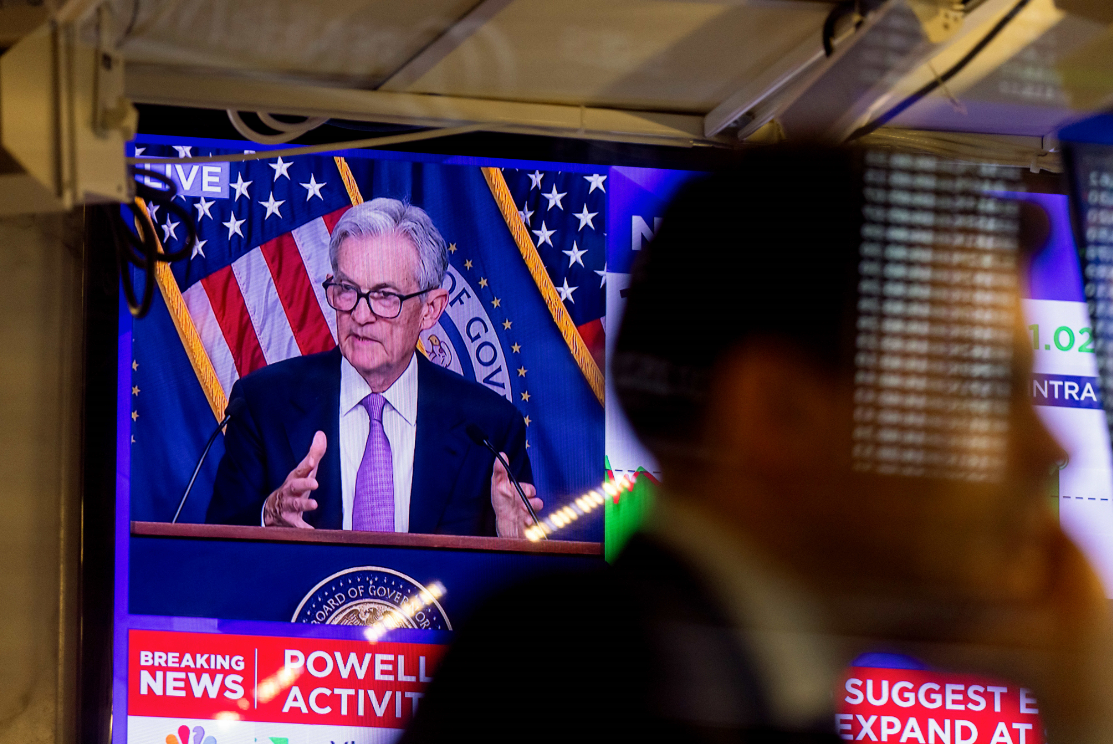
Jerome Powell delivered exactly what traders up and down Wall Street had long hoped for: A big interest-rate cut that would justify this year’s steep rally in stocks and bonds as the era of tight monetary policy finally began to reverse.
After much anticipation, the Fed finally delivered a rate cut at the September FOMC meeting. The amount had been the subject of a great deal of speculation of late, and the voting members decided on a half-point reduction to kick off this easing cycle, bringing the new Fed Funds trading range down to 4.75%–5%.
As the kiddos return to school, our fantasy football lineups are set, and the summer has ended, not only is the weather turning in the Northeast, but the inflation challenges are also cooling. The Federal Reserve’s (Fed) preferred inflation gauge, the PCE, was released at the end of August and came in at 2.5% month-over-month for July.
MSCI boosted India’s weighting in the MSCI Emerging Markets Index and reduced China’s in its latest quarterly rebalance, continuing long-term trends.
Doug Drabik discusses fixed income market conditions and offers insight for bond investors.
While the beach version of SoCal has had an epic, non-marine layer summer, it seems to have been enjoyed by few locals who instead violate the cardinal rule of adult life without children living at home and nevertheless travel to Europe in summer. We haven’t missed you.