As you move through retirement, it’s important to set time aside to reflect on how you’re doing. While most people often focus on their health and finances, it’s equally as important to think about other areas of your life as you approach the midpoint of your retirement.
As Apple Inc. prepared to introduce its Vision Pro headset a year ago, the worry at Meta Platforms Inc. was that the hardware geniuses in Cupertino were about to unveil a breakthrough in mixed reality, some new take on a computing platform that Chief Executive Officer Mark Zuckerberg had been trying to crack for more than a decade.
The US government’s finances keep looking worse. The latest Congressional Budget Office projections suggest that it will need to borrow an added $400 billion this year to cover its budget deficit — and trillions more over the next decade.
Join us for our Midyear Market Outlook Symposium, where our panelists will tackle all of these topics and shed light on top strategies aimed at helping your clients reach their financial goals.
Big swings in Nvidia Corp. shares have reignited debate about the staying power of the chipmaker’s rally. While the stock’s valuation and threat of competition are major concerns, one variable is key: durability of demand.
FedEx Corp. dropped a bomb on the market Tuesday afternoon with the announcement that it will do an “assessment” of its freight unit. Investors seemed to like the move, pushing up the shares as much as 15%, on the possibility of a windfall and a more pure-play package delivery and logistics company.
The petrodollar died this month -- or so I learnt via the financial blogosphere. In the past fortnight, Google searches for “petrodollar” have spiked to a record, and viral posts about Saudi Arabia ditching the greenback have ricocheted throughout commodity and currency trading rooms. Apparently, a cataclysmic event has ended American economic hegemony.
Much of the current decrease in the headline retail sales number can be attributed to the decline in gasoline prices at the pump.
A long era of easy profits in private equity is gone, and Goldman Sachs Group Inc. is digging in deeper for the harder work ahead.
U.S. Treasury auctions are of interest lately due to growing U.S. debt and high interest rates. What are Treasury auctions, how do they work, and what should investors know?
After years of insufficient investment and sagging productivity in the UK, the Labour Party recognizes that achieving high-quality growth will require a comprehensive policy approach that builds on many intermediate objectives. But devising a strategy is only the first step; the real challenge lies in implementation.
In their mid-year outlook for global stocks, Head of Americas Equities Marc Pinto and Head of EMEA and Asia Pacific Equities Lucas Klein argue that while risks of an economic slowdown remain, the potential for unlocking new shareholder value is also strong.
Today emerging markets are too big to ignore. The asset class represents a large and growing proportion of the world economy, accounting for over 40% of global GDP in 2022. The asset class includes a broad spectrum of issuers, with investment opportunities of varying risk/return.
Valued for their reliability across economic regimes, investors don't have to sacrifice growth when blue chip investing with FBCG.
Bond investors have been looking for an approach that delivers attractive, repeatable, uncorrelated active returns. Is their wait over?
Higher education is one among many paths to success.
Macro worries meet AI wonderwall. Stocks have managed to climb a wall of macro worries, thanks to largely solid earnings that we believe can expand beyond AI beneficiaries and continue to support prices. As Q3 begins, we look for:
Investors often ignore geopolitics, usually to their benefit. Now might be one of those times when we should pay attention. In the past few weeks, hostilities between East and West have accelerated. It’s a worrisome trend.
Roxanna Islam, Head of Sector and Industry Research at VettaFi, discusses the benefits and flaws of applying rules-based investing to closed-end funds. She notes that changes in the industry have forced changes on a rules-guided index of closed-end funds and how that is impacting the holdings and asset allocation of the fund-of-funds that some investors are using instead of building their own portfolio of individual closed-end strategies.
No coach is going to be able to work well with your team unless you are very clear about expected outcomes. What will success look like in working with the coach?
Many investors see diversification as the starting point for a sound investment strategy. But it could result in potentially diluted returns. Taking advantage of the strengths inherent in high-conviction, quality investing could potentially be more durable over the long term.
Investor behavioral tendencies, however, can complicate the process and create inefficiency. A systematic framework can mitigate that, especially if it focuses on quality first and then growth.
Join the experts at Macquarie Asset Management for a product spotlight on the Macquarie Focused Large Growth ETF (LRGG) and explore a concentrated,1 active approach to quality investing.
The longer I spent working at a big firm, the more I came to understand that the advice I could offer was determined by decisions at the top. My input as an advisor was limited, which didn’t sit well with me, so I looked for a position that would allow me to offer unbiased financial advice.
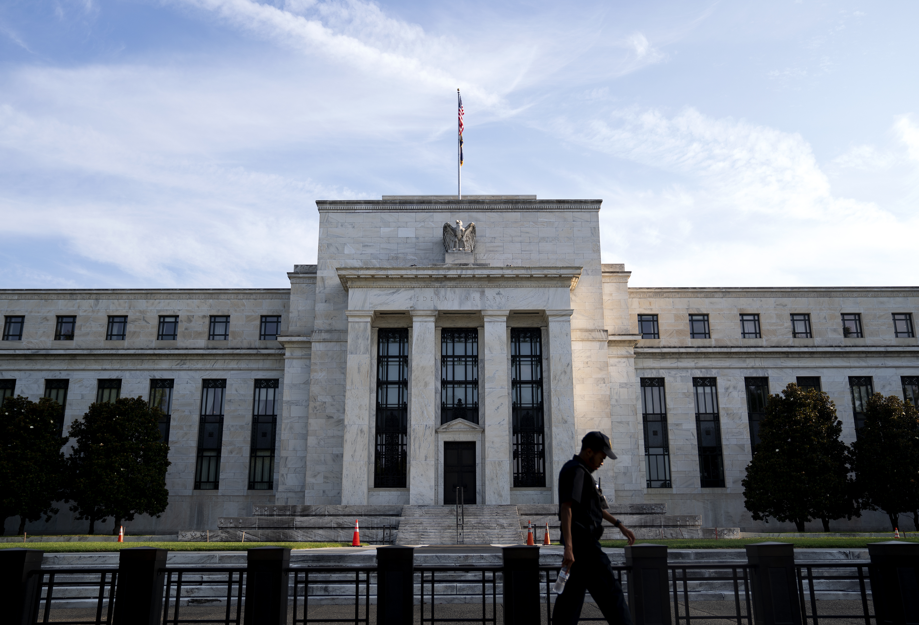
With inflation still persistent, the Fed is holding back on rate cuts. Meanwhile, in Europe, the European Central Bank (ECB) is looking to cut rates, which could generate strength in International Developed markets.
It took much of the first half of the year for Treasury bond investors to fall in line with a Federal Reserve signaling higher-for-longer interest rates. Now, as they weigh the timing of a second-half pivot, they must also contend with potential wild-card risks from a hotly contested presidential race.
Traders in the US rates options market are embracing a nascent wager on the Federal Reserve’s interest-rate path: a whopping 3 percentage points worth of cuts in the next nine months.
The biggest US banks haven’t waited for this week’s stress tests to signal optimism about their capital levels.
After being so consistently wrong in recent years about how the US economy and households would perform coming out of the pandemic, doomsayers should have learned their lesson. But there they were in full force after Pool Corp. said late Monday that it was lowering its earnings outlook because households aren’t installing backyard swimming pools as they once did.
Big US banks look to be getting their way in the fight over tougher capital rules. The Federal Reserve is talking to other regulators about changes to the updated standards that were proposed last July, according to Bloomberg News, which could mean capital demands increasing by less than one-third of what was originally envisaged.
The artificial intelligence hype that made Nvidia Corp. the world’s biggest company has come with a price for the world’s climate. Data centers housing its powerful chips are gorging power and belching carbon dioxide, and sobering figures now reveal the extent of the problem.
Over the last decade, there has been an ongoing fundamental debate about markets and valuations. The bulls have long rationalized that low rates and increased liquidity justify overpaying for the underlying fundamentals.
In this video Chuck Carnevale, Co-Founder of FAST Graphs, a.k.a. Mr. Valuation is going to discuss how to find the best stocks to invest in regardless of your investment strategy and regardless of the level of the market, whether you are looking for growth or if you are looking for income.
What I see emerging, though, is the idea that the CRM isn’t a single pane of glass to view the entire business. Effective CRMs are more like prisms, where the viewer’s role determines what they see, and what information leaps to their fingertips.
Recent economic data slightly underperformed expectations, though nothing dramatically concerning. Jobless claims dipped just below the 240K level, which is something to watch closely. Claims above this threshold have historically been indicative of labor market weakness, which could influence Federal Reserve (Fed) policies.
Americans remain pessimistic about the state of the economy largely because the big jump in prices overwhelmingly outweighs the drop in inflation. Unfortunately, the current state of US politics means that more attention will be paid to assigning blame, rather than debating solutions, ahead of November’s presidential election.
Corporate bonds continue to garner interest as investors may be locking in current yields now before eventual rate cuts take place.
Experienced real estate investors know that one of the primary fundamental measures of strength is occupancy rate.
The allure of China as a global manufacturing hub is unlikely to fade anytime soon.
Although bonds may not always be able to significantly contribute to growing an investor’s wealth, their lower risk profile can bring comfort in positioning an investor to maintain that wealth.
As the performance of China’s equity markets remains uneven and unpredictable, portfolio manager Hardy Zhu and Chief Investment Officer Sean Taylor highlight the potential growth agents that could improve long-term investment returns.
I have long admired Jonathan Clements. His columns in The Wall Street Journal introduced me to index-based investing. I was deeply saddened to read his column in HumbleDollar, dated June 15, 2024, that, at age 61, he has been diagnosed with lung cancer that has metastasized to his brain and “a few other spots.”
BlackRock’s Dhruv Nagrath discusses the rise of bond ETFs and offers perspective on current fixed income markets. VettaFi’s Roxanna Islam explains a massive tech ETF rebalance and previews the expected debut of spot ether ETFs.
Many different factors drive commodity cycles. Decarbonization, deglobalization, and demographics are inflationary drivers that weren’t present just a few years back and which put commodities in an interesting position.
Join the experts at Voya Investment Management on June 25th at 1pm ET for a free educational webcast that unpacks how to approach nontraditional bond funds.
When it comes to personalization, automation can be one of our most powerful tools. That might sound paradoxical, but it’s not.
This article will outline the key steps and best practices financial advisors should take to become trusted advisors in the realm of cybersecurity.
It might seem like a far-fetched concept, but making the sale should be a consistently predictable and effortless experience. Your outcomes should not be unpredictable and you should not have to “follow-up” on qualified prospects who have ghosted you.
There is a benefit to simplified language that can help consumers understand and engage with economic issues. Yet oversimplifying nuanced concepts to the point of inaccuracy only fosters miscommunication and misunderstanding.
With 2024 continuing to see uncertainty, advisors need strategies to help address hard-to-predict markets. Join Fidelity Investments Institutional Portfolio Manager Michael Hagopian for this 30-minute LiveCast to hear how Fidelity’s Enhanced ETFs are constructed to identify both traditional and non-traditional long-term drivers of risk and return to achieve a differentiated, low-cost source of potential alpha.
Norinchukin Bank is best known outside of Japan as an investing whale in the market for bonds that package up loans to private equity businesses, known as collateralized loan obligations.
Declines in foreign direct investment in China bolster the thesis that global companies are turning away from the world’s most-important production hub, continuing the trend of decoupling that has policymakers and corporate leaders looking for alternative manufacturing bases. The truth of the nation’s deteriorating importance isn’t so simple.