For investors, a concentrated portfolio of equity-market winners tends to work just fine — until it doesn’t. At the moment, the S&P 500 is a case in point: Its earnings remain both spectacular and spectacularly concentrated around the artificial intelligence story.
Investors’ certainty that the Federal Reserve would follow its recent interest-rate cut with another in December has evaporated.
The volume of activity on Polymarket, one of the most popular prediction markets, has been significantly inflated by so-called wash trading in which users rapidly buy and sell the same contracts, according to a new study by Columbia University researchers.
There is (another) framework for a deal with China. That is a positive for risk markets. There is increasing evidence of waning tariff effects on company earnings and outlooks. That is a positive for risk markets. The interaction of the two is by far the most intriguing.
Chuck begins by reminding viewers that investors tend to be about two-and-a-half times more sensitive to fear than to greed. When stocks are expensive, investors often ignore the overvaluation.
Financial markets are obsessed with AI, and the broader public is aware of its looming impact on jobs and wages. Yet for the Federal Reserve, the concern has barely registered.
Though many AI-related stocks continued to struggle, including Advanced Micro Devices despite solid earnings, indexes rebounded early as a private jobs report exceeded forecasts.
It’s been a good year for international equity ETFs. As a category, broad exposure funds tapping into both developed and emerging market equities have delivered outsized gains relative to U.S. markets this year, as well as much sought portfolio diversification.
The Federal Reserve’s (Fed) balance sheet runoff — commonly referred to as quantitative tightening (QT) — is set to conclude on December 1. Since initiating QT, the Fed has reduced its balance sheet by over $2 trillion, largely through the drawdown of its overnight reverse repo program (O/N RRP).
It's been a minute since we’ve touched on traditional stock splits. Our last look at this type of share-price engineering came in Q2, when reverse ETF splits were happening all around us. For individual investors, when a company’s management team chooses to split its stock, it can have more impactful implications for longer-run returns.
Wall Street excels at creating catch phrases. The latest one is the “debasement trade.” JP Morgan analysts coined the term earlier this year. Thanks to macroeconomic and geopolitical factors such as lower interest rates, rising fiscal deficits, trade policies, and global geopolitical tensions, concern is rising about the debasement or devaluation of fiat currency.
Big tech names performed strongly last week, carrying the S&P 500 into positive territory. Fears of an AI bubble are making investors wary of the breakneck pace of capital expenditures. Amazon’s (AMZN) stellar earnings after Thursday’s close indicate the capex boom is pressing on, however.
Even with the government shutdown casting a shadow over Washington D.C., equity markets have continued their upward march, fueled by a trifecta of positive surprises: cooler-than-expected inflation, another rate cut by the Federal Reserve (Fed) and easing trade tensions.
Open enrollment is a crucial time to review and choose employee benefits. It's an opportunity to make informed decisions that can significantly impact your financial and health well-being.
Something remarkable happened the other day: I tried an AI device I didn’t instinctively loathe. It was a smart ring, created by two former Meta Platforms Inc. employees, that finally met some of the key criteria I think about when it comes to wearable tech and artificial intelligence, an intersection already fraught with failure and no shortage of justifiable anger.
High concentration makes it hard for diversified active portfolios to outperform. While the mega-caps include great businesses, active strategies may avoid or underweight popular stocks over concerns about valuations, business models and interrelated risks, or because of regulations on weighting individual holdings.
Often framed as rivals, private and liquid credit should instead be viewed as powerful complements for both issuers and investors. We believe these two markets are settling into a symbiotic coexistence, as the distinctions blur between the likes of direct lending and broadly syndicated loans.
When it comes to taking financial advice, humans still prefer their own kind. That's crucial in helping to meet an advisor shortage.
Join Origin’s Head of Private Wealth, Michael O’Shea, for a discussion on how private real estate investments can enhance tax-advantaged income planning. Michael will unpack the strategy behind Origin’s IncomePlus Fund, which may help advisors provide sustainable, tax-efficient returns, enhance portfolio diversification and differentiate their practices in an increasingly competitive advisory landscape.
The US stock market has roared past every caution sign on its way to a dizzying 36% surge since the April lows. It’s now staring down one favored by investing legend Warren Buffett.
Global bond sales have soared to a record this year as borrowers take advantage of easy market conditions to fund everything from the boom in artificial intelligence projects to a revival in acquisitions.
AstraZeneca Plc’s profit rose more than analysts anticipated last quarter, buoyed by demand for its blockbuster cancer and diabetes drugs.
In their latest article, Why Hold Expensive Slow-Growing Stocks? An Alternative Framework for Value and Growth Indices, Chris Brightman, Campbell Harvey, Que Nguyen, and Omid Shakernia, argue that traditional style-box construction forces investors to hold stocks that are neither true “value” nor true “growth”—notably, expensive, slow-growing companies that have historically underperformed.
Innovation and influence are very distinct phenomena. Bob Dylan, for instance, didn’t invent folk music: He borrowed extensively from Woody Guthrie, Pete Seeger and others in the folk revival movement of the fifties and sixties, yet he became far more influential than any of them.
The rebirth of private equity dealmaking has been supposedly just around the corner for well over a year. But even as investment bankers cheer a rush of mergers & acquisitions and the reopening of the market for initial public offerings, many financial sponsors are still struggling to catch the same wave.
Before we started some recent home renovations, neighbors offered advice: stay patient. Construction projects feature weeks that feel like no progress has been made, and days that feel like everything has changed at once.
China’s “anti-involution” policy to tackle deflation, announced in 2024, is still in its early stages. Some effects are already visible, but compared with China’s last deflation fight in 2014–2015, the policy may take longer to work, in our view.
Federal Reserve Chairman Jerome Powell caught everyone's attention when he cast doubt on a December rate cut. It’s easy to see why. Standard Fed logic is simple: 2, 3, 4.
Federal Reserve Chair Jerome Powell agrees that there’s probably something to the claims of a K-shaped economy. But at last week’s press conference, he failed to note how the Fed has helped to create it — and the implications it has for monetary policy.
German officials announced a massive stimulus program in early 2025. The results have been underwhelming so far, but we believe the economic boost to Germany and Europe is still coming.
Amidst ongoing US policy unpredictability and signs of a softening labor market, the US economy and markets have continued to demonstrate notable resilience. A long-awaited Federal Reserve interest rate cut, and strong corporate earnings supported equity and credit markets - yet policy shifts, elevated stock valuations, and ongoing geopolitical tensions continue to pose potential headwinds.
Q3 Earnings growth continues to improve, with 64% of constituents reporting thus far, S&P 500® EPS growth for Q3 2025 accelerated to 10.7%
LPL Research reports on Fed rate cut, U.S.–China trade truce, strong earnings, and AI spending scrutiny amid narrowing market breadth and volatility risks.
Advisors may sometimes feel like they’re venturing out to solve the world’s personal financial problems alone. They don’t have to feel that way when they’re recommending active funds with the requisite expertise and experience behind them. Vanguard active ETFs can offer that.
Every month, TMX VettaFi publishes hundreds of articles across our ETF-focused websites. Reviewing the pieces that capture our readers’ attention provides a clear picture of prevailing advisor and investor sentiment. In October, five articles stood out. They primarily focus on the surging themes of AI, international equities, and alternatives.
Advisors are using exchange traded funds to expand beyond public markets to private markets to modernize 60/40 portfolios.
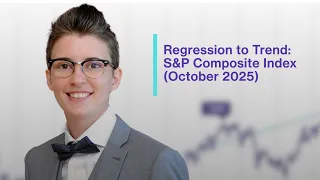
This video examines the stock market's long-term behavior by looking at the inflation-adjusted S&P Composite Index's history using regression analysis with data through October 2025
Join the experts at T. Rowe Price for an educational webcast exploring the unique challenges of today’s market environment and how to make better asset allocation decisions for your clients.
M&A is more like a math equation. Your firm plus the desired one should equal what you would like to see occur. There are many other desired outcomes of these deals. For that reason, evaluating each deal with the exact same metrics is preposterous and unhelpful.
AUM-based compensation was a necessary evolution. But it isn’t the endpoint. If our profession is serious about being a profession, not an asset-gathering enterprise, we must continue to evolve. That means taking a hard look at how we get paid.
Remember that people have different communication and learning styles. What works for one person who “gets it” doesn’t work for another. If a message is important, make sure to use several modes of communication — written, verbal and interactive — wherever possible.
Investors who watched the robotics space peak back in 2021 may see the current rally with apprehension. Back then, the narrative of a China-driven logistics and e-commerce boom sent robotics stocks to dizzying heights. What followed was China’s economy first slowing down, and then a pandemic-fueled demand shock. The sector fell hard.
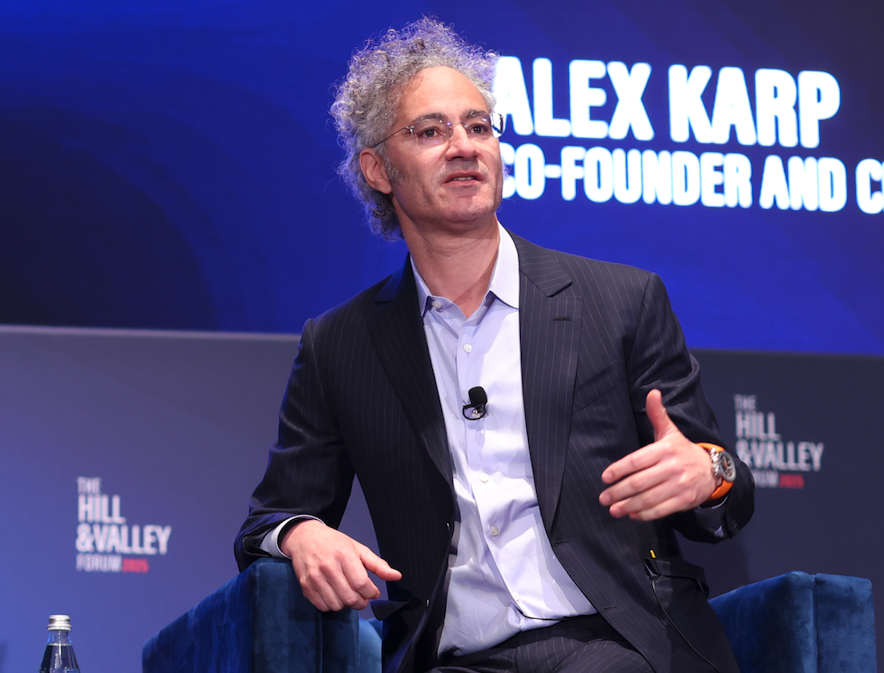
There can be only one Highlander, but Palantir’s Alex Karp shows there can be multiple highly paid, outspoken chief executive officers of richly valued tech companies with cult followings and unsettling stores of political power. That still doesn’t guarantee it’s a durable model for success.
The huge checks Meta Platforms Inc. is writing to support its artificial intelligence ambitions are reminding some investors of the massive metaverse outlays that crippled the stock just a few years ago.
The US Treasury indicated it’s not looking to boost sales of notes and bonds until well into next year, in a decision that will see the government increasingly rely on bills to fund the budget deficit.
The trade was simple — and worked until it didn’t. Wrap crypto in a stock ticker. Call it innovation. Ride the wave.
Following this year’s impressive rally in gold (the best year for the metal since 1972) investor attention has once again turned toward its role as a long-term portfolio component.
Actively managed ETFs, particularly those of the fixed income variety, are among the fastest-growing ETF segments today. That growth has been facilitated in part by advisors moving away from higher-fee mutual funds and issuers converting popular mutual funds to the ETF wrapper, among other factors.
An advisor or allocator needs to do three things: understand the goals of their client, find different ways to earn returns for taking risks, and then take the right amount of risk to meet those goals.
While many commentators have criticized Argentine President Javier Milei's draconian approach to economic reform, the results of the October legislative election show that the Argentine people would prefer short-term economic pain over a return to Peronist policies. Milei now has a clear path to finish what he started.