Last week’s employment report offered what may be the last clear picture of the US job market before President Donald Trump’s tariff shock. Overall, it looked pretty healthy, with a 4.2% unemployment rate, 80.4% of the prime-age population employed and 1.9 million nonfarm payroll jobs added over the past 12 months.
When it’s finally completed seven years from now, Citadel LLC’s New York tower will be the second tallest building in the city, after the World Trade Center. It will also loom over the headquarters of JPMorgan Chase & Co. just a few hundred yards south along Park Avenue.
An enduring image from 2024 will be the capture of the SpaceX booster rocket by the Mechazilla robot arms on its return to Earth.
While there are no absolute winners in a trade war, there may be relative winners in the global stock market for investors to consider.
Lost in the focus on the bludgeoning that tariff policy has had on equity markets, is the impact on global currencies. From the end of February through April 3rd, the U.S. Dollar is down 5.1% relative to other developed market currencies (DXY). In addition, we’ve also seen a violent unwinding of the popular currency carry trade.
At the start of last week, the S&P 500 rallied three days in a row, with investors believing that the tariffs announced on Wednesday would be targeted.
Tariff Turbulence. The President’s long-anticipated tariff announcement on April 2 has come and gone. Our hopes for some clarity, so the uncertainty weighing on confidence and the equity market could subside, were dashed after we heard the breadth and magnitude of the administration’s tariff plan.
We’re adjusting our stance in response to rising risk while maintaining a disciplined view on long-term strategy.
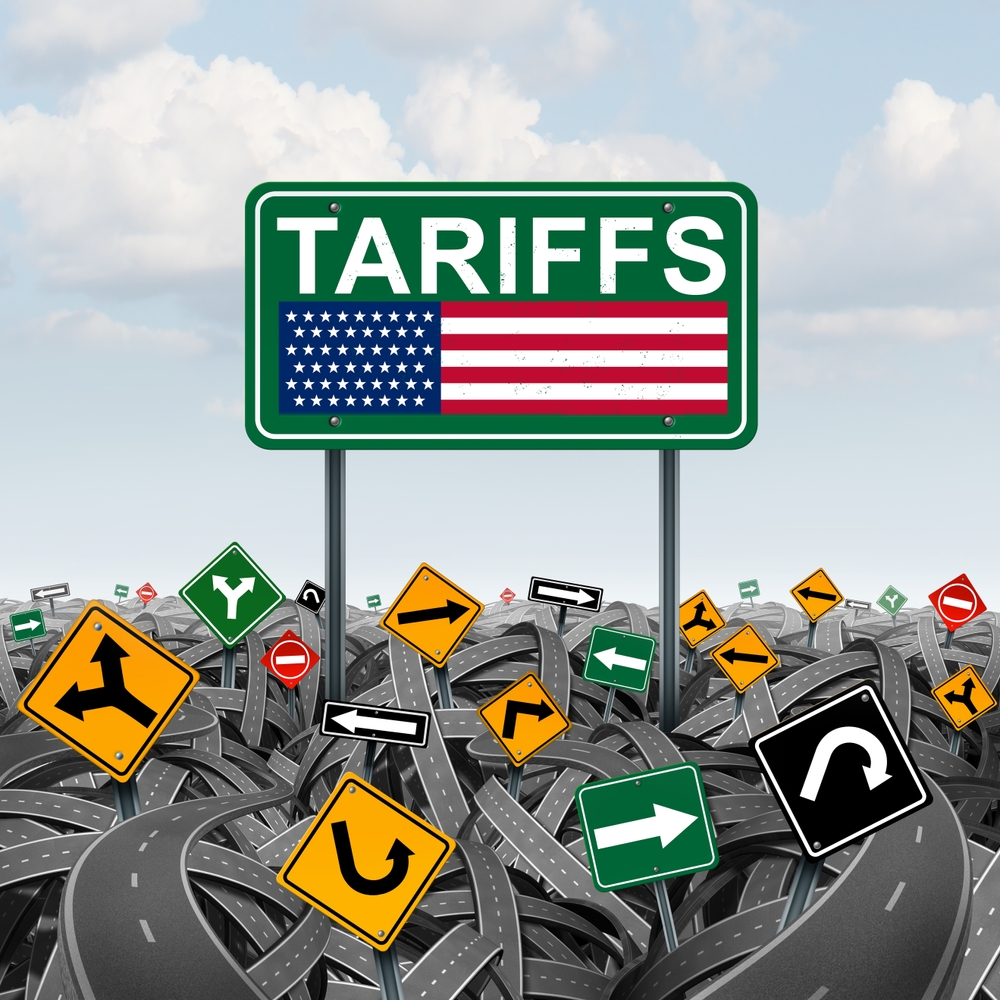
While the path may have twists and turns, the destination seems clear; higher U.S. tariffs.
The recent market drawdown highlights risks of a concentrated S&P 500—and the case for diversification now.
Many of us came into the year with highly concentrated portfolios, which now were faced with changing market conditions.
The book’s title derives from the author’s criticism of young, self-absorbed Silicon Valley types unconcerned by the public good — the “hollow republic” — as opposed to those focused on the commonwealth, the “technological republic.”
Let’s get straight to the heart of the matter: if you’re relying on a multi-step sales process to win clients, you’re unknowingly eroding your authority.
Even the best financial plans sometimes hit an unexpected sour note: an investment seemingly doesn’t work out, an emergency expense appears to throw off a budget, or an impulsive splurge leaves us with a case of buyer’s remorse. When this happens, we need to improvise as we respond to the financial twists and turns.
A sharp selloff in shares of Apple Inc. illustrates investor skepticism about its ability to navigate President Donald Trump’s tariffs on China, Vietnam and India — countries all critical to the iPhone maker’s supply chain.
That would be my advice for the Brazilian government on how to approach US President Donald Trump’s tariff-palooza.
MFS, which pioneered the first mutual fund in 1924, recently entered the ETF arena with the launch of five actively managed products. MFS’s Emily Dupre discusses the firm’s decision-making process around launching ETFs, their investment capabilities, and the role active management plays in a portfolio. Plus, VettaFi’s Roxanna Islam assesses the ETF impact of the recent tariffs announcement.
US Treasuries tentatively resumed their gains on Tuesday after the wildest day for bond traders since the height of the pandemic in March 2020.
President Donald Trump’s bombshell Liberation Day tariff announcement was greeted with one of the worst two-day US stock market routs on record. Whatever you think of Trump’s tariff policies, they are a huge gamble, and no one knows how things will play out.
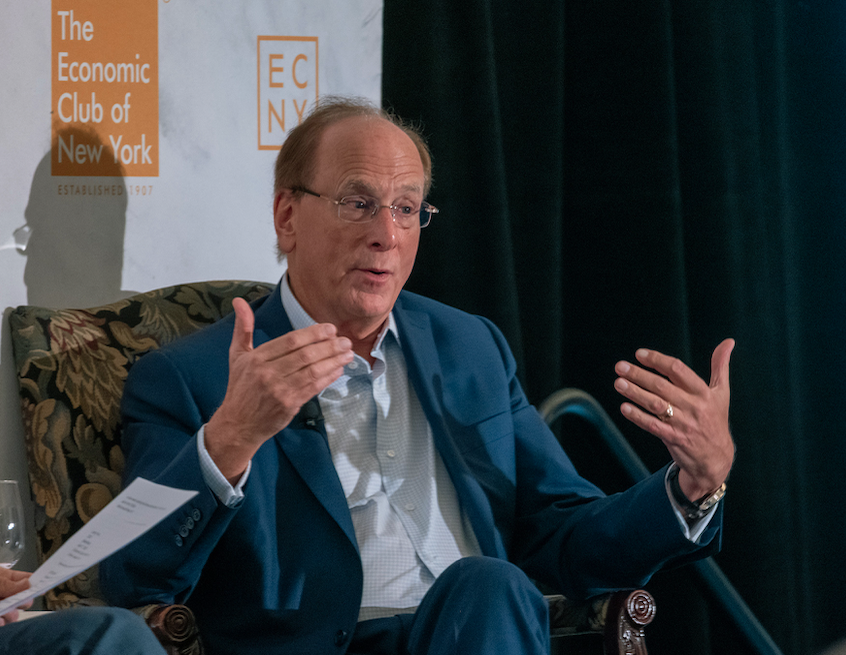
BlackRock Inc. Chief Executive Officer Larry Fink said New York is plagued by crime and filth and lacks enough good schools, and he called on politicians to make it easier for financial firms to do business in the city.
Markets faced more volatility as Trump’s aggressive tariff measures injected both economic and political uncertainty into the system.
We reexamine our macroeconomic outlook in light of newly announced tariffs, which have exceeded market expectations and prompted us to update our assumptions and analysis.
The markets face a challenging path as tariff policies intensify economic uncertainty, yet opportunities persist for discerning investors.
The Federal Reserve started raising short-term interest rates three years ago and the M2 measure of the money supply – what Milton Friedman said to focus on – soon started declining, hitting bottom in late 2023.
The announcement of global tariffs by President Trump has rocked markets and much is uncertain, but there are key facts for investors to keep in mind.
As investors are uncomfortably aware of, global equity markets have been in freefall since U.S. President Donald Trump’s announcement of “reciprocal tariffs” on April 2.
Last week, we noted that “nothing good happens below the 200-DMA,” and the tariff-induced market crash this past week confirmed that statement. However, we also noted that over the last 30 years, previous failures at the 200-DMA have also often been buying opportunities.
The international trading system is not perfect, but as we have said so many times, freer trade is better than no trade and tariffs are, typically, the worst solution to trade issues between countries.
VettaFi head of sector and industry research Roxana Islam talked to T. Rowe Price PM Dom Rizzo on active tech ETF investing.
Moving forward, investors may want to keep investment-grade options close with a few from Vanguard to consider.
VettaFi’s Head of Research Todd Rosenbluth discussed the T. Rowe Price International Equity ETF (TOUS) on this week’s “ETF of the Week” podcast with Chuck Jaffe of “Money Life.”
As market prices change over time, so will the fraction of your portfolio which is in stocks or bonds. How often should you rebalance your portfolio back to your desired asset allocation? And how much is that rebalancing worth?
Like a crossword puzzle, President Trump has been bombarding the media with clues about his economic policy. Given the importance of inflation and interest rates to the economy and the financial markets, it's worth assessing his clues and formulating some answers about what Trump may be up to.
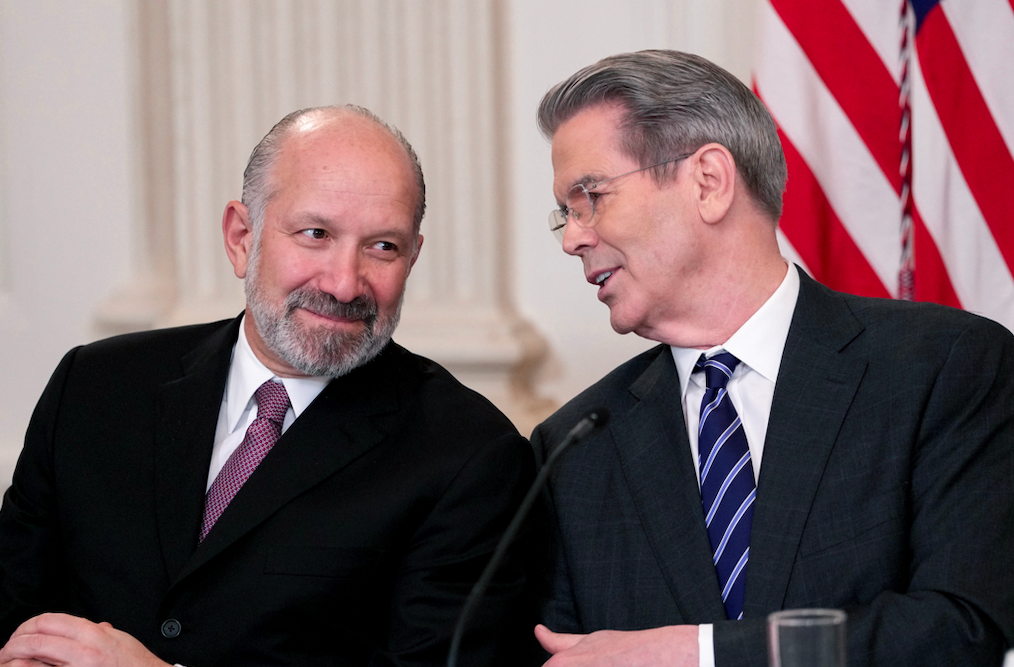
President Donald Trump and his economic team dismissed investors’ fears of inflation and recession, offering no apologies for the market turmoil sparked by sweeping global tariffs and defiantly insisting a boom is on the horizon.
Traders boosted expectations for the Federal Reserve to cut interest rates this year — and raised the specter of a reduction before the central bank’s next meeting — as the US administration’s tariffs ignite fears of a global recession.
President Donald Trump has said his reciprocal tariff policy was meant to stand up for the American worker, whom he portrayed as the victim of a decades-long shift toward unfettered globalization.
Chinese shares plunged and sovereign yields neared an all-time low as investors braced themselves for the fall-out of a spiraling trade conflict between the world’s two largest economies.
President Donald Trump’s trade war has US stocks on track to enter their first bear market since the Covid pandemic.
Good news: Tariffs will not make the world end. American businesses will do what they do best, which is adapt. While the probability of a recession has increased, we always get through it and the best businesses thrive. Unless directly affected by tariffs, don’t change your personal plans that much.
Last week's economic landscape was dramatically reshaped by President Trump's announcement of sweeping tariff policies on what he declared "Liberation Day." His announcement triggered a historic sell-off in the stock market.
Global markets are in freefall in response to President Donald Trump’s universal 10% tariff on all goods being imported into the U.S., with as many as 60 countries facing “reciprocal” tariffs on top of that.
The trajectory of small businesses often goes something this: a first-generation entrepreneur starts and grows a company. It could be a software company, but also a plumbing, electrical, or HVAC business.
The 10% across-the-board (ad valorem) tariff and specific reciprocal tariffs on most U.S. trading partners went well beyond what most were expecting.
The incremental tariffs were bolder than market expectations and ushered in new uncertainty.
If tariffs are imposed on gold and silver will their prices rise, fall, or stay the same? We explain facts and myths when it comes to gold prices and tariffs.
China’s prolonged reliance on fiscal stimulus has distorted economic incentives, fueling a housing glut, a collapse in prices, and spiraling public debt. With further stimulus off the table, the only sustainable path is for the central government to relinquish more economic power to local governments and the private sector.
The tariff chaos continues … but the economy remains intact. For now.
On the latest edition of Market Week in Review, Director and Senior Investment Strategist Alex Cousley discussed the details of the Trump administration’s tariff plan and the market’s reaction.
The early days of the Trump administration have brought sweeping tariff announcements. While the situation is fluid, the direction is clear: trade restrictions are likely to increase, with China as a primary target.
U.S. stocks underperformed in the first quarter of 2025, hit by a double whammy from intensifying policy uncertainty and a U-turn in select mega cap stocks.