We examine the April 2 tariff announcement from President Trump, outlining key proposals and the potential implications for trade and market sentiment.
In the report, Fixed Income Portfolio Managers John Lloyd and Greg Wilensky discuss how fixed income markets are responding to Trump’s sweeping tariffs and the implications for investors.
To most people, black gold means oil, the substance that helped build the modern world while causing the climate crisis. But a new treasure on the market is getting prospectors excited, not least for the role it could play in fixing the problem fossil fuels created.
By sparing Mexico and Canada from his reciprocal tariffs on Wednesday, US President Donald Trump has kept the pact known as USMCA on life support. That’s no small feat given the animosity shown by the US government toward its neighbors in the past weeks.
As volatility rises, staying invested is a strategic priority for capturing long-term return potential in a broadening market.
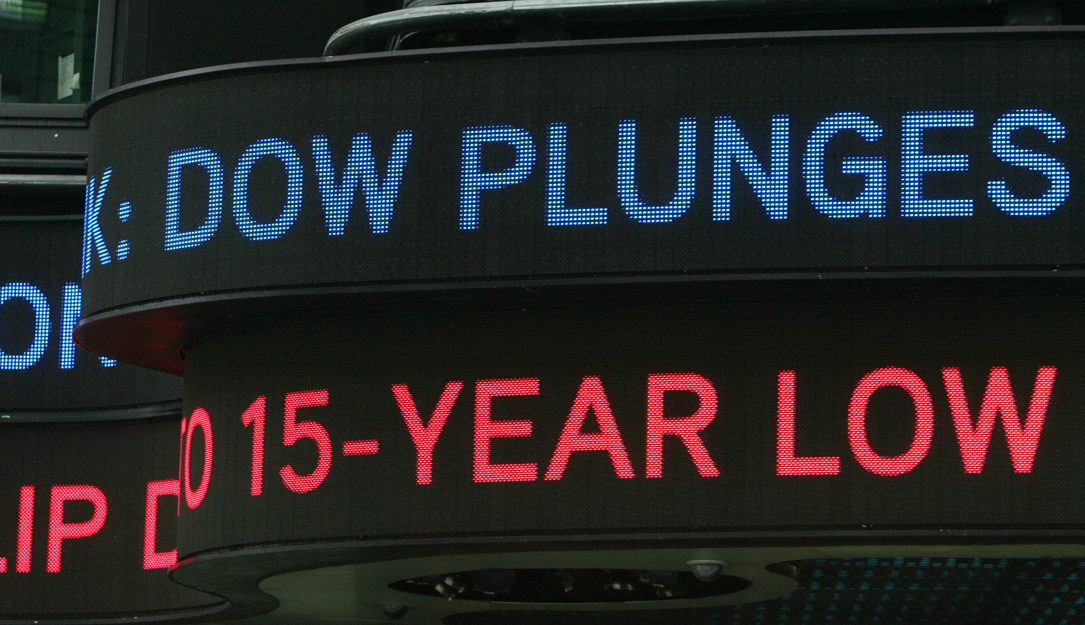
U.S. indexes suffered their worst day since the pandemic, hurt by Trump's massive tariffs that sparked recession fears. Almost every sector fell, with retailers and tech hard hit.
We’d like to discuss our three worst-performing securities in the US portfolio to help our investors understand why we are sitting on our hands and allowing our discipline to proceed.
The Nasdaq-100 Index (NDX) slipped nearly 2.5% last week. That sparked fresh fears that current geopolitical and macroeconomic climates remain headwinds to growth stocks. Those headwinds may imply investors aren’t flocking to AI stocks
The stock market faces severe downside risk ahead, and the U.S. is constrained in the unsystematic monetary and fiscal expansion that both amplified that bubble and fueled record but wholly impermanent corporate profit margins. Meanwhile, the U.S. economy now faces an imminent recession, and if we fail to be vigilant, we, once united Americans, risk losing what is far greater and more valuable than money.
Join the experts at KraneShares and Hedgeye as they explore a unique approach to minimizing volatility compared to traditional hedged or buffered products.
In the report, Fixed income portfolio managers Brent Olson and Tim Winstone reflect on the initial credit market response to President Trump’s tariffs.
Join our upcoming webinar for a comprehensive review of ROBO Global's flagship indices and their standout performers from the past quarter.
Alphabet Inc.’s Google and Amazon.com Inc. have found an avenue to profit from Elon Musk’s chaotic Department of Government Efficiency.
Traders boosted their bets on Federal Reserve interest-rate cuts this year and US Treasuries rallied as a solid report on American jobs failed to calm markets.
President Donald Trump’s new reciprocal tariff policy is straightforwardly bad for the US economy and markets. The only conceivable reason that the S&P 500 Index was down just 4% on Thursday is that investors still don’t believe it will stick. Unfortunately, there’s no quick way out of this quagmire.
Investors crushed the stocks of consumer discretionary companies on Thursday in response to President Donald Trump’s tariff announcement, making little distinction between home goods companies such as Williams-Sonoma Inc., apparel names including Nike Inc. or restaurants such as Cheesecake Factory Inc.
Ideally, nobody would have to worry about the burgeoning and multifaceted realm of nonbank finance: Let hedge funds, securities dealers and the like take whatever risks they want, as long as they bear the full consequences.
The combination of slowing economic growth and stubborn inflation, combined with uncertainty about U.S. tariff policy, is keeping investors cautious.
The popularity of Buffered ETFs, also referred to as Defined outcome ETFs, has exploded over the last five years. Historically there has been a wide deviation in caps over the years.
Social Security faces funding issues by 2035, but major changes to the program are unlikely in the near term.
To summarize the market action of March of 2025: U.S. stocks (SPX) did poorly, international stocks (especially Europe, VGK) did well in dollar terms, and gold (IAU) did spectacularly well. The main culprit appears to market concerns about the Trump administration’s tariff policies.
The absolute best time to start investing would be the day you turned 18 and could legally open a brokerage account.
Portfolio managers that didn’t fully embrace the AI trade withstood their share of criticism over the past year or two, as many AI-linked stocks reached great heights.
Adam Hetts, Global Head of Multi-Asset & Portfolio Manager, and Oliver Blackbourn, Portfolio Manager, give their thoughts on how US President Trump’s ‘Liberation Day’ tariffs have reshaped global trade dynamics, emphasising the benefits of diversification at a time of heightened uncertainty about the prospects for growth.
Active ETFs just topped the $1 trillion threshold, making up nearly 10% of the total ETF pie. Enhanced yield is the name of the game.
With nearly half of the bond market now outside of the Agg, a number of opportunities exist for those seeking exposure beyond the benchmark.
U.S. ETFs saw record first quarter flows this year, bringing in $296 billion during the first three months of 2025.
Bond traders ramped up bets on interest-rate cuts from the Federal Reserve amid concern that Donald Trump’s trade war will backfire on the US economy, sending the yield on benchmark Treasuries toward the closely-watched 4% level.
Runway AI Inc. has raised $308 million in a new round of funding that more than doubles the company’s valuation — a sign of investor enthusiasm for startups building artificial intelligence software that can generate videos.
Meta Platforms Inc.’s head of artificial intelligence research plans to leave the company, creating a high-level vacancy just as Meta seeks to invest and compete aggressively in AI.
President Donald Trump imposed the steepest American tariffs in a century as he steps up his campaign to reshape the global economy, sparking threats of retaliation and a selloff in markets around the world.
The tiny German village of Rehden, halfway between Hamburg and Frankfurt, is the unlikely ground zero for the next phase of the European energy crisis.
Market volatility is likely to rise as investors digest the president's plans.
Uncertainty is the watchword for the global economy. Dramatic policy shifts—tariffs in particular—by the Trump administration 2.0 have so far surprised financial markets and softened consumer sentiment. But we see a global economy well positioned to absorb potential shocks in the months ahead.
Compensation dynamics are commanding investor attention once more. For the first time in decades, Japan's pay increases—finalized at +5.46% in this year's shunto negotiations—have notably exceeded compensation growth rates in the United States.
The tariffs that the U.S. is imposing on its trading partners will bring about several costs that are important for investors to understand. Some of those costs are inherent to what a tariff is, while others stem from the fact that U.S. industrial policy has, and looks to continue to have, a huge amount of uncertainty associated with it.
Turbulence is expected to continue until markets gain more clarity.
Two of the most common estate planning tools to use are a Will and a Revocable Trust. Both essentially perform the same purpose, ensuring your wishes are fulfilled, but they do so in different ways. Understanding their differences can save your family from unnecessary probate, costs, and stress.
The first quarter of 2025 took investors on a rollercoaster, driven by on-again, off-again tariff policy announcements.
Investors face new challenges as their wealth grows. So it’s a good thing that direct indexing is designed to fit their allocations just the way they are.
In this video, Chuck Carnevale, Co-Founder of FAST Graphs, aka Mr. Valuation is going to cover two aerospace and defense stocks – Huntington Ingalls Industries (HII) and Lockheed Martin (LMT).
An early-term recession, though difficult, can create strategic opportunities to push a bold and transformative agenda forward.
In recent weeks, market volatility has surged, driven by uncertainty surrounding the growth picture and Washington's economic policy
This video provides an update on the monthly moving averages we track for the S&P 500 and the Ivy Portfolio after the close of the last business day of the month.
The underrepresentation of women in financial services leadership is not a reflection of their ability – it’s a symptom of an industry that hasn’t evolved quickly enough to meet the challenges of the modern world. Addressing this gap requires more than a commitment to diversity...
In this column, I’ll share some marketing secrets I’ve seen work well, whether you are trying to do lead gen or whether you are in a “finals” situation competing against other advisors, or whether you are talking with a prospect in your office.
Even in the best-case scenarios, implicit trust tends to erode when a marriage unravels. On occasion, the divorce process uncovers secrets, hidden rifts, and breaches of trust that can expose both parties to scrutiny and trouble.
This year’s whiplash headlines and thrashing in equity markets have done little to slow down the ETF industry.
Goldman Sachs Group Inc. is expanding its private equity offering to wealthy individuals across Wall Street and beyond, in the latest sign of investment firms gradually broadening access to the much sought-after private markets.
Hiring at US companies accelerated last month, rebounding from a weak February marked by severe weather in some regions of the country.