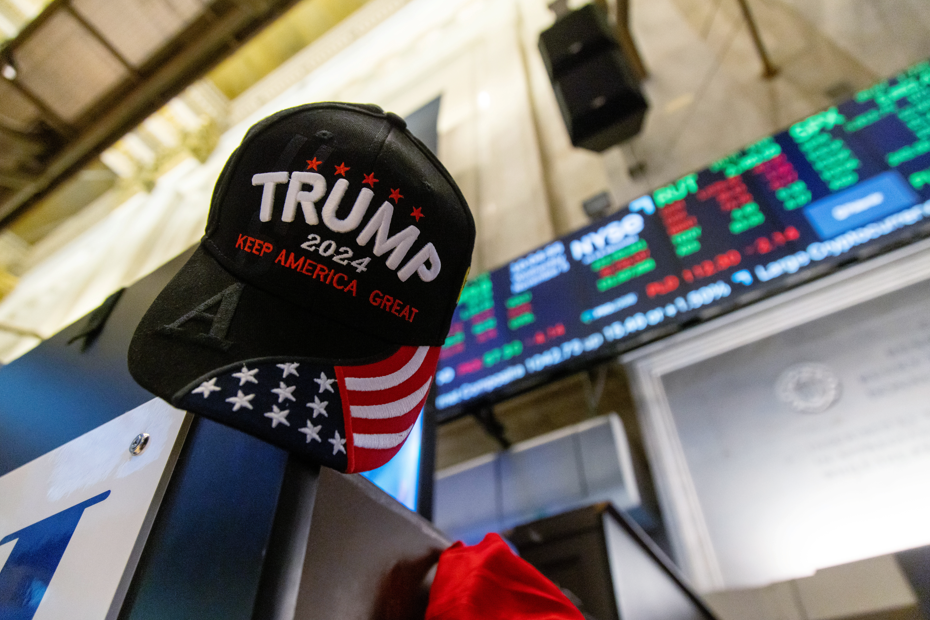
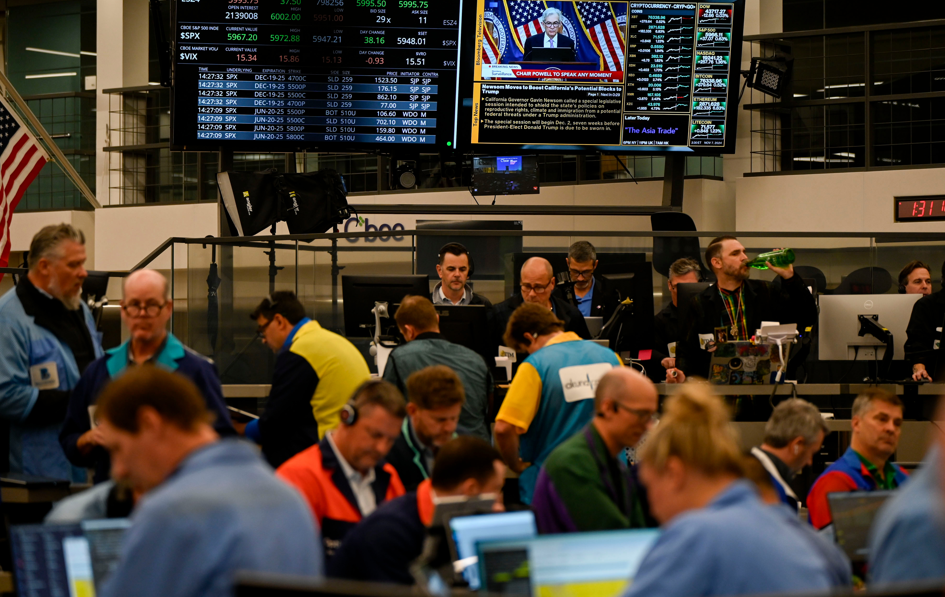
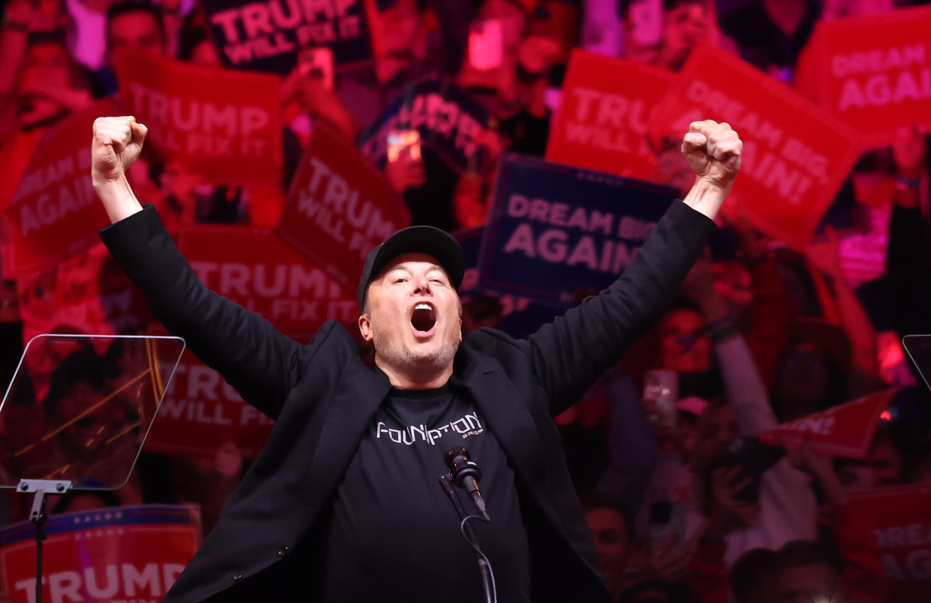
With the Russell 2000 Index rallying in response to the U.S. election results—the benchmark index of small cap stocks soared by nearly 6% on Nov. 6 alone—small cap managers are re-evaluating their positioning ahead of President-elect Trump taking office in January.
Instead of dreading volatile markets, the savvy advisor understands that during these times, her professional skill is most valuable and she can fulfill the vital role that she was hired to accomplish.
Retirement plan savers looking to mitigate the risk of higher taxes in the future may benefit from making after-tax contributions to employer plans, which may be transferred to Roth accounts. Our Bill Cass details a “mega backdoor” Roth strategy.
The Fed cut rates by 0.25%, with limited changes to the statement, while Powell's blunt "no" response about any coming political pressure to resign was headline grabbing.
In a week with a U.S. presidential election and market volatility, the Federal Reserve cut its policy rate 25 basis points (bps) as expected. Amid this noise and the generally positive messages from recent macro data, Fed Chair Jerome Powell emphasized that downside economic risks had decreased, but the policy rate remains above neutral, suggesting that gradual cuts are still likely to come over time.
The Federal Reserve cut short-term rates by a quarter percentage point last week, like pretty much everyone expected. In addition, the Fed didn’t push back hard against market expectations of another quarter-point cut in mid-December, so unless the economic or financial news changes dramatically by then, expect a repeat at the next meeting.
The prospect of a Trump presidency has led to much debate and speculation about how markets might react. Depending on what policies are eventually passed, there are potential risks and opportunities in both the stock and bond markets.
Many tech companies and executives are at political odds with President-elect Trump, but the sector performed well during his first term.
The housing market inderwent huge transformations in recent decades with the aftermath of the Global Financial Crisis & the COVID-19 pandemic.
In this article, we outline the key benefits of profits interests for RIAs and provide a roadmap for how RIAs can grant profits interests to their employees.
Bitcoin options traders buoyed by Donald Trump’s election victory are already eyeing a landmark price of $100,000 for the original cryptocurrency, after it surged to a fresh record on hopes for a more crypto-friendly administration.
Mike Wirth became the king of Big Oil on Oct. 7, 2020. That was the day the chief executive officer of Chevron Corp. elbowed out archival Exxon Mobil Corp. to become America’s largest oil corporation by market value. It was the zenith of a honeymoon between Wall Street and Wirth.
Donald Trump will inherit, to all appearances, a solid economy when he assumes the presidency in January. After all, the stock market is at record highs, unemployment is low by historical standards and gross domestic product has been expanding at a healthy pace of around 2.5% so far this year.
The bond-market selloff unleashed by Donald Trump’s presidential victory last week ended almost as quickly as it began.
Since Donald Trump’s election win, the hedge funds clinging on to bets against Tesla Inc. have lost billions of dollars, as they feel the fallout of the special relationship between the president-elect and Elon Musk.
VettaFi’s Head of Research Todd Rosenbluth discussed the Calamos S&P 500® Structured Alt Protection ETF – November (CPSN) on this week’s “ETF of the Week” podcast with Chuck Jaffe of “Money Life.”
In the midst of grieving your loved one’s loss and making funeral arrangements, you may also be responsible for finalizing their estate, which could include inheriting real estate.
Most of the time the yield on long-term bonds exceeds that on short-term bonds, in order to compensate for the greater risk attached to long-term debt. But until recently the yield curve was inverted, with short-term rates exceeding long-term rates. This happens when investors expect interest rates to decline in the future.
In addition to better appreciating why gold is surging, our analysis will help you recognize that market narratives explaining asset price movements can be wrong, no matter how reasonable they may seem at first blush.
Today is Veterans Day. My father served in the army during the Vietnam War. He lives in Long Island, New York, and I am proud of his service.
Accumulating inconsistencies in the prevailing paradigm then trigger a crisis, leading to the emergence of new theories and ideas, resulting in a paradigm shift where the old framework is rapidly replaced by a new one.
I went to bed “early” on election night, around 10:30 pm. We are in the five months of the year where Puerto Rico is one hour ahead of Eastern time, and nothing I was seeing made me think it would be an early night. And by that I meant 3 or 4 am.
On the latest edition of Market Week in Review, Chief Investment Strategist for North America, Paul Eitelman, discussed key watchpoints for investors in the wake of the U.S. elections. He also explained how the election results are impacting markets, and finished with an update on the latest monetary policy decisions from the U.S. Federal Reserve (Fed) and the Bank of England (BoE).
We are in a world where multiple, starkly different outcomes are possible. The decisive U.S. election outcome has stoked uncertainty about future U.S. policy.
Maslow’s hierarchy of needs was a groundbreaking concept when it appeared in 1943. American psychologist Abraham Maslow argued that certain basic needs—food, water, shelter, etc.—must be met before a person can move on to higher levels of self-worth and fulfillment.
The people have spoken. While there are still some unknowns, the contours of the American government that will be seated next January are reasonably clear.
In the report, Global Head of Fixed Income Jim Cielinski and Head of Global Short Duration Daniel Siluk believe navigating the change in rate regimes has grown more complicated for the Federal Reserve (Fed) as they must now consider the ramifications of Donald Trump’s proposed economic policies.
Investors have embraced U.S. midcap equity ETFs in 2024, with the investment style gathering $19 billion of new money as of early November.
With the election over, many market sectors have skyrocketed. However, investors should still consider investing in more gold.
Donald Trump’s return to the White House is already starting to tee up a deluge of bonuses in Wall Street’s corridors of power.
Oil fell after Chinese stimulus measures disappointed speculators, but not enough to jolt prices from the narrowest trading band since July.
US companies are plowing money into building data centers as they race to get ahead in artificial intelligence.
If you’re unfamiliar with synthetic risk transfers, there’s a chance you’ll hear all about them when the next financial crisis hits. They’re the latest way for big banks to game rules designed to safeguard the system, and they’re growing fast. So far, regulators seem all but oblivious.
Explore how these two investment types compare.
Join the experts at VettaFi and Invesco for a comprehensive webcast focused on optimizing your portfolio’s income sleeve with a lower volatility strategy tailored for the current rate environment.
A few months ago, travel companies were warning that the great post-pandemic boom in consumer travel was losing steam.
Stocks rose at the end of their best week in 2024 after solid consumer sentiment data and bets that newly elected President Donald Trump’s pro-growth agenda will keep fueling Corporate America.
The collapse of Germany’s deeply unloved and dysfunctional three-party coalition offers Europe’s biggest economy an opportunity for political and economic renewal. Two important questions arise: Will Germany put aside political squabbles and grab its golden opportunity.
Here’s something that would have seemed pretty much inconceivable two years ago: According to Zillow, home prices have now risen more in New York City and its environs since the beginning of 2020 than in metropolitan Austin, Texas.
Detroit voted overwhelmingly for Vice President Kamala Harris, but investors in “Detroit” backed President-elect Donald Trump. Shares in General Motors Co. and Ford Motor Co. jumped on news of Trump’s election win, with GM reaching a new high for the year and Ford up by almost 6% on Wednesday, more than double the S&P 500 Index’s gain.
Following the September FOMC meeting’s much ballyhooed 50-basis point (bps) rate cut, the voting members scaled back and reduced the Fed Funds by 25 bps this time around.
While investors and institutions were digesting the results of Tuesday’s elections, the Fed was meeting to determine the path forward for rates. Following on the 0.5% (50 basis points) start in September, the Fed cut rates by a further 0.25% today and the markets are forecasting another cut to come in December, but the odds of that move have ticked lower.
Volatility is likely here to stay until we get some level of clarity on the political landscape.
Western economies are inching towards soft landings, and their central banks are reducing interest rates. These developments will be helpful to economies in the Asia-Pacific region as they conclude 2024 and look forward to next year. However, the outlook for China remains a central concern.
Marc Pinto, Head of Americas Equities, and Lucas Klein, Head of EMEA and Asia Pacific Equities, say a surprisingly straightforward U.S. election could provide additional momentum to U.S. stocks through the end of 2024. But it remains to be seen how policy will impact future earnings—the real driver of long-term returns.
There’s a problem brewing in the world of ETFs: We are running out of ticker symbols. Bloomberg recently reported that, with so many new funds hitting the marketplace in recent years, issuers are forced to produce catchy four-letter ticker symbols rather than the more eye-pleasing three-letter abbreviations.
Corporate buybacks have become a hot topic, drawing criticism from regulators and policymakers. In recent years, Washington, D.C., has considered proposals to tax or limit them.
Stocks have had a habit of gaining ground no matter who becomes President.
The Exchange conference offers investors firsthand exposure to the ideas, strategies, and tools top-tier issuers are deploying.
Join the experts at John Hancock Investment Management for a webcast that unpacks the securitized market and explores how an active approach could fit in your portfolio.